
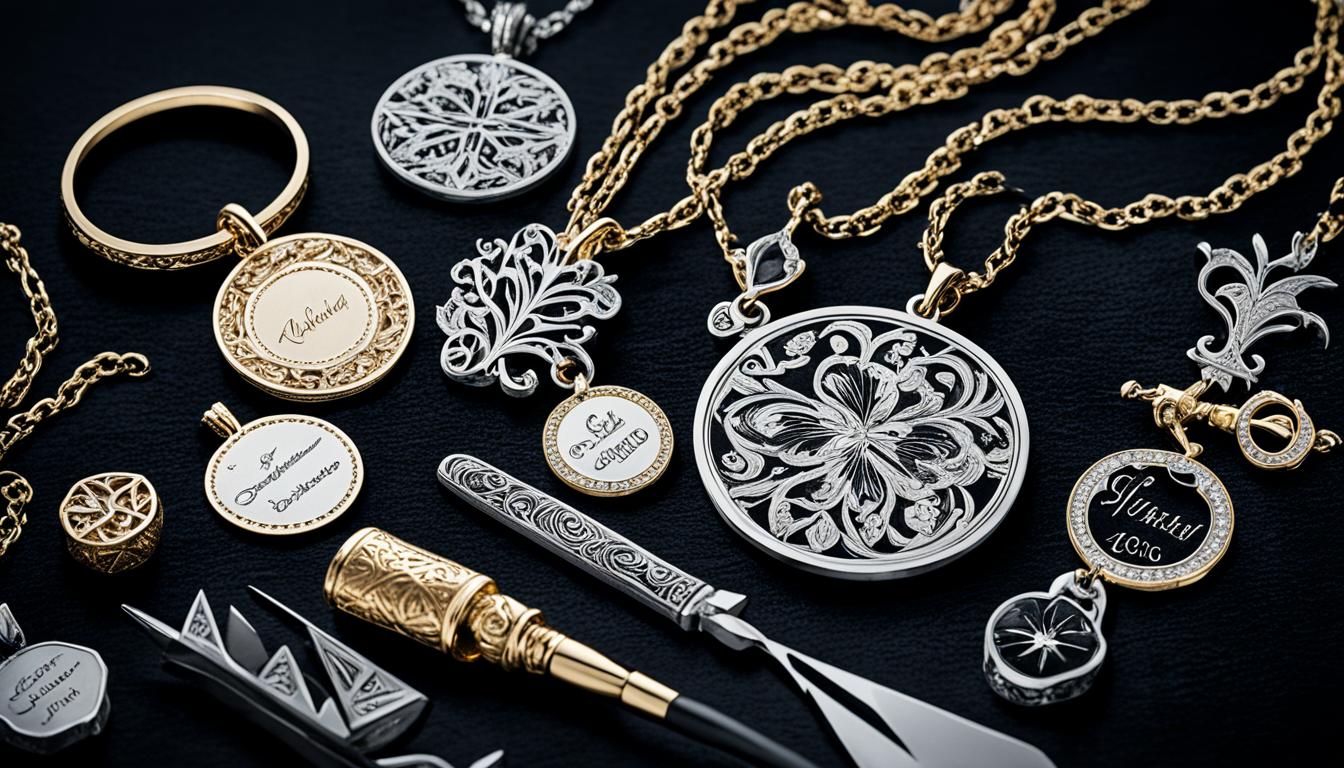
Achieving intricate detail on precious metals demands specialized engraving techniques and meticulous process control. Modern jewelry manufacturing integrates both traditional rotary methods and advanced laser systems to personalize pieces with exceptional accuracy and durability. Understanding the capabilities and limitations of each approach is essential for producing high-quality results.
Micro Rotary Diamond Engraving Fundamentals
Micro rotary diamond engraving utilizes a non-rotating diamond tip or a rotating carbide tool to physically displace material, creating crisp, bright lines on various jewelry substrates. This method is particularly effective for shallow marking and fine detail where tactile depth is desired. Precision down to 0.05 mm is achievable with advanced machines, making it suitable for delicate work on rings, pendants, and charms.
Tool selection is critical for optimal performance. Diamond-tipped bits are preferred for extremely fine details, especially on hard metals or ceramics, while carbide gravers maintain edge sharpness for deeper mechanical engraving over longer production runs. Micro profiler engraving tools, available with included angles of 15°, 20°, and 30° and tip widths from 0.002″ to 0.015″, are specifically designed for very small, shallow lines and closely spaced letters.
Operating parameters, including feeds and speeds, must be carefully calibrated for each material. Modern micro motor systems offer variable speed control, allowing jewelers to adjust torque and rotation for different metals. Platinum, for instance, often requires more torque at lower speeds, whereas silver and gold benefit from faster rotation with lighter pressure to prevent material deformation.
Engraving tolerances are paramount, especially for logos and hallmarks on small jewelry surfaces. Key aspects to verify include logo size, position, depth, orientation, and overall readability. Inconsistent depth or blurred lines can significantly diminish the aesthetic and commercial value of a piece, necessitating precise machine setup and operator skill.
Advanced Fiber Laser Metal Marking
| Feature | Q-Switched Fiber Laser | MOPA Fiber Laser |
|---|---|---|
| Pulse Width | Fixed (typically 100-200 ns) | Adjustable (2-500 ns) |
| Frequency | Adjustable | Adjustable (1-4000 kHz) |
| Heat Control | Less precise, higher heat spread | More precise, smaller heat-affected zone |
| Color Marking | Limited to monochrome | Capable on stainless steel |
| Anodized Aluminum | Standard marking | Black/white marking, cleaner results |
| Plastics | Can scorch | High-contrast, cleaner marking |
| Cost | Generally lower upfront cost | Higher upfront cost, more versatile |
Fiber laser marking has become an industry standard for engraving precious metals due to its excellent beam quality, high speed, and ability to create permanent marks with minimal heat-affected zones. These systems typically operate at a 1064nm wavelength, which is highly absorbed by metals such as gold, silver, platinum, stainless steel, and titanium.
The choice between MOPA and Q-switched fiber lasers significantly impacts marking capabilities. Q-switched lasers deliver consistent, high-energy pulses with a fixed pulse width, typically 100 to 200 nanoseconds, making them effective for deep, high-contrast engraving on bare metals. They offer a cost-effective solution for standard marking tasks.
MOPA fiber lasers, conversely, provide adjustable pulse widths, ranging from 2 nanoseconds up to 500 nanoseconds, and variable frequencies. This enhanced control allows for greater versatility, enabling applications like color marking on stainless steel, clean black or white marks on anodized aluminum, and precise marking on heat-sensitive plastics. MOPA systems offer superior control over heat input, resulting in finer details and reduced thermal distortion.
For gold, which is highly reflective, sufficient laser energy and multiple passes are often required to achieve desired depth. A 20W fiber laser is capable of surface marking, but 30W or higher is recommended for deeper engravings or increased production capacity. Speeds up to 15,000 mm/s are achievable for efficient production workflows. For cutting thin silver sheets (0.4mm), parameters like 500-800 mm/s speed, 95% power, and 100 passes with a ‘wobble’ function are recommended to prevent re-fusion of melted metal.
Engraving plated jewelry requires expert calibration. It is generally recommended to engrave raw metal before plating to ensure the plating solution coats the interior of the engraving, providing durability and uniform color. If engraving after plating, the laser must be fine-tuned to a ‘marking’ frequency to create legible inscriptions without cutting through to the base metal.
Specialized Ring Inside Diameter Engraving
Engraving the inside diameter (ID) of rings presents unique challenges due to the confined, curved surface. Precision workholding fixtures are paramount to ensure stability and consistent results. Dedicated ring-holding fixtures, often machined from solid brass, incorporate adjustment screws and rotating wheels to securely hold rings of various shapes and sizes, dampening vibration during the engraving process.
Modern inside ring engraving machines utilize both mechanical and laser methods. Mechanical engravers employ a diamond tip or mechanical cutter, while laser systems offer high precision for reproducing intricate designs, custom fonts, and even images on all metal types. Laser-assisted alignment is a valuable technique, projecting the text path onto the inner surface before cutting to verify spacing and orientation, thereby minimizing errors.
Digital depth calibration is a significant advancement, allowing engravers to preset exact depths based on the ring’s metal type and wall thickness. This ensures sharp lettering without compromising the structural integrity of the ring. For optimal legibility, a minimum ring width of 1.4 mm is generally required, increasing to 2 mm for special symbols.
Font selection is also critical for inside ring engraving. Script and cursive fonts convey elegance, while serif fonts offer a sense of tradition. Sans-serif fonts provide a clean, modern aesthetic, prioritizing legibility. The limited space inside a ring typically accommodates 20 to 30 characters, depending on the ring size and band width.
Mastering Fine Detail Vector Engraving
Fine detail vector engraving relies on precise, mathematically defined paths to create sharp, clean lines and intricate designs. Unlike raster engraving, which uses a series of dots, vector engraving traces continuous lines, making it ideal for logos, text, and complex patterns. The quality of the vector file directly correlates with the final engraving resolution.
Achieving crisp lines and minute features requires careful consideration of design parameters. Minimum line widths and text sizes are crucial for clarity, especially on precious metals. For instance, recessed letters typically require a minimum width of 0.3mm, and design elements should have a minimum metal thickness of 0.5mm to ensure structural integrity and prevent issues during subsequent manufacturing processes like casting.
Software plays a pivotal role in fine detail engraving. CAD software is used to create or import designs, which are then converted into toolpaths and G-code for CNC machines. Advanced engraving programs can automatically compensate for surface curvature, preventing distortion and ensuring consistent depth and appearance across complex geometries.
Material preparation is equally important. The surface finish of the metal before engraving significantly impacts the final appearance. Highly polished surfaces can enhance the contrast of engraved lines, while any imperfections will be magnified by the engraving process. Overly complex designs may not translate well to the physical medium, necessitating simplification for optimal results.
Best Practices for Precious Metal Handling
Working with precious metals like gold, silver, and platinum demands specific handling protocols due to their unique material properties and inherent value. Gold’s high reflectivity requires careful laser parameter tuning, often necessitating sufficient energy and multiple passes. Silver, being highly reflective and thermally conductive, presents particular challenges for laser processing.
Effective waste collection and material recovery systems are indispensable in a jewelry workshop. Engraving processes generate fine metal dust, filings, and polishing compounds, all of which contain valuable precious metals. Dedicated dust collectors with HEPA filtration and multi-stage capture systems are essential for protecting worker health and reclaiming these materials.
Bench sweeps, polishing mops, and even vacuum bags should be systematically collected and sent to reputable refiners. Specialized recycling systems can achieve recovery rates of 99% or higher from various jewelry wastes, including dissolved metals in solutions and physical production scrap. This maximizes economic yield and minimizes material losses.
Post-engraving finishing requires a delicate touch. Generally, extensive polishing over engraved areas should be avoided, as it can round off sharp lines, blur delicate shading, and weaken the design’s visual impact. Most polishing should be completed before engraving. After engraving, an extremely light buff with a very soft wheel and fine rouge can remove microscopic burrs and impart a gentle luster without compromising the engraved details.
Regular cleaning of engraved jewelry involves mild, fragrance-free dish soap and lukewarm water, followed by gentle brushing with a soft-bristled toothbrush to remove trapped dirt and oils. Harsh chemicals, ultrasonic cleaners (unless specifically approved), and abrasive pastes should be avoided to prevent damage to both the metal and the engraving.