
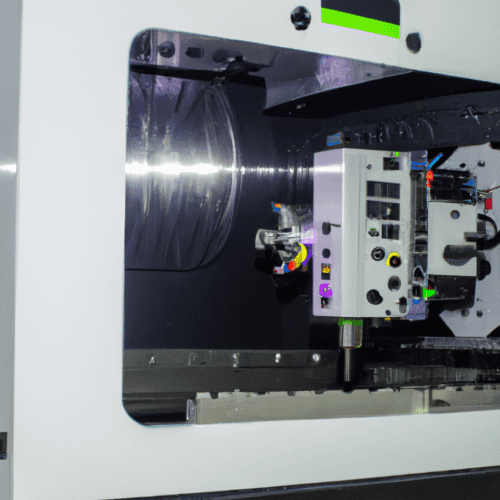
Mechanical equipment encompasses a broad category of devices and systems engineered to perform work by applying forces and controlling motion. These systems are fundamental to nearly every industrial process, transforming raw materials into finished goods or facilitating complex operations. Their design and implementation are critical for efficiency and precision in manufacturing environments.
Defining Mechanical Equipment in Manufacturing
Mechanical equipment in manufacturing refers to any apparatus utilizing mechanical principles to achieve a specific production objective. This includes everything from simple hand tools to complex, multi-axis robotic systems. The core function often involves material removal, forming, assembly, or precise movement of workpieces.
These machines are designed with specific operational parameters, including power requirements, structural rigidity, and control mechanisms. Engineers select equipment based on material properties, desired output quality, production volume, and cost-effectiveness. Understanding these foundational elements is crucial for optimal tooling and process development.
Power-Driven Machinery and Subtractive Processes
| Component Type | Typical Application | Key Performance Metric | Standard Tolerance (Example) |
|---|---|---|---|
| Spur Gear | Parallel shaft power transmission | Torque capacity, speed ratio | AGMA Quality 8-10 for precision |
| Ball Bearing | High-speed, light-to-moderate loads | Dynamic load rating, rotational accuracy | ABEC-1 to ABEC-9 (higher is tighter) |
| V-Belt Drive | Power transmission over distance | Power rating, efficiency | Belt length tolerance ±1% or ±3.2mm, whichever is greater |
Power-driven machinery forms the backbone of modern manufacturing, utilizing external energy sources like electricity or hydraulics to perform mechanical work. Common examples include lathes, milling machines, grinders, and drills, all designed for material removal. These machines enable high-volume production and achieve tight dimensional tolerances.
Subtractive shop tools, a subset of power-driven machinery, physically remove material from a workpiece to create a desired shape. This process generates chips or swarf, distinguishing it from additive or formative manufacturing methods. Precision in subtractive processes relies heavily on tool geometry, material properties, and machine rigidity.
CNC milling machines can achieve positional accuracies down to ±0.0005 inches (±0.0127 mm) for high-precision tasks, with standard operations typically within ±0.001 inches (0.025 mm). Surface finishes can range from 6.3 to 1.6 μm (Ra) for fine milling. For machining 6061-T6 aluminum with a 1/2″ carbide end mill, a cutting speed of 600 SFM (180 m/min) and a chip load of 0.002-0.005 inches per tooth for finishing passes are common starting points.
Industrial Production Hardware and Its Role
Industrial production hardware encompasses a vast array of components and systems beyond the primary machining tools, essential for a complete manufacturing ecosystem. This includes workholding devices, material handling systems, inspection equipment, and specialized jigs and fixtures. Each element contributes to the overall efficiency and quality of the production line.
Workholding solutions, such as vises, chucks, and custom fixtures, secure the workpiece during machining operations, preventing movement and ensuring accuracy. The choice of workholding directly impacts part rigidity and the ability to achieve specified tolerances. Modern systems often integrate hydraulic or pneumatic clamping for rapid setup and consistent force.
Material handling equipment, including conveyors, robotic arms, and automated guided vehicles (AGVs), facilitates the movement of raw materials, work-in-progress, and finished goods throughout the facility. These systems minimize manual labor, reduce cycle times, and enhance workplace safety. Their integration is key to lean manufacturing principles.
Mechanical Transmission Systems
Mechanical transmission components are vital for transferring power and motion from a prime mover to the working part of a machine. This category includes gears, belts, chains, shafts, couplings, and bearings. Each component plays a specific role in modifying speed, torque, or direction of rotation.
Gears, for example, are precision-machined components designed to transmit rotational motion and torque between shafts. Spur gears, helical gears, and bevel gears are common types, each suited for different applications based on load, speed, and alignment requirements. Gear tooth profiles are manufactured to tight tolerances to ensure smooth operation and minimize backlash.
Bearings reduce friction between moving parts, supporting radial and axial loads while allowing relative motion. Ball bearings, roller bearings, and plain bearings are selected based on load capacity, speed, operating environment, and required lifespan. Proper lubrication and maintenance are critical for bearing performance and machine longevity.
Automated Manufacturing Units
Automated manufacturing units represent the pinnacle of mechanical equipment integration, combining various technologies to perform production tasks with minimal human intervention. These systems often feature robotics, advanced CNC machines, sensor arrays, and sophisticated control software. The goal is to maximize throughput, consistency, and adaptability.
Industrial robots are a prime example, capable of performing repetitive tasks such as welding, painting, assembly, and material handling with high precision and speed. Collaborative robots, or ‘cobots’, are increasingly deployed alongside human workers, enhancing safety through integrated force and proximity sensors. Robot arm repeatability can be as fine as ±0.02 mm for high-end models.
The integration of artificial intelligence and machine learning into automated units allows for predictive maintenance, real-time process optimization, and adaptive manufacturing. This enables systems to self-correct for minor deviations, improving overall equipment effectiveness (OEE) and reducing scrap rates. The future of manufacturing heavily relies on these intelligent, interconnected mechanical systems.