
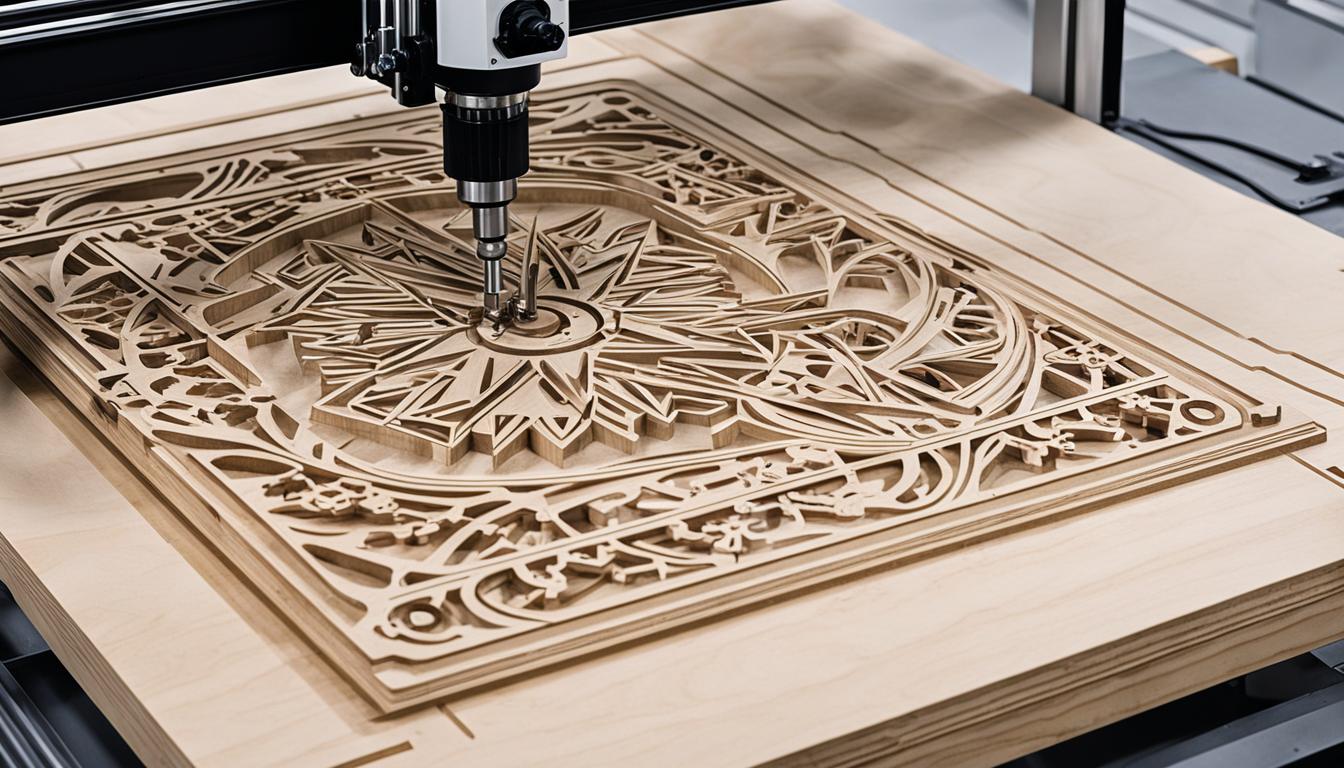
Axiom AutoRoute CNC routers are engineered for demanding applications, offering a robust platform for expert craftsmen requiring exceptional accuracy and repeatability. These machines integrate advanced components to ensure superior performance across a wide range of materials and intricate designs.
The AutoRoute series, including Basic, Pro, and Elite models, caters to varying workshop needs, each designed with a focus on rigidity and precise motion control. Their construction prioritizes stability, a critical factor for achieving fine details and tight tolerances in professional projects.
Axiom AutoRoute Series: Engineered for Performance
The Axiom AutoRoute series represents a significant advancement in desktop and light industrial CNC routing, providing a blend of power and precision. Models like the AutoRoute Pro V5 and Elite V5 feature robust gantry designs and powerful spindles, typically ranging from 1.5 HP to 3 HP, capable of handling hardwoods, plastics, and non-ferrous metals with ease.
Each machine in the series is built upon a foundation designed for minimal deflection and vibration. The larger Elite models often incorporate heavier-duty components and larger work envelopes, allowing for the production of bigger parts or multiple smaller components in a single setup. This scalability ensures that craftsmen can select a machine perfectly suited to their project scope.
Integrated into these systems are high-performance stepper or servo motors, depending on the model, which provide precise control over axis movement. These motors, coupled with advanced drive systems, contribute directly to the machine’s ability to execute complex toolpaths with high fidelity.
Engineering for Stability: Recirculating Ball Screws and Cast Iron Bases
| Feature | Axiom AutoRoute Basic | Axiom AutoRoute Pro | Axiom AutoRoute Elite |
|---|---|---|---|
| Spindle Power | 1.5 HP (1.1 kW) | 2.25 HP (1.7 kW) | 3 HP (2.2 kW) |
| Work Envelope (approx.) | 24′ x 24′ (610x610mm) | 24′ x 36′ (610x914mm) | 24′ x 48′ (610x1219mm) |
| Z-Axis Travel | 4′ (100mm) | 6′ (150mm) | 6′ (150mm) |
| Motion System | Recirculating Ball Screws | Recirculating Ball Screws | Recirculating Ball Screws |
| Table Base | Aluminum Extrusion | Cast Iron | Cast Iron |
Precision in CNC routing hinges significantly on the mechanical components responsible for motion. Axiom AutoRoute machines utilize recirculating ball screws on all axes, a critical feature for achieving high accuracy and minimizing backlash. These screws convert rotary motion into linear motion with exceptional efficiency and minimal friction.
Ball screws operate by employing hardened steel balls that roll in a precisely ground helical groove between the screw shaft and the nut. This rolling contact significantly reduces friction compared to traditional lead screws, leading to smoother, more consistent movement and extended component life. The design inherently reduces ‘play’ in the system, which is crucial for maintaining dimensional accuracy during intricate cuts.
Further enhancing the machine’s stability, many Axiom AutoRoute models incorporate cast iron table bases. Cast iron is renowned for its excellent vibration dampening properties, which are superior to fabricated steel or aluminum structures. This inherent material characteristic absorbs cutting forces and machine vibrations, preventing them from transferring to the workpiece or affecting toolpath accuracy.
The substantial mass of a cast iron base provides an incredibly rigid foundation, ensuring the gantry and spindle remain perfectly aligned throughout the machining process. This rigidity is paramount for maintaining tight tolerances and achieving superior surface finishes, especially when routing harder materials or performing deep cuts.
Intuitive Control: Standalone Handheld Systems
Axiom CNC routers are typically controlled via a standalone handheld controller, offering a user-friendly interface that simplifies machine operation. This dedicated controller eliminates the need for a tethered computer during operation, providing greater flexibility and a cleaner workshop environment.
These controllers feature intuitive menus and physical buttons for common functions such as jogging axes, setting work offsets, and initiating programs. The ability to manage G-code files directly from a USB drive plugged into the controller streamlines the workflow, allowing operators to quickly load and execute jobs.
The handheld design allows operators to move freely around the machine, observing the cutting process from various angles while maintaining full control. Emergency stop buttons are prominently featured, providing immediate shutdown capabilities for enhanced safety during operation. This direct, tactile control empowers craftsmen to make on-the-fly adjustments and monitor progress effectively.
Achieving Precision in Craft Routing
Precision craft routing demands machines capable of executing intricate details with high fidelity, and Axiom AutoRoute routers are designed to meet these requirements. The combination of rigid construction, accurate ball screws, and precise motor control enables the creation of complex geometries, fine engravings, and tight-fitting joinery.
Craftsmen routinely use these machines for detailed inlay work, custom cabinetry components, intricate sign making, and prototyping. The ability to consistently reproduce parts with minimal deviation is a hallmark of these precision routers, allowing for batch production of identical components or highly detailed one-off pieces.
Materials commonly routed with high precision include various hardwoods (maple, cherry, oak), softwoods (pine, cedar), engineered woods (MDF, plywood), and a range of plastics (acrylic, HDPE, PVC). Achieving a smooth, clean cut on these materials requires not only a precise machine but also appropriate tooling and optimized cutting parameters.
Optimizing Performance: Feeds, Speeds, and Tolerances
Optimizing feeds and speeds is crucial for maximizing tool life, achieving desired surface finishes, and maintaining dimensional accuracy. For Axiom AutoRoute machines, general guidelines suggest starting with manufacturer recommendations for specific bit types and materials, then fine-tuning based on observed results.
Key parameters to consider include spindle RPM, feed rate (how fast the tool moves through the material), and depth of cut. For instance, when routing hardwoods with a 1/4′ two-flute up-cut end mill, common spindle speeds might range from 16,000 to 20,000 RPM, with feed rates between 100 and 250 inches per minute, depending on the wood density and desired finish.
Standard tolerances achievable on high-quality CNC routers like the Axiom AutoRoute series can be remarkably tight. For woodworking and plastics, a typical achievable tolerance is often within ±0.005 to ±0.010 inches (±0.127 to ±0.254 mm). With careful setup, premium tooling, and optimized parameters, even tighter tolerances are often attainable for critical features.
Consider these general technical specifications for the Axiom AutoRoute series:
These specifications highlight the progressive capabilities across the series, with the Pro and Elite models offering enhanced power and stability for more demanding professional applications. Understanding these technical details allows craftsmen to select the ideal machine for their specific precision routing needs.