
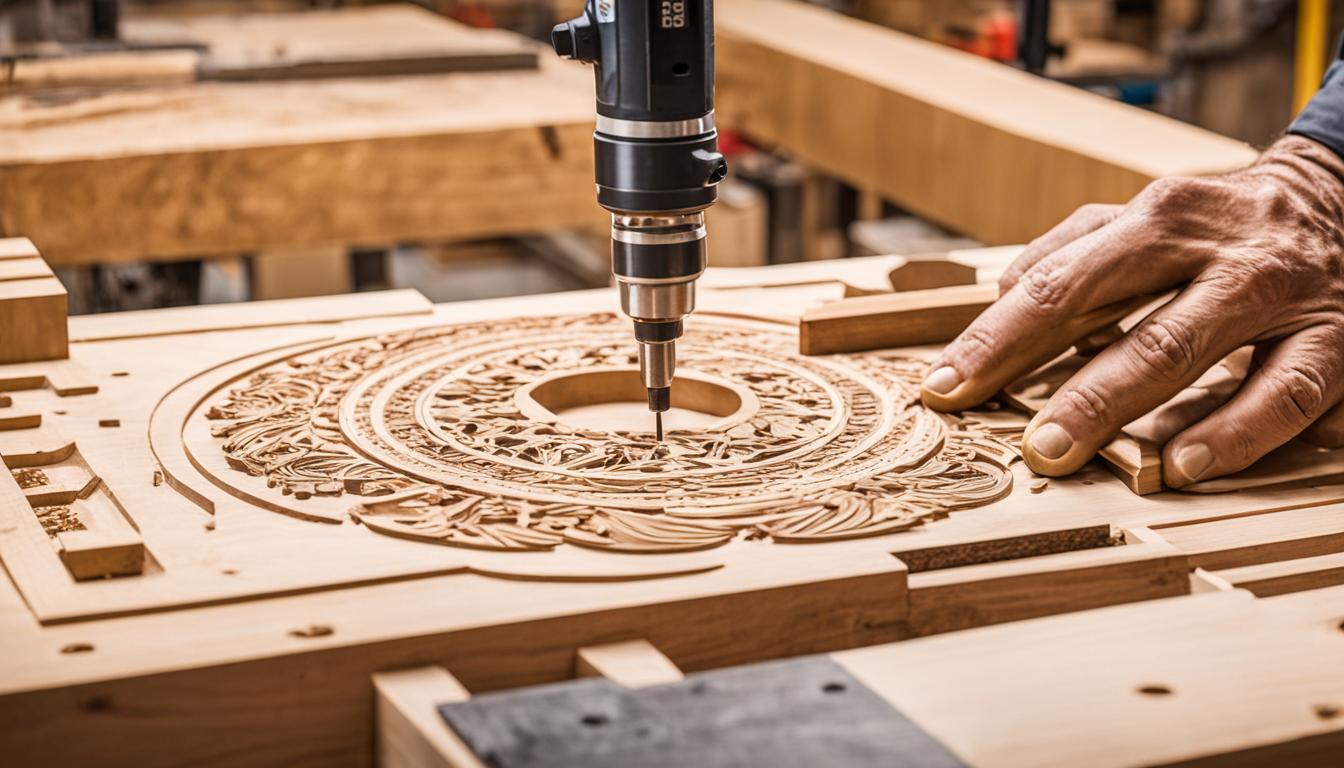
Bob’s CNC machines have long served as an accessible entry point into the world of Computer Numerical Control (CNC) for hobbyists and small workshops. These low-cost desktop routers, often characterized by their wooden gantry frames, offer a practical solution for precision woodworking and engraving tasks. While Bob’s CNC ceased operations in March 2025, their legacy of DIY-friendly kits and GRBL-compatible systems continues to influence the hobbyist CNC market.
The company’s product lines, such as the ‘Evolution,’ ‘Revolution,’ ‘E Series,’ and ‘KL7 Series,’ were designed to provide a hands-on learning experience, making CNC machining more approachable without the prohibitive cost of industrial-grade equipment. These machines were particularly well-suited for a variety of woodworking projects, including intricate carving and sign making.
Engineering Wooden Gantry Frames for Stability
Wooden gantry frames are a distinctive feature of many entry-level CNC routers, including those formerly offered by Bob’s CNC. Birch wood, for instance, was a common material choice, contributing to the affordability of these machines compared to their all-metal counterparts. The design of a gantry is critical for machine stability and accuracy, as it supports the spindle’s movement across the workpiece.
Achieving sufficient rigidity in a wooden gantry involves careful design considerations. The gantry’s center of gravity should be balanced between its linear bearings to ensure equal load distribution and prevent unwanted deflection during operation. While wood offers ease of fabrication, its inherent flexibility compared to metal necessitates robust construction techniques, such as torsion box designs, to enhance stiffness.
Modern engineering practices for DIY CNC rigidity often involve reinforcing wooden structures with aluminum or steel, particularly in high-stress areas like the Z-axis or gantry sides. Doubling the gantry span can quadruple deflection under a given load, emphasizing the importance of matching the machine’s envelope to the intended part geometry rather than simply scaling up designs. For hobbyist machines, a structural stiffness of approximately 0.5 – 1.0 kgf/µm is a reasonable target.
GRBL Software Integration and Control
| Bit Diameter | Material | Spindle Speed (RPM) | Feed Rate (mm/min) | Depth per Pass (mm) | Stepover (%) |
|---|---|---|---|---|---|
| 1/8″ (3.175mm) | Softwood | 20,000 | 1200 | 1.5 | 40 |
| 1/8″ (3.175mm) | Hardwood | 20,000 | 1000 | 1.0 | 40 |
| 1/8″ (3.175mm) | MDF | 20,000 | 1200 | 1.5 | 40 |
| 60-Degree V-Bit | Softwood | 18,000 | 1500 | 3.0 (Max) | N/A |
| 60-Degree V-Bit | Hardwood | 18,000 | 1200 | 2.5 (Max) | N/A |
GRBL is an open-source, high-performance G-code parser and CNC milling controller that operates on an Arduino Uno board, making it a cost-effective solution for motion control in CNC machines. It translates G-code commands into precise motor movements, controlling everything from cutting to engraving processes. Bob’s CNC machines, such as the KL744 and E3 models, utilized GRBL 1.1 firmware on an Arduino Uno controller.
The software’s compatibility with Arduino boards lowers the barrier to entry for hobbyists, providing superior motion control, accuracy, and speed. GRBL supports standard-compliant G-code and includes full acceleration management with look-ahead capabilities, planning velocities up to 18 motions into the future for smooth, jerk-free cornering. This feature is crucial for achieving clean cuts and intricate details in woodworking projects.
GRBL offers several advantages for low-cost desktop routers, including USB communication, eliminating the need for parallel ports. It also provides advanced parameters that allow users to grow into the full capabilities of their machines. While GRBL is highly capable, it typically controls a maximum of three axes and requires specific Arduino pins for proper functioning.
Optimizing Tooling for Hobbyist Sign Carving
Hobbyist sign carving demands specific tooling and optimized feeds and speeds to achieve clean, detailed results in various wood types. The choice of router bit significantly impacts the final cut quality, with different bit geometries suited for distinct tasks. V-groove bits, for example, are indispensable for decorative edging and sign making, producing sharp, crisp lines.
For general cutting and pocketing, spiral upcut and downcut end mills are commonly used. Upcut bits efficiently clear chips, while downcut bits provide a clean top edge, reducing tear-out. Ball nose bits are essential for 3D carving, creating smooth contoured surfaces. Engraving bits are specifically designed for fine detail work and intricate designs.
Feeds and speeds are critical parameters that must be carefully balanced to prevent bit breakage, excessive heat, and poor cut quality. For a 1/8-inch (3.175mm) two-flute solid carbide end mill in hardwood, a spindle speed of 16,000 RPM and a feed rate of 800 mm/min (31 in/min) are recommended starting points. The depth per pass should generally not exceed half the tool’s diameter, though this can vary with material density.
These settings are starting points; fine-tuning is often necessary based on the specific machine, material, and desired finish. A good rule of thumb for plunge rate is to set it at half the feed rate, and stepover typically ranges from 10% to 30% of the bit diameter, though 40% is a common default for roughing. Listening to the spindle for signs of straining or chattering can help in adjusting RPM.
Selecting Entry-Level DIY Engraving Tools
Choosing the right entry-level DIY engraving tools involves understanding the capabilities of low-cost desktop routers and the types of bits best suited for woodworking. Many hobbyist machines, like the former Bob’s CNC E3, came equipped with a DeWalt DW660 or Makita RT0701C trim router as the spindle. These routers typically offer spindle speeds ranging from 10,000 to 30,000 RPM.
For beginners, a starter set of solid carbide bits is highly recommended. Essential bits include a surfacing bit to level the spoilboard, downcut end mills (e.g., 1/4-inch and 1/8-inch) for clean cuts, and V-bits (e.g., 60-degree and 90-degree) for engraving and decorative work. Collet adapters are also crucial for using smaller diameter bits with a 1/4-inch router.
Standard tolerances for hobbyist CNC woodworking typically fall around ±0.1 mm (±0.004 inches) for most linear dimensions. For CNC-routed parts, some services achieve tighter tolerances of ±0.2 mm. Achieving precision requires sharp tools, slow feeds, and careful machine setup. Understanding these tolerances helps manage expectations for the accuracy of DIY projects.