
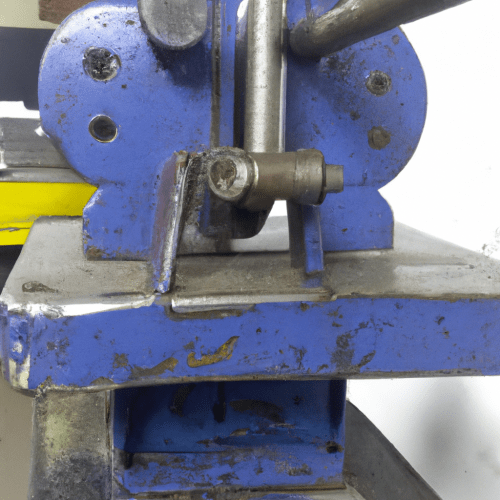
Punching machines are indispensable tools in modern manufacturing, engineered to create precise holes, slots, and complex shapes in sheet metal. These robust systems are fundamental to various industries, enabling efficient and repeatable fabrication processes. Their evolution reflects a continuous drive for higher accuracy, speed, and automation in metalworking operations.
The core function of a punching machine involves a punch and die set that rapidly perforates material, offering significant advantages over other cutting methods for specific applications. Understanding the diverse types and their technical capabilities is crucial for optimizing production workflows and achieving desired part quality.
Hydraulic Sheet Metal Presses
Hydraulic sheet metal presses utilize hydraulic pressure to generate the substantial force required for punching and forming operations. A hydraulic-powered ram at the top provides a highly controlled punching process, allowing for meticulousness in complex jobs. This system ensures consistent force application throughout the entire stroke, a critical factor for maintaining material integrity and dimensional accuracy.
These presses offer precise control over ram speed, pressure, and position, making them exceptionally versatile for various metal forming applications. They are well-suited for bending, drawing, embossing, coining, and straightening, particularly with thicker materials that demand high force. Modern hydraulic presses often integrate advanced features like Siemens CPUs for quota setting, limit switches for stroke regulation, and automatic movement controls.
Safety is paramount in hydraulic press operation, with contemporary machines incorporating numerous protective measures. These include robust protective guards and covers, easily accessible emergency stop buttons, and safety interlock systems. Many systems also feature two-hand operation controls, light curtains, and safety sensors that automatically halt machine operation if a beam is interrupted, enhancing operator protection.
Punch and Die Tooling Fundamentals
| Material/Coating Type | Key Properties | Typical Applications |
|---|---|---|
| SKD11 Tool Steel | High wear resistance, good toughness | Standard punches and dies, medium to high volume |
| Powdered High-Speed Tool Steel | Excellent wear resistance, high hot hardness | High volume production, small sizes, demanding applications |
| Cemented Carbide | Extreme hardness, superior wear resistance | Very high volume, abrasive materials |
| TiN (Titanium Nitride) | General purpose, good lubricity, wear resistance | General punching, cost-effective enhancement |
| TiCN (Titanium Carbonitride) | Higher toughness, reduced friction, improved wear | Punching stainless steels, increased tool life |
| TiAlN (Titanium Aluminum Nitride) | High thermal stability, increased hot hardness | High-temperature applications, forming dies |
Punch and die tooling forms the critical interface between the machine’s power and the workpiece, directly determining the quality and geometry of the punched features. The punch, driven by the machine’s ram, forces material into a precisely matched die, shearing out a slug and leaving the desired hole or shape. The size and shape of these tools dictate the final outcome.
Tooling materials are selected based on the application’s demands for hardness, toughness, and wear resistance. Common materials for punches include SKS3, SKD11, SKH51, powdered high-speed tool steel, and cemented carbide, with SKD11 often serving as a standard. Die plates frequently use SK materials, SKS3, or SKD11.
Advanced coatings significantly extend tool life and enhance performance by reducing friction and wear. Physical Vapor Deposition (PVD) coatings like Titanium Nitride (TiN) are general-purpose options, while Titanium Carbonitride (TiCN) offers higher toughness and reduced friction. Chromium Nitride (CrN) is effective for materials like copper and titanium, and Titanium Aluminum Nitride (TiAlN) excels in high-temperature applications.
Newer nanocomposite coatings such as nACRo and nACVIc are gaining traction, providing improved performance over traditional options. These coatings decrease sliding friction, increase abrasive wear resistance, and reduce galling, leading to cleaner cuts and longer operational periods between sharpening.
High-Speed Hole Punching Techniques
High-speed hole punching is a critical capability for achieving rapid production rates in sheet metal fabrication. Modern punch presses can operate at exceptionally fast ram speeds, with some machines capable of punching as quickly as 1,350 strokes per minute. This allows for the creation of numerous holes in mere seconds, significantly boosting throughput.
The mechanics of rapid punching are often enabled by advanced servo-electric systems, which offer superior control and responsiveness compared to traditional mechanical or hydraulic drives. These systems, combined with sophisticated control software, allow for precise synchronization of punch movement and material positioning.
For dense hole arrays or complex patterns, techniques like ‘nibbling’ and the use of ‘cluster tools’ are employed. Nibbling involves a series of rapid, overlapping punches to create larger cutouts or contours. Cluster tools, which incorporate multiple punches in a single tool, can create scores of holes with just one stroke, maximizing efficiency for perforated screens and similar components.
Achieving optimal high-speed punching requires balancing speed with precision, considering factors such as material type and thickness, tool condition, and machine power. Softer materials like aluminum generally permit faster punching speeds than harder materials like stainless steel. Proper tool maintenance and alignment are also crucial to prevent wear and maintain effective punching speed.
Automated Turret Punch Systems
Automated turret punch systems represent a pinnacle of efficiency in sheet metal fabrication, integrating CNC technology with a rotating turret that houses multiple punch and die tools. This unique design allows for rapid, automated tool selection and changeover, enabling continuous processing of complex designs without manual intervention.
These machines are controlled by computer numerical control (CNC) systems, which execute programmed instructions to precisely position the sheet metal and select the appropriate tooling. The deep integration of CNC technology provides unprecedented levels of automation and flexible production capabilities, making them ideal for rapid response production models involving multiple varieties and small to medium batch sizes.
Automation extends beyond tool changes to material handling, with systems for automatic loading and unloading of sheet metal, part sorting, and even robotic integration for full production lines. This capability facilitates ‘lights-out’ manufacturing, where machines can operate autonomously for extended periods, significantly increasing productivity and reducing labor costs.
Turret punch presses offer remarkable versatility, capable of not only punching holes but also performing forming operations such as creating louvers, countersinks, and embosses within the same machine cycle. This ability to consolidate multiple processes into one setup saves considerable secondary setup time and manual labor.
- High-speed production, often exceeding 400 strokes per minute.
- Rotating turret with dozens of tool stations for rapid tool changes.
- CNC control for precision and repeatability in hole placement and complex patterns.
- Integrated material handling, nesting software, and robotic systems for automation.
- Ability to perform forming operations like louvers, flanges, and embosses.
Precision in Sheet Metal Fabrication
Achieving precision in sheet metal fabrication through punching machines is a critical aspect of producing high-quality components. While punching is inherently a repeatable process, maintaining tight tolerances requires careful consideration of material properties, tooling, and machine capabilities. Modern CNC turret presses are highly accurate, often holding hole-to-hole tolerances of ±0.005 inches (0.127 mm).
Typical tolerances for punched hole diameters range from ±0.1 mm to ±0.2 mm, which translates to approximately ±0.004 inches to ±0.008 inches. Hole position is also a key consideration, with positional tolerances generally falling between ±0.13 mm and ±0.25 mm (approximately ±0.005 inches to ±0.010 inches). However, cumulative error can occur over large panels due to material stretching during continuous punching and dragging.
Several factors influence the achievable precision, including the accuracy of the die, the thickness of the material, and inherent material variations. For instance, punching close to an edge (less than double the material thickness) can cause the edge to deform, affecting hole location accuracy. Engineers should allow for a tolerance of at least ±0.010 inches for hole-to-edge dimensions whenever possible.
Specifying tolerances that are too tight without functional necessity can significantly increase production costs due to additional labor for sorting and inspection. Effective communication of critical datums and understanding the capabilities of the fabrication process are essential for balancing precision with manufacturing efficiency.
- Hole Diameter: ±0.1 mm to ±0.2 mm (±0.004″ to ±0.008″)
- Hole Position (single punch): ±0.13 mm to ±0.25 mm (±0.005″ to ±0.010″)
- Hole-to-Hole (CNC turret punch): ±0.005″ (0.127 mm)
- Hole-to-Edge: Typically ±0.010″, tighter only when absolutely necessary.
- Linear Dimensions (flat features): ±0.005″ to ±0.010″