
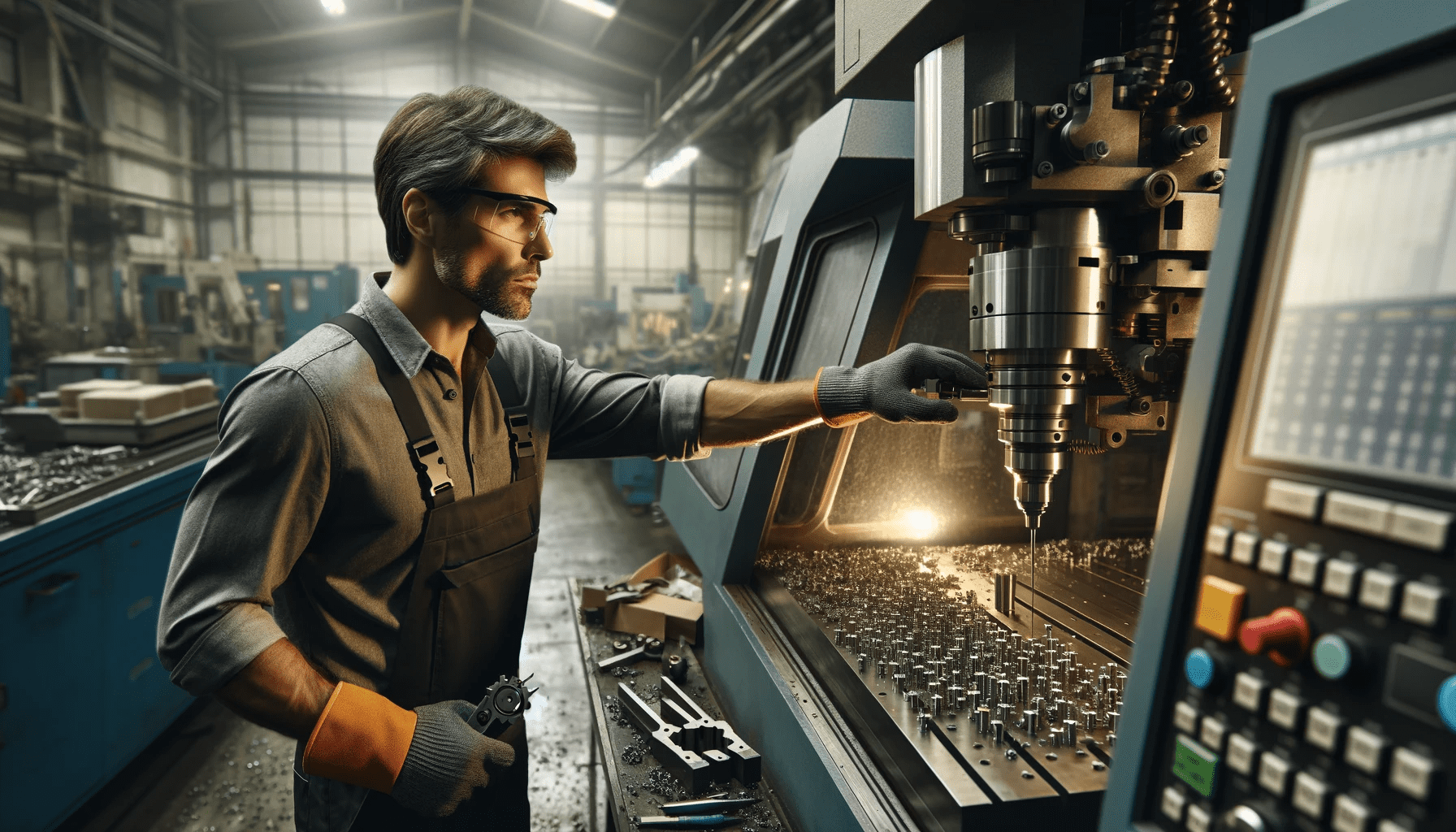
Virtual Reality Systems (VRS) are fundamentally reshaping Computer Numerical Control (CNC) education, bridging the critical gap between theoretical knowledge and practical application. This immersive technology provides a safe, cost-effective environment for trainees to develop essential machining skills without the inherent risks of physical equipment. It allows for comprehensive, hands-on experience that accelerates proficiency and reduces traditional learning curves.
Modern CNC training programs increasingly integrate VR to simulate complex machine operations, programming, and troubleshooting. This approach minimizes material waste and equipment wear, offering a highly repeatable practice ground for aspiring machinists. The adoption of VRS is a direct response to the manufacturing industry’s demand for skilled operators capable of handling advanced CNC technologies.
Virtual Reality Machine Setup and Operation
VR environments meticulously replicate actual CNC machines, including their control panels, tooling, and workholding mechanisms. Trainees can practice the entire machine setup workflow, from mounting tools and fixtures to setting work offsets and loading raw material. This virtual replication ensures a realistic experience, preparing operators for real-world scenarios.
Operators learn to navigate complex machine interfaces, adjust parameters, and perform tool changes with precision. The interactive nature of VR allows for direct manipulation of virtual components, fostering muscle memory and procedural understanding. This hands-on practice in a simulated space is crucial for developing the confidence needed before operating expensive physical machinery.
Detailed modules guide students through increasingly complex operational sequences, such as spindle startup, coolant activation, and part program execution. The ability to repeat these procedures multiple times within the virtual realm solidifies learning. This structured, repeatable practice is a significant advantage over traditional, resource-intensive training methods.
Digital Twin Simulation for Precision Machining
| Material Type | Typical Standard Tolerance (mm) | High Precision Tolerance (mm) |
|---|---|---|
| Aluminum Alloys | ±0.05 | ±0.025 |
| Steel Alloys | ±0.08 | ±0.025 |
| Stainless Steel | ±0.10 | ±0.025 |
| Brass/Copper | ±0.05 | ±0.025 |
| Engineering Plastics | ±0.15 to ±0.25 | ±0.05 |
| Titanium Alloys | ±0.13 | ±0.05 |
A ‘digital twin’ in CNC education is a precise virtual replica of an entire CNC system, encompassing its control logic, kinematics, and behavioral characteristics. This digital representation enables comprehensive simulation, analysis, and optimization of machine performance in a virtual environment. It ensures precision from the very first part, reducing downtime and increasing overall efficiency.
Digital twins accelerate the development and validation of new products and processes by allowing manufacturers to simulate and optimize designs virtually. This capability translates into faster time-to-market and significant cost savings by preventing errors before they occur. Reduced scrap rates, minimized tool wear, and efficient material use are direct benefits.
Educational institutions leverage digital twins to provide students with access to a wide array of machine types and kinematics, even without physical equipment. Students can safely test and optimize NC programs, explore specific machine behaviors, and prepare for new machine investments. This virtual access is particularly valuable for high-end technologies and complex workpieces.
Achieving precise part dimensions is paramount in CNC machining, necessitating adherence to strict tolerance standards. Digital twin simulations can validate toolpaths and setups against these standards, ensuring the final product meets stringent quality requirements. Standard CNC machining tolerances typically range from ±0.05 mm to ±0.13 mm for most milling and turning operations.
Crash-Free Training and Enhanced Safety
A primary advantage of virtual reality in CNC education is the elimination of costly machine crashes during the learning process. Trainees can freely experiment with cutting parameters, toolpaths, and operational sequences in a ‘safe sandbox’ without risking damage to expensive equipment or wasting valuable materials. This freedom to fail is a powerful learning accelerator.
Aerospace manufacturers, for instance, have reported an 80% reduction in spindle crashes after implementing VR training programs for new machinists. These programs allow operators to practice critical procedures like emergency stops, tool-change protocols, and mid-operation recovery in a consequence-free environment. Such scenarios are often too risky or expensive to replicate on a live machine.
VR training modules guide operators through troubleshooting errors and recovering from mistakes, building confidence and competence. The ability to repeatedly practice these complex situations ensures that when a trainee transitions to a physical machine, they possess a robust understanding of safety protocols and operational nuances. This significantly reduces the potential for human error.
VR G-Code Verification and Optimization
Virtual reality systems offer true G-code machine simulation, directly processing the G-code intended for the CNC machine rather than relying on cutter location (CL) data. This ensures unparalleled precision and accuracy in verifying NC programs. The simulation environment provides full collision detection and avoidance technology, identifying potential issues before they reach the shop floor.
G-code verification in VR drastically reduces the need for physical ‘dry runs’ on actual machines, saving significant setup time and preventing costly errors. The software can compare the simulated cut model against the original CAD design, detecting gouges, excess material, or dimensional discrepancies. This ensures the final component precisely reflects the design intent.
Advanced verification methods are emerging, including Visual Language Model (VLM)-based approaches that evaluate G-code alongside Human-Machine Interface (HMI) displays for errors and safety status. This comprehensive debugging capability is particularly useful for manually generated G-code, a common practice in CNC training.
Beyond error detection, VR G-code verification software can optimize machining processes by adjusting feed rates for each cut. This leads to safer, faster, and more efficient operations, reducing cycle times, tool breakage, and extending tool life. The ability to simulate complex multi-axis and mill-turn operations is also fully supported.
Interactive Operator Learning and Skill Development
Interactive VR training immerses operators in a dynamic 3D environment where they can directly engage with virtual machines. Users can open machine doors, manipulate virtual jog handles to move axes, and input G-code commands to control coolant systems or change tools. This level of interaction goes far beyond passive observation, fostering deep learning.
The system provides real-time feedback on operator actions, allowing for immediate correction and reinforcement of correct procedures. This ‘learn by doing’ approach, coupled with structured, repeatable practice, accelerates skill acquisition significantly. Trainees develop a robust understanding of machine responses to their inputs.
Modern VR training programs are designed with modularity, allowing learners to progress through increasingly complex scenarios at their own pace. This personalized learning pathway caters to individual needs, ensuring a thorough grasp of fundamental principles before advancing to more intricate operations. It also supports upskilling existing workers on new equipment and processes.
Effective feeds and speeds are critical for optimal CNC machining, influencing surface finish, tool life, and overall efficiency. VR training can simulate the impact of varying these parameters, allowing operators to observe chip formation and cutting sounds virtually. This practical understanding is vital for making informed adjustments on a live machine.
-
Aluminum Alloys: 8,000–12,000 RPM, 40–80 IPM feed rate.
-
Dense Hardwood (e.g., Walnut): 6,000–8,000 RPM, 60–100 IPM feed rate.
-
Carbon Fiber: 12,000–18,000 RPM, 30–60 IPM feed rate (to prevent fraying).
-
Brass: 10,000–14,000 RPM, 60–90 IPM feed rate (for polished edges).
-
Depth of Cut (DOC): Typically equal to or less than the bit diameter; varies with machine rigidity and material.