
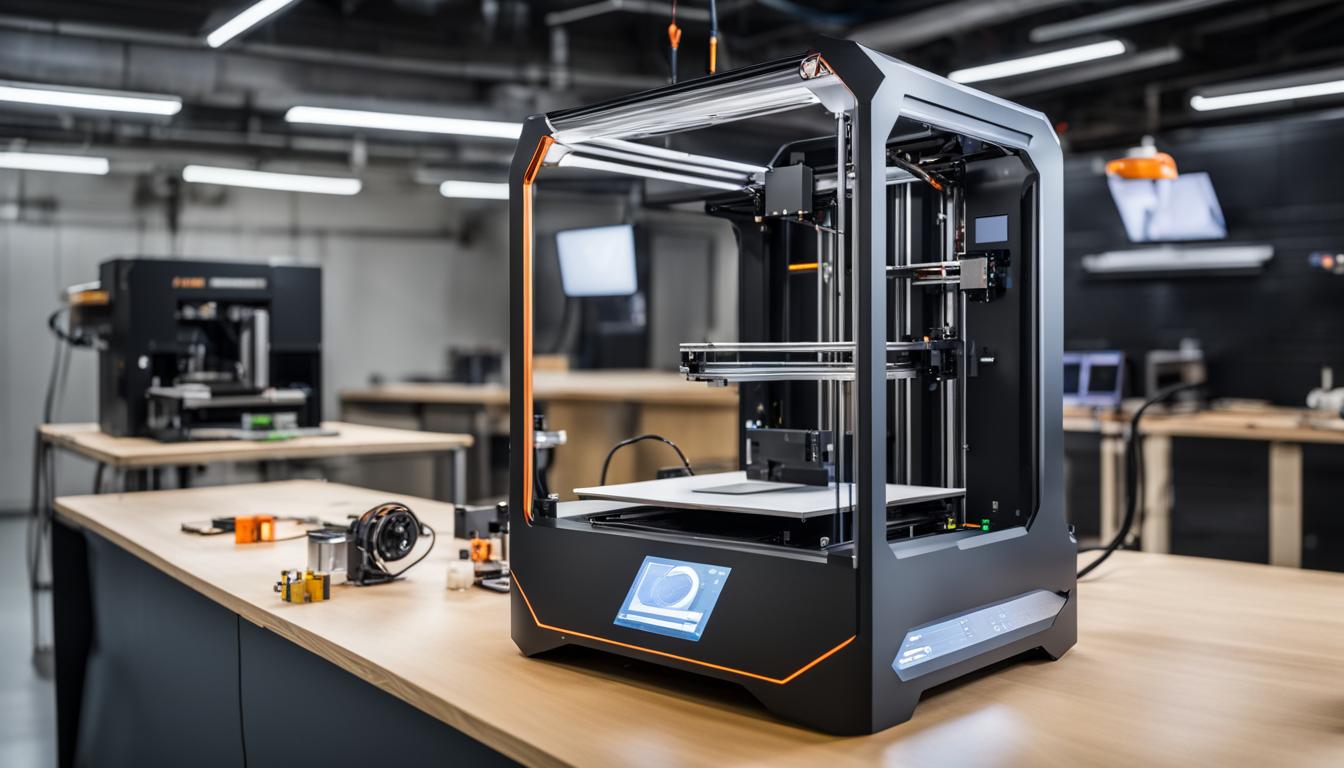
XYZprinting offers a diverse portfolio of 3D printing solutions, catering to a broad spectrum of users from hobbyists and educators to professional engineers. The company’s commitment to accessibility and innovation is evident across its Fused Filament Fabrication (FFF) and Stereolithography (SLA) product lines. These printers are designed to integrate seamlessly into various workflows, providing reliable additive manufacturing capabilities.
The brand emphasizes user-friendly interfaces and robust construction, making 3D printing more approachable for new adopters while still delivering performance suitable for more demanding applications. Their ecosystem includes not only the hardware but also proprietary software and a range of specialized filaments and resins.
Budget Desktop FDM Printers
XYZprinting’s budget-friendly FDM (Fused Deposition Modeling) printers, such as the da Vinci Nano and da Vinci Mini, provide an entry point into additive manufacturing for individuals and small businesses. These compact machines utilize FFF technology, extruding thermoplastic filaments layer by layer to build three-dimensional objects.
The da Vinci Nano, for instance, features a build volume of 120 x 120 x 120 mm and offers layer resolutions between 100 and 400 microns. It supports PLA, antibacterial PLA, PETG, and tough PLA filaments, making it versatile for various basic prototyping and educational projects.
Another popular option, the da Vinci Mini, provides a slightly larger build volume of 150 x 150 x 150 mm with similar layer resolution capabilities. Both models are equipped with a 0.4 mm nozzle and often include features like auto-calibration and Wi-Fi connectivity for enhanced user convenience.
Educational 3D Printing Kits
| Feature | XYZprinting da Vinci Nano (FDM) | XYZprinting da Vinci Mini (FDM) | XYZprinting Nobel 1.0A (SLA) |
|---|---|---|---|
| Printing Technology | FFF (Fused Filament Fabrication) | FFF (Fused Filament Fabrication) | SL (Stereolithography) |
| Build Volume (W x D x H) | 120 x 120 x 120 mm (4.7 x 4.7 x 4.7″) | 150 x 150 x 150 mm (5.9 x 5.9 x 5.9″) | 128 x 128 x 200 mm (5 x 5 x 7.9″) |
| Layer Resolution | 100 – 400 microns | 100 – 400 microns | 25 / 50 / 100 / 200 microns |
| Nozzle Diameter / Laser Wavelength | 0.4 mm | 0.4 mm | UV Laser λ 405 nm |
| Compatible Materials | PLA, Antibacterial PLA, PETG, Tough PLA | PLA, PETG, Tough PLA | Photopolymer Resins (Standard, Flexible, Tough, Rigid) |
| Connectivity | USB 2.0, Wi-Fi | USB 2.0, Wi-Fi 4 (802.11n) | USB Wire, USB Flash Drive |
| Key Features | Auto-feeding filament, enclosed print area, removable print bed | Auto-calibration, Wi-Fi connectivity, aluminum print bed | Auto-refill system, high precision, no assembly required |
XYZprinting actively supports STEAM (Science, Technology, Engineering, Arts, and Mathematics) education through its specialized 3D printing kits and curriculum. These solutions are tailored for K-12 classrooms, aiming to integrate 3D design principles and problem-solving skills into the learning environment.
The da Vinci miniMaker is specifically designed for K-5 classrooms, offering a build volume of 5.9 x 5.9 x 5.9 inches and a resolution range of 100 to 400 microns. It comes with access to a gallery of 4,500+ 3D models and the free XYZmaker design tool, facilitating easy entry into 3D design for young students.
For middle and high school levels, printers like the da Vinci Jr. 1.0 are often bundled with more advanced curricula. These kits emphasize collaborative learning and provide resources for projects ranging from atomic models to gear systems and microplastic sifters.
Desktop SLA Resin Printers
Stereolithography (SLA) technology from XYZprinting, exemplified by models like the Nobel 1.0A, delivers higher resolution and finer detail compared to FDM for specific applications. SLA printers cure liquid photopolymer resin with a UV laser, producing isotropic parts with smooth surface finishes.
The Nobel 1.0A boasts a layer resolution down to 25 microns and an X/Y axis resolution of 130 microns, making it suitable for intricate designs in fields like jewelry, dental modeling, and engineering prototypes. Its build volume measures 128 x 128 x 200 mm.
XYZprinting offers a range of specialized resins for its Nobel series, including standard, flexible, tough, and rigid formulations. These engineering resins provide varying mechanical properties such as impact resistance, flexibility, and deformation resistance, expanding the functional capabilities of printed parts.
Consumer 3D Printers
XYZprinting’s consumer-oriented 3D printers prioritize ease of use and safety, making them ideal for home users and hobbyists. The da Vinci series, including models like the da Vinci Mini and da Vinci Jr., are prominent in this category. They often feature enclosed print chambers to protect users from hot components and reduce noise.
Many consumer models incorporate proprietary filament cartridges with NFC chips, which automatically detect filament type and remaining quantity, simplifying material management. While this ensures optimal printing parameters, it also means users are typically tied to XYZprinting’s branded filaments.
The da Vinci Color series represents a significant advancement, combining FDM printing with CMYK inkjet technology to produce full-color 3D prints. This system applies ink droplets to color-absorbing PLA filament, enabling thousands of shades for visually rich models.
Accessible 3D Printing Tools
Ensuring accessibility, XYZprinting provides a suite of tools and software designed to streamline the 3D printing workflow for all skill levels. The XYZmaker Suite software is a common interface across many of their FDM printers, supporting various file formats like ‘.stl’, ‘.3mf’, and ‘.obj’.
Calibration is a critical aspect of 3D printing, and XYZprinting printers often feature auto-calibration or simplified manual procedures. For FDM machines, proper bed leveling and Z-offset adjustment are essential for print adhesion and dimensional accuracy.
Maintenance tools and clear instructions are provided to help users manage common issues such as extruder cleaning and filament loading. The enclosed designs of many printers also contribute to safety by preventing accidental contact with moving parts or heated components.