
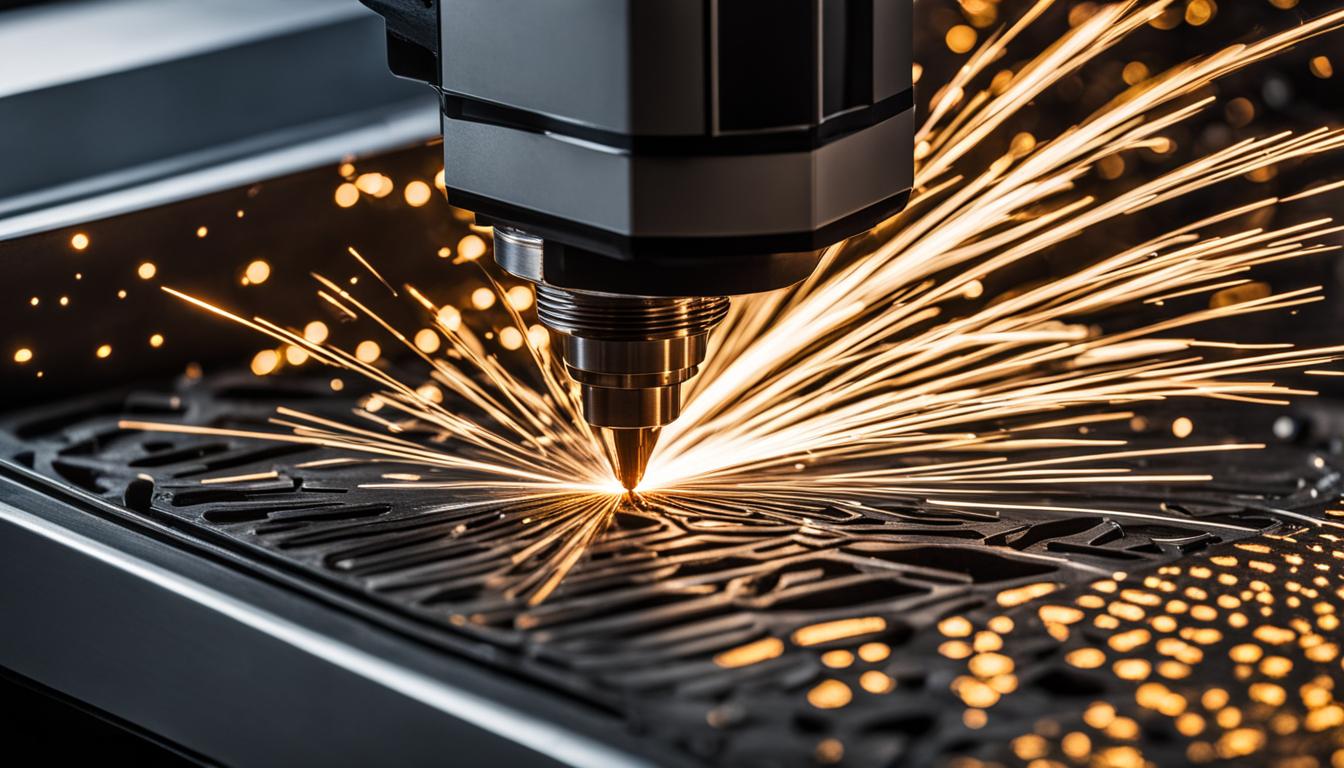
Investing in a CNC laser engraver requires a thorough understanding of the associated costs, which vary significantly based on laser technology, power, and intended application. From hobbyist diode units to industrial fiber systems, each category presents a distinct budget profile. Evaluating these factors ensures a strategic acquisition for any workshop or business.
Diode Desktop Laser Engraver Budgets
Diode laser engravers represent the most accessible entry point into laser technology, primarily targeting hobbyists, DIY enthusiasts, and small crafting businesses. These machines typically feature low-power diode lasers, ranging from 1W to 20W optical output. Prices for basic open-frame diode machines can start as low as $200, extending up to $850 for more capable models.
Many beginners and small creators find a practical ‘sweet spot’ in the $500 to $1,500 range for diode systems. This budget often includes enclosed 10W to 20W diode machines, offering improved safety and performance for engraving wood, leather, paper, and thin acrylic. For instance, a 20W diode laser like the xTool D1 Pro can be found around $699, while an enclosed ACMER P1 S Pro 20W is approximately $599.
Diode lasers are generally slower than CO2 counterparts, with typical engraving speeds ranging from 1000 to 6000 mm/min. While suitable for engraving and cutting thin materials, their power limitations mean multiple passes are often required for thicker stock, such as 3-5mm plywood or acrylic. Higher speeds, around 500 to 800+ mm/s, are considered ‘high speed’ for these gantry-based systems, particularly for delicate materials.
CO2 Glass Tube Laser System Pricing
| Laser Type | Typical Power Range (Optical) | Approximate Cost Range (Machine Only) | Primary Materials | Typical Engraving Speed (mm/s) |
|---|---|---|---|---|
| Diode Laser | 1W – 20W | $200 – $1,500 | Wood, Leather, Paper, Thin Acrylic | 100 – 250 (gantry) |
| CO2 Glass Tube Laser | 40W – 150W | $500 – $5,000+ | Wood, Acrylic, Leather, Glass, Rubber | 300 – 600 (gantry) |
| Industrial Fiber Laser | 20W – 100W (marking) / 1kW – 30kW+ (cutting) | $3,000 – $600,000+ | Metals, Some Plastics | 500 – 10,000+ (galvo) |
CO2 laser engravers offer greater versatility and power compared to diode lasers, making them a popular choice for small businesses and professional crafters. These systems utilize gas-filled glass tubes to generate a laser beam, typically ranging from 40W to 150W. Entry-level 40W CO2 desktop lasers can cost between $500 and $2,500, depending on workspace size and included features.
Mid-range CO2 machines, often with 50W to 60W power, are priced from $850 to $3,000, providing larger engraving areas and more stable performance. For example, a 55W CO2 laser like the Bambu Lab R1 retails at $2,499, offering a generous 600 x 300 mm work area. More powerful 80W CO2 systems, capable of cutting 5-10mm acrylic repeatedly, can push prices higher, often exceeding $2,500.
CO2 lasers are significantly faster than diode lasers, with average engraving speeds around 300-600 mm/s for typical models. High-end CO2 machines with RF tubes can achieve speeds of 600-700 mm/s or more. These machines excel at cutting and engraving a wide array of non-metal materials, including wood, acrylic, leather, fabric, paper, rubber, and glass.
Industrial Fiber Laser Engraver Investments
Fiber laser engravers represent the high-end of the market, specifically designed for permanent marking and engraving on metals. These systems are crucial for industrial applications, jewelry engraving, tool marking, and serialized part identification. Prices for fiber laser marking machines vary widely based on power and configuration.
Entry-level fiber laser marking machines, typically 20W to 30W, start around $3,000 to $4,500. These are suitable for surface marking and light engraving on metals and some plastics. For instance, a 20W fiber and diode dual laser can be found for $2,999, while a 60W MOPA fiber laser engraver might cost $4,999.
Industrial fiber laser cutting machines, with higher power outputs (e.g., 3-6 kW), range from $20,000 to $80,000. High-end automated fiber laser cells can exceed $300,000 to $600,000+, with laser power being the single biggest price driver, adding roughly $8,000-$12,000 per additional kilowatt. These machines offer superior precision, faster speeds, and cleaner edges for intricate metal designs.
Essential Air Assist and Ventilation Systems
Beyond the laser unit itself, proper air assist and ventilation are critical for safety, material processing quality, and machine longevity. Air assist systems direct a focused stream of air at the laser’s focal point, preventing flare-ups, reducing charring, and clearing debris. Basic air pumps for diode and CO2 lasers can cost around $59 to $99.99.
Ventilation systems, particularly fume extractors, are indispensable for removing harmful smoke, odors, and fine dust generated during laser operations. Desktop fume extractors for smaller machines can range from $350 to $700. Industrial-grade fume extraction systems, offering multi-stage filtration and higher airflow, can cost significantly more, from $1,995 to over $7,400 for heavy-duty applications.
These auxiliary systems are not optional; they are fundamental to safe and effective laser engraving. Neglecting proper ventilation can lead to health hazards, poor engraving quality, and accelerated wear on optical components. Many professional machines, such as the Haas HL-50E fiber laser marking machine, include an integrated fume extractor.
Software Licensing and Operational Costs
Software is the command center for any CNC laser engraver, translating designs into machine movements. LightBurn is a widely adopted third-party software known for its versatility and compatibility with various diode and CO2 lasers. A lifetime license for LightBurn typically costs around $60. Other machines may come with proprietary software or be compatible with alternatives like RDWorks or CorelDraw.
Beyond the initial purchase and software, operational costs contribute to the total investment. These include consumables like replacement lenses, mirrors (for CO2 lasers), and filters for fume extractors. Electricity consumption, especially for higher-power industrial systems, and the cost of inert gases for certain cutting applications, also factor into the ongoing budget. Annual operating costs for industrial fiber lasers can add 20-40% on top of the purchase price.
Maintenance and calibration are also crucial for maintaining precision and extending machine lifespan. Standard laser cutting tolerances typically range from +/- 0.005″ (0.127 mm) to +/- 0.010″ (0.254 mm) for general applications on materials like wood and acrylic. Achieving tighter tolerances, down to +/- 0.0001″ (0.0025 mm) on some materials, requires well-maintained equipment and optimal settings.