
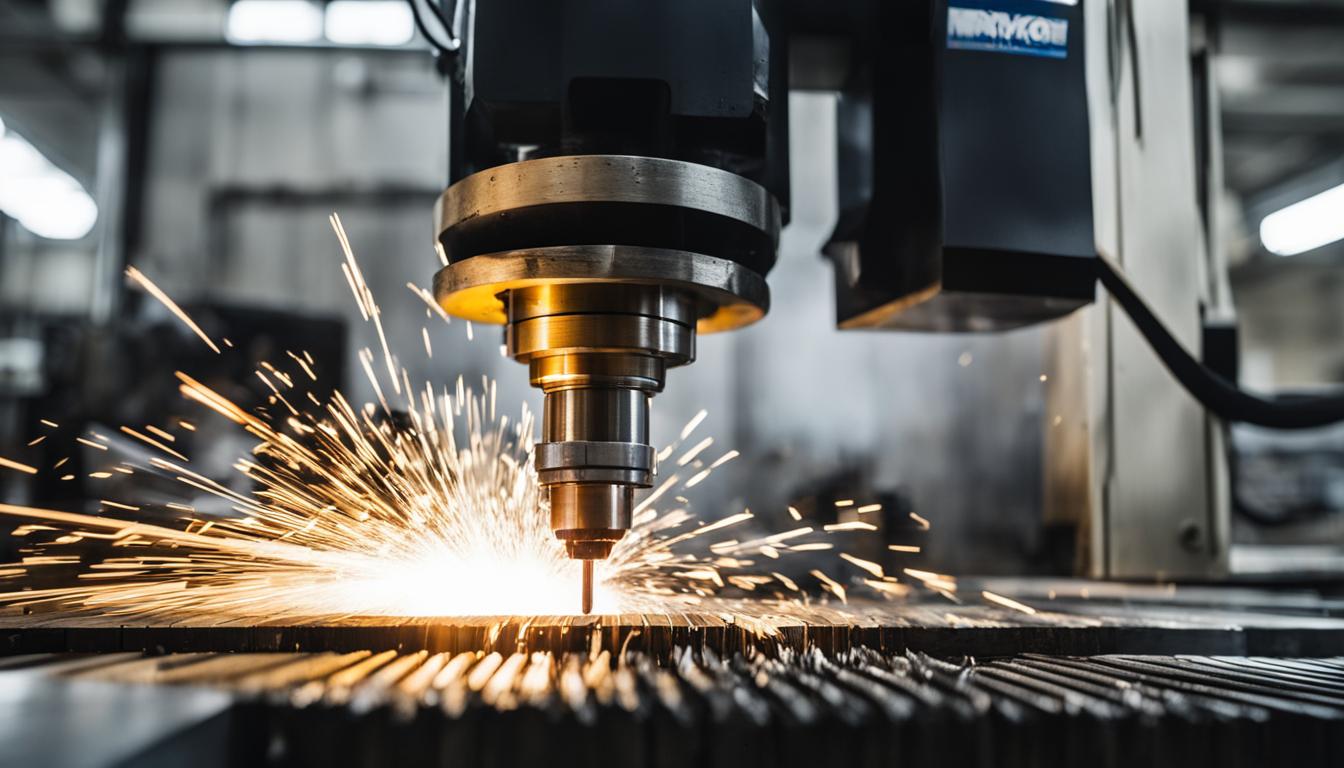
Computer Numerical Control (CNC) drilling machines represent a cornerstone of modern manufacturing, offering unparalleled precision, speed, and repeatability in creating holes across diverse materials. These automated systems execute programmed instructions to drill accurate holes, significantly surpassing the capabilities of manual methods.
Unlike traditional drilling, CNC machines precisely control spindle speed, feed rate, depth, and position through G-code, ensuring consistent hole quality and location. This level of control is critical for downstream operations like tapping, assembly, or alignment, where even minor discrepancies can lead to significant issues.
Automated High-Speed Hole Drilling
Automated high-speed hole drilling on CNC machines dramatically enhances production efficiency by minimizing human intervention and reducing errors. Modern CNC drilling centers can achieve rapid tool changes and high processing speeds, contributing to shorter production cycles.
These machines are designed for continuous operation, often incorporating advanced features like automatic material sensing and feed compensation during the cut. Such capabilities ensure consistent quality and throughput, especially in high-volume manufacturing environments.
Multiple Spindle Drill Heads
| Parameter | Aluminum (6061) | Mild Steel | Brass |
|---|---|---|---|
| Cutting Speed (m/min) | 200-400 | 80-150 | ~300-400 (SFM) |
| Feed Rate (mm/min) | 300-500 | 200-400 | ~1500-2300 (IPM converted) |
| Recommended RPM (for 1-5mm drill) | 600-1200 | 200-400 | 10,000-14,000 |
| Standard Hole Tolerance | ±0.1 mm (±0.005″) | ±0.1 mm (±0.005″) | ±0.1 mm (±0.005″) |
Integrating multiple spindle drill heads into CNC drilling operations provides a substantial boost in productivity and consistency. This technology allows for the simultaneous drilling of several holes or even multiple workpieces in a single machine cycle.
The primary advantage of multi-spindle heads lies in their ability to reduce cycle times and increase output significantly. Once spindle positions are set, the same hole pattern is repeated consistently across components, minimizing operator input and ensuring uniform accuracy.
Printed Circuit Board (PCB) Drilling
Precision is paramount in printed circuit board (PCB) manufacturing, where CNC drilling creates the intricate network of holes essential for component leads and vias. Mechanical drilling typically handles holes from 0.15mm to 6.3mm, with finished-hole tolerances around ±0.08mm.
For high-density interconnect (HDI) microvias, laser drilling techniques can achieve even smaller holes, down to approximately 0.1mm. PCB hole size tolerances are critical, often ranging from ±0.075 mm to ±0.1 mm for plated through-holes, ensuring proper electrical connections and component fitment.
Automated Peck Drilling
Automated peck drilling is a crucial technique for creating deep holes, particularly in challenging materials, by drilling in controlled incremental steps. This ‘canned cycle’ (G-code G73 or G83) involves the drill advancing into the material, retracting slightly to break chips, and then re-entering.
The G73 cycle, known as high-speed peck drilling, uses a small retract distance (typically 0.3–0.5 mm) to minimize non-cutting time, making it suitable for shallow to medium depth holes in free-cutting materials. Conversely, the G83 cycle performs a full retract to clear chips, which is essential for deeper holes or materials that produce long, stringy chips.
Optimized peck depths are vital for tool life and hole quality. For instance, in soft materials like aluminum, deeper pecks (0.5–1× drill diameter) can be used with G73, while harder materials like stainless steel require shallower pecks (0.1–0.3× drill diameter) with G83 to prevent work hardening and chip packing.
Precision Hole Pattern Cutting
Achieving precise hole patterns is a core capability of CNC drilling, enabling the creation of complex geometries with high accuracy and repeatability. The machine’s control system translates CAD model data directly into G-code, eliminating manual layout errors.
Modern CNC drilling machines can drill holes at various angles, depths, and diameters with ease, facilitating the production of intricate parts. This capability is indispensable in industries such as aerospace, automotive, and medical instruments, where exact hole placement is critical for functional integrity.
Modern Engineering Practices and Tolerances
Contemporary CNC drilling relies on robust engineering practices to maintain high precision. Standard CNC hole tolerances typically range from ±0.1 mm (±0.005 inches) for general features, with tighter tolerances of ±0.025 mm (±0.001 inches) achievable for critical applications like bearing bores or press-fit bores.
Tooling selection is paramount, with High-Speed Steel (HSS) bits being common for general-purpose drilling in softer metals and plastics. For harder materials or high-speed applications, solid carbide or carbide-tipped drills offer superior hardness and wear resistance, though they require more rigid setups due to their brittleness.
Effective coolant management is also crucial for maintaining tool life and hole quality. Coolants, which can be water-based, oil-based, semi-synthetic, or synthetic, serve to dissipate heat and evacuate chips. High-pressure through-tool coolant systems are particularly effective in deep-hole drilling, preventing chip packing and improving surface finish.
Note: Feed rates for brass are often higher due to its lubricity, and RPM values can vary significantly based on drill diameter and specific alloy.