
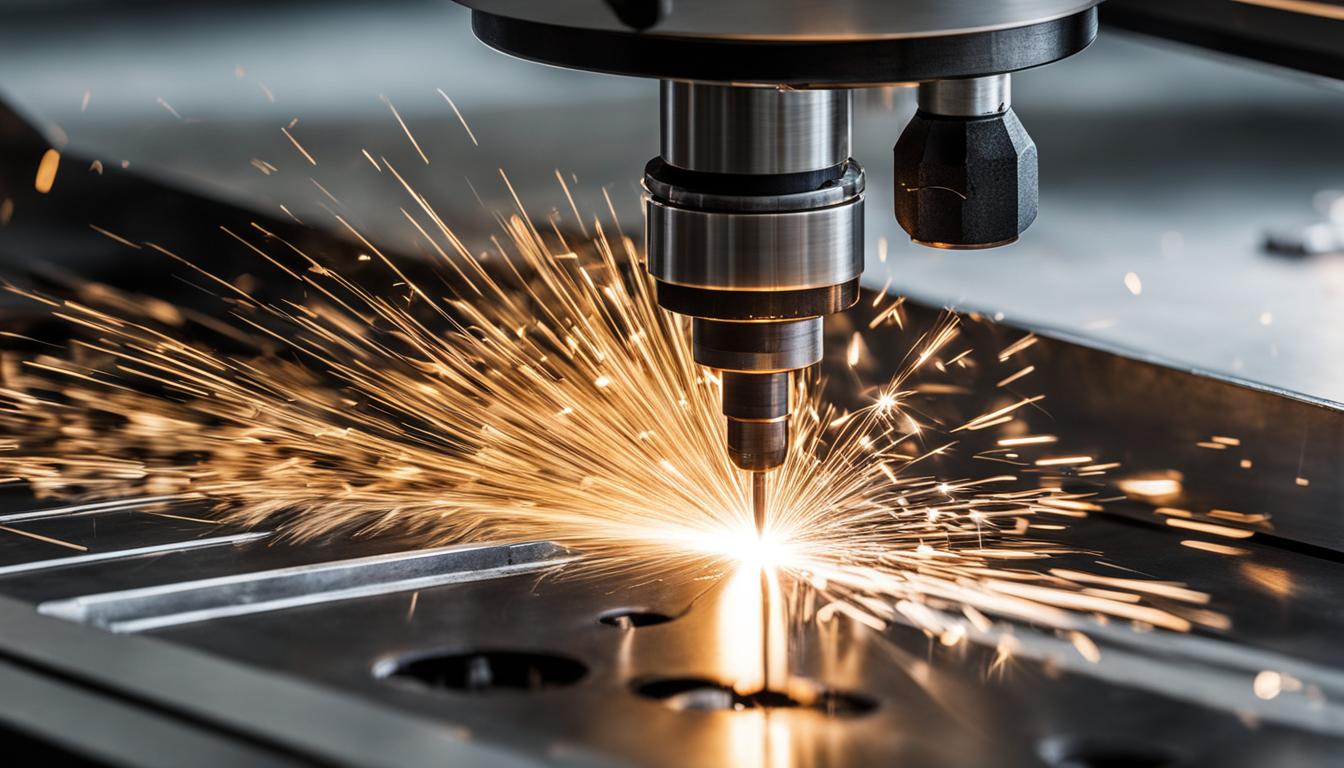
Modern manufacturing demands precision and efficiency, driving the continuous evolution of CNC machining processes. Integrating various subtractive fabrication methods within a single setup or automated cell is now a standard practice for optimizing production. This approach minimizes material handling and reduces cycle times significantly.
Computer Numerical Control (CNC) technology underpins these advanced operations, allowing for highly accurate and repeatable results across a spectrum of material removal techniques. Understanding the nuances of each process, from milling to sawing, is critical for tooling engineers to specify optimal parameters and achieve desired part quality.
Multi-Process CNC Setups Enhance Production Efficiency
Multi-process CNC machines, such as mill-turn centers, combine several operations into a single setup, drastically improving throughput and part accuracy. These integrated systems reduce the need for multiple machine transfers, which often introduce potential for error and increase setup times. The ability to complete a part in ‘one-and-done’ fashion is a significant advantage in high-volume production.
These advanced machines often feature multiple spindles, tool changers, and even robotic arms for automated part loading and unloading. This comprehensive integration allows for complex geometries to be machined with fewer interruptions, leading to higher overall equipment effectiveness. The Mazak Integrex series, for instance, exemplifies such capabilities with 7-axis mill/turn centers designed for lights-out manufacturing.
Fixture design in multi-process environments requires careful consideration to accommodate diverse operations while maintaining rigidity and accessibility. Universal fixturing systems or modular designs are often employed to quickly adapt to different part geometries and machining requirements. This flexibility is essential for maximizing the utility of expensive multi-axis machines.
Core Subtractive Fabrication Methods in CNC
| Operation / Material | Tool Type | Cutting Speed (SFM / m/min) | Feed Rate (IPM / mm/min) | Typical Tolerance (mm) |
|---|---|---|---|---|
| Milling Aluminum (6061) | 2-3 Flute Carbide End Mill | 600-1500 SFM (183-457 m/min) | 70-300 IPM (1778-7620 mm/min) | ±0.05 to ±0.13 |
| Drilling Mild Steel (HSS) | HSS Twist Drill | 80-100 SFM (25-30 m/min) | 0.004-0.008 IPR (0.1-0.2 mm/rev) | ±0.05 to ±0.13 |
| Milling Steel (Mild) | Carbide End Mill | 200-400 SFM (60-120 m/min) | 80-200 IPM (2032-5080 mm/min) | ±0.05 to ±0.13 |
| Drilling Aluminum (HSS) | HSS Twist Drill | 200-300 SFM (60-90 m/min) | 0.005-0.010 IPR (0.13-0.25 mm/rev) | ±0.05 to ±0.13 |
Milling is a fundamental subtractive process where rotating multi-point cutting tools remove material from a stationary workpiece. It excels at creating flat surfaces, slots, pockets, and complex 3D contours. Common milling tools include end mills, face mills, and ball nose mills, each suited for specific tasks like roughing, finishing, or intricate surfacing.
Drilling involves creating round holes in a workpiece using rotating drill bits. Various drill types exist, including twist drills for general-purpose hole making, spot drills for precise starting points, and step drills for multi-diameter holes. Peck drilling is often used for deep holes to clear chips and prevent tool breakage.
Punching is primarily used for sheet metal fabrication, rapidly creating holes or specific shapes by forcing a punch through the material into a die. This method is highly efficient for high-volume production of parts requiring numerous cutouts. Punching operations are characterized by their speed and ability to produce consistent results with minimal material waste.
Sawing, while often a preparatory step, is also a critical CNC subtractive method for cutting raw stock to size or creating specific profiles. CNC saws offer precise control over cut length and angle, minimizing material waste and ensuring accurate blanks for subsequent machining operations. Band saws and circular saws are common types, selected based on material and cut requirements.
Optimizing Tooling Selection for Each CNC Process
Tooling selection is paramount for achieving optimal performance, tool life, and surface finish in CNC operations. Factors such as tool material (e.g., High-Speed Steel, Cobalt HSS, Carbide), coating (e.g., TiCN, AlTiN), and geometry are chosen based on the workpiece material, machine rigidity, and desired outcome. Carbide tools, for example, offer high hardness and wear resistance for high-speed operations.
For milling, end mills are versatile, with variations like flat-end mills for flat surfaces and ball nose end mills for contoured shapes. Roughing end mills feature unique chip gashes for efficient material removal, while finishing end mills prioritize surface quality. Selecting the correct number of flutes also impacts chip evacuation and rigidity.
Drilling operations utilize a range of bits. Twist drills are common, but specialized drills like center drills prevent ‘drill walking,’ and flat-bottom drills create precise blind holes. For deep holes, gun drills are employed. The point angle of a drill is crucial, with 135° being excellent for aluminum and stainless steels, and 140° for general steels.
Punching requires specific punch and die sets tailored to the material thickness and desired hole shape. Proper clearance between the punch and die is essential to prevent burring and extend tool life. Sawing blades are chosen based on the material’s hardness and form, with different tooth geometries and materials optimized for cutting metals, plastics, or composites.
Automated Machine Integration for Seamless Workflows
Automated machine integration is transforming CNC manufacturing by enabling ‘lights-out’ production and continuous operation. Industrial robots are increasingly used for machine tending, loading raw materials, and unloading finished parts, significantly reducing downtime and labor costs. This allows machines to run 24/7, even without human supervision.
Data exchange between CNC machines, robots, and central manufacturing execution systems (MES) relies on robust communication protocols. MTConnect, OPC-UA, and FANUC FOCAS are prominent standards facilitating real-time monitoring, diagnostics, and process optimization. These protocols ensure interoperability across diverse equipment, crucial for integrated factory environments.
The benefits of lights-out manufacturing extend beyond increased throughput, encompassing improved product consistency and reduced energy consumption in unoccupied spaces. While initial investment can be substantial, the long-term gains in efficiency and cost reduction make it an attractive strategy for many manufacturers.
Achieving Optimal Material Removal Rates and Surface Finish
Material Removal Rate (MRR) is a critical metric, representing the volume of material removed per unit of time. Optimizing MRR involves balancing cutting speed, feed rate, and depth of cut to maximize efficiency without compromising tool life or surface quality. For milling, MRR is calculated as radial depth of cut × axial depth of cut × feed rate.
Achieving the desired surface finish often requires a trade-off with MRR. Roughing operations prioritize high MRR with larger depths of cut and feed rates, accepting a coarser finish. Finishing passes then employ lower MRR values, smaller depths of cut, and reduced feed rates to achieve precise dimensions and superior surface quality.
Standard tolerances for CNC machining typically range from ±0.05 mm to ±0.13 mm for most milling and turning operations. Tighter tolerances, such as ±0.01 mm, are achievable but significantly increase costs due to slower machining speeds, specialized tooling, and extensive inspection. Specifying tight tolerances only for critical functional features is a key cost-saving strategy.
The following table provides typical parameters for common materials and operations, serving as a starting point for process optimization. These values are guidelines and may require adjustment based on specific machine capabilities, tool geometry, and desired outcomes.