
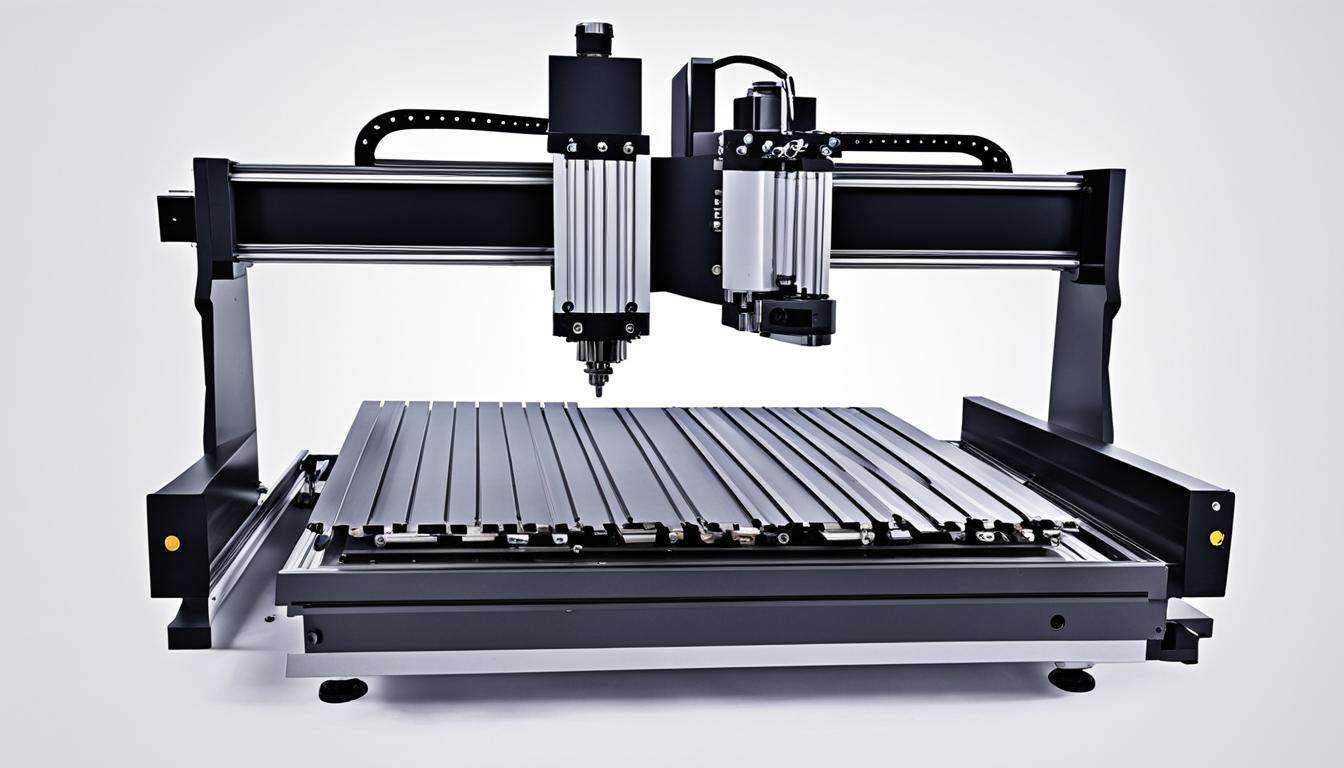
Acquiring a mini CNC machine represents a significant investment for hobbyists and small businesses alike. The total cost extends beyond the initial purchase price, encompassing software, tooling, and potential DIY components. Understanding these various financial tiers is crucial for effective budgeting and selecting the right machine for specific applications.
Mini CNC machines, often referred to as desktop or benchtop models, offer a compact footprint without sacrificing significant machining capability. These machines are designed for a range of materials, including wood, plastics, acrylic, aluminum, and other non-ferrous metals.
Desktop Router Price Ranges
Desktop CNC routers typically range from a few hundred dollars for basic entry-level models to several thousand for more capable machines. For instance, entry-level routers suitable for beginners can start around $800 to $1,500.
Machines in the $800 to $1,500 range often feature lighter frames and smaller spindles, making them ideal for engraving, test pieces, and small projects in softer materials like wood and plastics. The Genmitsu 3018-PROVer, for example, is a popular budget option for learning CNC concepts.
Stepping up, the $1,500 to $8,000 category introduces more rigid frames, higher-power spindles, and ball screws, enabling regular work with aluminum and other non-ferrous metals. Models like the Shapeoko 5.1 Pro and Onefinity Foreman Elite offer enhanced rigidity and larger work areas, with prices starting around $3,550 and $3,586 respectively.
For small businesses or advanced makers, desktop routers can reach $10,000 or more, offering features like automatic tool changers (ATCs) and larger work envelopes. The Nestworks C500, released in 2025, targets small-scale manufacturing with an 800W ATC spindle and a cast-aluminum frame, providing ±0.02 mm precision.
Hobbyist Mini Mill Costs
| Machine Type | Entry-Level Price Range (USD) | Mid-Range Price Range (USD) | Key Features |
|---|---|---|---|
| Desktop CNC Router | $800 – $1,500 | $1,500 – $8,000 | Wood, plastics, light engraving; more rigid frames, ball screws, aluminum capability |
| Hobbyist Mini Mill | $5,000 – $10,000 | $10,000 – $20,000 | Precision machining of harder metals (aluminum, brass); cast frames, linear guides |
| Benchtop CNC Lathe | $3,000 – $5,000 | $5,000 – $15,000 | Small metal part turning, prototyping; higher spindle speeds, automatic tool changers |
| DIY CNC Router Kit | $796 – $2,000 | $2,000 – $5,600 | Basic engraving, learning platform; customizable components, open-source controllers |
Hobbyist mini CNC mills generally command higher prices than routers due to their increased rigidity and precision, essential for machining harder materials like steel and aluminum. Entry-level desktop CNC milling machines can start around $5,000 and extend up to $20,000 for more advanced models.
Machines like the Carbide 3D Nomad 3 are designed for precision desktop milling, offering robust construction for detailed small-part work. These mills are often characterized by cast-aluminum frames and linear guide systems, providing superior accuracy and surface quality.
For serious metal machining in a compact footprint, options like the Haas Mini Mill start at approximately $47,995, excluding additional tooling and installation. The Grizzly G0876, another enclosed mill with an ATC, is priced around $43,000 to $45,000.
These higher-end mini mills are built for production use, featuring tighter tolerances, higher spindle RPMs, and duty cycles measured in hours. They represent a significant investment but offer industrial reliability and the capability to handle aggressive cutting.
Additional Tooling Software Fees
Beyond the machine itself, software constitutes a critical ongoing cost for CNC operations. CAD/CAM software is essential for designing parts and generating toolpaths. Many budget CNC machines are compatible with popular software such as Fusion 360, Vectric VCarve, and Carbide Create.
Autodesk Fusion (formerly Fusion 360) offers a free ‘Personal Use’ license for qualifying hobbyists generating less than $1,000 in annual revenue. For commercial users, a standard paid subscription costs $85 per month or $680 per year in the United States as of August 2026.
Advanced functionalities within Fusion, such as the Design, Manufacturing, or Simulation Extensions, incur additional annual fees. For example, the Manufacturing Extension costs $1,465 per user per year, significantly increasing the total software investment.
Other software options like Carbide Create and Easel are often bundled with entry-level machines or offered as beginner-friendly interfaces. VCarve Pro is another popular choice for 2D and 2.5D work, though its pricing was not explicitly detailed in the search results.
Benchtop CNC Lathe Pricing
Benchtop CNC lathes provide turning capabilities in a smaller form factor, suitable for prototyping, education, and light production. Entry-level miniature CNC lathes can cost between $3,000 and $5,000, while mid-range options typically hover around $10,000.
Models like the Taian HAISHU HS40X mini CNC lathe, priced around $5,000-$10,000, offer a swing over bed of 400mm and spindle speeds up to 2,500 RPM, ideal for small metal parts. The CK40X, designed for more demanding tasks, ranges from $10,000-$15,000.
For more professional applications, the Haas TL-1, a compact CNC lathe, starts at approximately $25,000. This includes Haas’ proprietary control system, simplifying programming for CNC turning operations.
Industrial-grade entry-level CNC lathes, not typically considered ‘mini’ but still compact for professional shops, can range from $40,000 to $90,000 new. These machines feature 8-10 inch chucks and basic 2-axis controls, suitable for shops adopting CNC or for prototype work.
Entry-Level DIY Budgets
Building a DIY CNC machine can be a cost-effective entry point, though it requires significant time for assembly, calibration, and troubleshooting. DIY CNC router kits typically start around $796, with higher configurations reaching up to $5,600.
These kits often include essential components, but the final price depends on factors like table size, spindle brand and power, and the chosen CNC controller. Open-source controllers like GRBL are popular for DIY builds due to their affordability and community support.
Many beginners opt for platforms like the Genmitsu 3018 series, which offers strong value for exploring CNC concepts with limited upfront cost. These compact machines fit small workspaces and allow users to learn feeds, speeds, and workholding before upgrading.
While building from scratch can be more challenging, purchasing a complete machine often saves time and delivers more reliable performance from day one. However, the DIY route provides invaluable hands-on experience in understanding machine mechanics and electronics.