
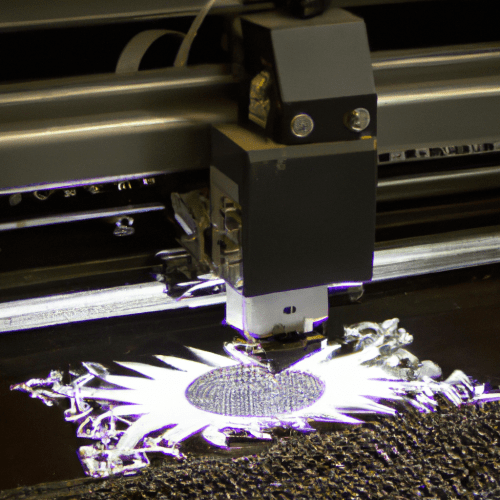
Investing in a laser cutting machine represents a significant capital expenditure for any fabrication shop or manufacturing facility. The total cost extends far beyond the initial purchase price, encompassing various operational and maintenance expenses that impact long-term profitability. Understanding these multifaceted financial considerations is crucial for making an informed decision in today’s rapidly evolving market.
Entry-Level CO2 Laser Systems
Desktop CO2 laser cutters offer an accessible entry point into laser fabrication, typically ranging from $200 for basic diode models to over $5,000 for professional-grade CO2 or fiber systems. Many beginners and small creators should budget between $500 and $1,500 for a safer, more capable setup in 2026.
These machines, often with power outputs around 40W to 55W, excel at cutting and engraving non-metallic materials such as acrylic, wood, leather, paper, and fabric. The xTool P2, for instance, a popular 55W CO2 model, can cut up to 12-15 mm acrylic or 10 mm wood in single passes, offering a generous work area and user-friendly software.
While entry-level CO2 lasers are cost-effective for non-metals, their tolerances typically range from ±0.1 mm to ±0.5 mm. They require more attention to cooling, exhaust, alignment, cleaning, and general maintenance compared to simpler diode lasers.
Industrial Fiber Laser Investment
| Laser Type | Typical Power Range | Primary Materials | Approximate Base Cost (2026) | Typical Tolerance (Metal) |
|---|---|---|---|---|
| Desktop CO2 | 40W – 55W | Wood, Acrylic, Leather, Fabric | $500 – $5,000 | ±0.1 mm – ±0.5 mm |
| Industrial Fiber (Entry) | 1kW – 3kW | Thin to Medium Metals | $28,000 – $85,000 | ±0.05 mm – ±0.2 mm |
| Industrial Fiber (High Power) | 6kW – 20kW+ | Thick Metals, High Volume | $80,000 – $1,000,000+ | ±0.05 mm – ±0.1 mm |
Industrial CNC fiber laser cutting machines represent a substantial investment, with prices generally ranging from $10,000 to over $100,000, and high-power, large-format models exceeding $100,000. Entry-level 3kW fiber lasers can cost between $28,000 and $38,000, while mid-range 6kW production machines are typically priced from $45,000 to $60,000.
These advanced systems utilize a high-intensity beam channeled through a fiber-optic cable, making them ideal for cutting reflective metals like steel, aluminum, and copper with minimal heat distortion. Fiber lasers offer superior beam quality and shorter wavelengths, enabling tighter tolerances, often down to ±0.05 mm to ±0.2 mm for metal materials.
Higher wattage directly translates to faster cutting speeds and increased material capacity. For example, a 3kW fiber laser can cut 6mm carbon steel at approximately 300–500 inches per minute (IPM), while a 6kW system can achieve 600–900 IPM on the same material.
The core components significantly influence the overall price. The laser source itself can constitute 30-50% of the total cost, with a quality 1kW source ranging from $20,000-$35,000, and a 6kW+ source potentially exceeding $80,000 in 2026.
Essential Fume Extraction Systems
Proper fume extraction is not merely an accessory but a critical safety and operational necessity for any laser cutting setup. Laser fumes consist of respirable dust and volatile organic compounds (VOCs) that pose significant health risks if not effectively managed.
Fume extraction systems vary in price, with many quality units available under $5,000. Systems like the Filtrabox Micro are praised for their consistent performance, modular filters, and robust build quality, often outlasting competitors.
These systems typically employ multi-stage filtration, including pre-filters, HEPA filters, and activated carbon filters, to capture particulates and gases. Regular checking and replacement of pre-filters are crucial for extending the life of more expensive HEPA and carbon filters.
Power Output and Its Cost Implications
Laser power output is a primary determinant of both machine cost and operational capability. Higher wattage machines, particularly fiber lasers, enable faster cutting speeds and the ability to process thicker materials, directly impacting production throughput and efficiency.
For instance, a 30kW fiber laser can cut 5-6 mm thick carbon steel at speeds up to 18-30 m/min, whereas a 10 mm thick sheet would be cut at 13-15 m/min. This scaling of speed with power is critical for industrial applications.
While the initial investment for higher power is greater, the long-term return on investment (ROI) can be substantial due to increased productivity and the ability to handle a wider range of jobs. Modern fiber laser systems now push power beyond 20kW, with 40kW and 60kW models becoming more common for ultra-thick materials.
The choice of power tier also influences the types of materials that can be processed efficiently. Fiber lasers are the industry standard for metal, comfortably handling aluminum and stainless steel, while CO2 lasers remain better suited for thick carbon steel, wood, and plastics.
Ongoing Operational Maintenance
Operational maintenance is a significant, often underestimated, component of a laser cutting machine’s total cost of ownership. Annual maintenance costs for industrial lasers can average $10,000–$25,000 per device, driven by consumables and potential repairs.
Consumables for fiber lasers include protective lenses, which may cost $2-$5 per lens and require daily checks. CO2 lasers, in contrast, have higher annual maintenance costs, typically $1,000-$2,000 for mirror and lens maintenance, compared to $200-$400 for fiber lasers’ protective windows.
Regular preventative maintenance tasks are essential, such as monthly water changes for the chiller, cleaning the work table, and inspecting the exhaust system. Semi-annual requirements include checking and refilling lubrication systems, along with replacing air/gas filters ($2,000-$4,000) and dust collector filters ($800-$2,000).
Energy consumption also contributes significantly to operational costs. Fiber lasers are considerably more energy-efficient than CO2 lasers, boasting over 90% efficiency compared to CO2’s approximately 30%. This translates to lower electricity bills, with fiber lasers running at about $4 per hour versus $20 per hour for CO2 systems.