
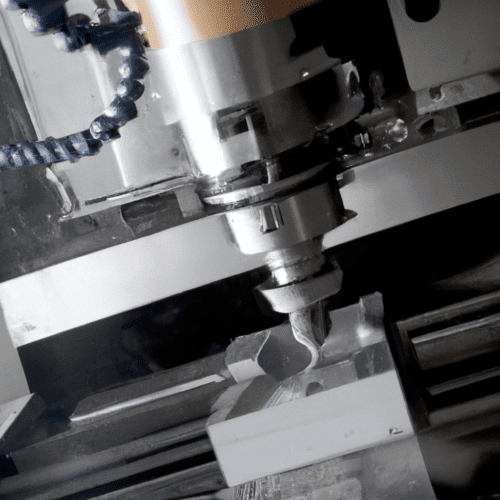
Acquiring a Computer Numerical Control (CNC) machine involves a multifaceted financial assessment, extending far beyond the initial purchase price. Engineers and shop owners must consider a spectrum of expenses, from entry-level desktop routers to high-precision industrial machining centers, alongside critical hidden costs and recurring software licensing fees.
Desktop CNC Router Price Tiers
Desktop CNC routers cater to a broad user base, from hobbyists to small businesses, with pricing directly reflecting capability and build quality. Entry-level 3018-class machines typically range from $200 to $350, primarily suited for light engraving, basic PCB work, and softwoods.
The budget and beginner category expands slightly, with machines generally priced between $150 and $600, capable of cutting wood and plastic, with limited light engraving on aluminum. These units serve as excellent learning platforms for fundamental CNC operations.
Mid-tier benchtop routers, often costing $500 to $800, introduce greater rigidity and improved drive quality, making them suitable for more consistent aluminum machining. Pre-assembled lead-screw machines in this range can offer better long-term value by minimizing the need for aftermarket upgrades.
Advanced hobbyist and professional benchtop machines, priced from $1,000 to over $3,000, feature stiffer frames, superior drive hardware, and more powerful spindles, such as 500W ER11 units. These machines provide enhanced repeatability and are often aimed at small businesses requiring functional parts.
The Used CNC Machine Market
| Category | Price Range (USD) | Primary Application | Key Features |
|---|---|---|---|
| Entry-Level / Toolroom | $35,000 – $65,000 | Prototyping, Education, Light Repair | 8k RPM Spindle, 3-Axis, Basic Controller |
| Mid-Range Workhorse | $70,000 – $145,000 | General Job Shops, Automotive Parts | 12k RPM, 4th-Axis Ready, High-Speed ATC |
| High-Precision / Aerospace | $160,000 – $350,000+ | Aerospace, Medical, Mold Making | 20k+ RPM, Linear Motors, 5-Axis (3+2) |
| Micro-Machining VMC | $120,000 – $220,000 | Electronics, Jewelry, Small Medical | Ultra-high precision, compact footprint |
The market for used CNC machinery presents a viable alternative to new equipment, particularly in the current economic climate where tariffs have increased new machine prices. Demand for precision 5-axis machining centers, especially models built after 2015, remains stable, with these machines trading at 55-80% of their new cost.
Pricing for older CNC lathes has normalized, offering more accessible entry points for shops. Specific models like a Mazak Quick Turn 350, manufactured between 2014 and 2017 and in good condition, are found in the mid-market segment. Machines equipped with a sub-spindle and Y-axis command a noticeable premium over standard lathes.
Significant inventories of used CNC machines are available from major brands including Haas, Mazak, DMG Mori, Okuma, Doosan, and Makino. The 8-15% price increase on new imported machines due to tariffs further strengthens the case for considering used equipment.
Industrial Machining Center Investment
Industrial CNC machining centers represent a substantial capital investment, with new Vertical Machining Centers (VMCs) ranging from $35,000 for basic entry-level models to over $300,000 for high-precision, multi-axis production cells. These machines are designed for factory floor operations, demanding robust infrastructure.
Key price drivers for modern VMCs include integrated AI control systems, automated pallet changers, and real-time digital twin capabilities. The machine’s structural mass, often featuring Meehanite or cast iron bases, significantly contributes to its rigidity, vibration damping, and long-term dimensional stability, directly impacting cost.
Industrial machines universally require a stable three-phase power supply, with common voltages including 220V, 380V, 400V, 415V, 460V, and 480V, at either 50Hz or 60Hz. Confirming these electrical specifications before purchase is crucial to avoid installation delays and performance issues.
A 5-axis CNC router, offering advanced capabilities beyond typical 3-axis options, can range from $100,000 to over $1,000,000, reflecting its complexity and precision. The spindle specification, encompassing speed, power, taper size, and bearing grade, is among the highest-cost components in any machining center.
Hidden Tooling, Freight, and Operational Costs
The ‘sticker price’ of a CNC machine often obscures a significant portion of the total investment. Hidden costs can add an additional 25-40% to traditional quotes, encompassing various factors beyond the machine itself. For desktop CNCs, tooling, workholding, dust collection, software, and materials typically add 20-30% to the machine’s price.
Initial tooling costs, including end mills, drills, and specialized cutters, can be substantial, particularly when setting up a new capability. For a small shop, budgeting $100 to $400 per month for ongoing tooling is a realistic starting point, as tools are consumables that dull, chip, and break.
Operational expenses include coolant and cutting fluid, which can cost $100 to $500 annually, and various filters requiring $50 to $200 per year for replacement. Electricity consumption for a CNC machine typically ranges from 7.5 to 25 kW, translating to approximately $1.1 to $2.2 per hour in electricity costs.
Preventive maintenance is critical for avoiding costly breakdowns. Annual professional service can cost $5,000 to $7,000, with quarterly services adding $2,000 to $3,000. Consumables and wear parts contribute another $2,000 to $3,000 annually.
Emergency breakdowns, such as a spindle failure, can incur costs of $25,000 to $40,000 for rebuild and downtime, while ballscrew failures range from $15,000 to $25,000. Lost production during downtime can cost $5,000 to $15,000 per week, highlighting the importance of proactive maintenance.
Freight and installation for industrial machines are significant, often requiring specialized rigging and electrical work to meet three-phase power and air pressure requirements. An air source typically needs a pressure supply of 5-7MPa, equipped with an oil filter and gas-water separator. Training for operators and programmers on new machines and control systems also represents a real, often underestimated, cost.
Essential Software Licensing Fees
Computer-Aided Design (CAD) and Computer-Aided Manufacturing (CAM) software are indispensable for CNC operations, and their licensing fees constitute a significant ongoing expense. While some free options exist, professional-grade software often comes with annual subscription fees or substantial perpetual license costs.
Autodesk Fusion 360 offers a base subscription at $545 per year, which includes 3-axis CAM and 2-axis turning capabilities. A free version is available for non-commercial use, though with limited CAM functionality.
For more advanced applications, Mastercam perpetual licenses start from approximately $6,000 to $15,000 for milling modules, with a full multi-axis suite potentially reaching $25,000 to $50,000+. Annual maintenance on perpetual licenses typically adds 15-20% of the initial license cost.
SolidCAM offers perpetual licenses starting around $5,000 for iMachining 2D, with a 5-Axis bundle priced at approximately $18,000. A free perpetual license is available for makers earning under €3000 per year from CNC work. CAMWorks, often integrated with SOLIDWORKS, has bundle pricing starting around $3,000 for its Standard tier, while its Premium package with full 5-axis simultaneous machining can reach $20,000 for a perpetual license.
Other perpetual license options for 3-axis functionality include VisualCAD/CAM and BobCAD-CAM, both typically priced around $1,200 to $1,500. Siemens NX CAM’s Mach 1 Manufacturing Bundle perpetual license starts at $18,000, plus an annual maintenance fee of approximately $2,700. These costs underscore the need for careful budgeting and selection based on specific operational requirements.