
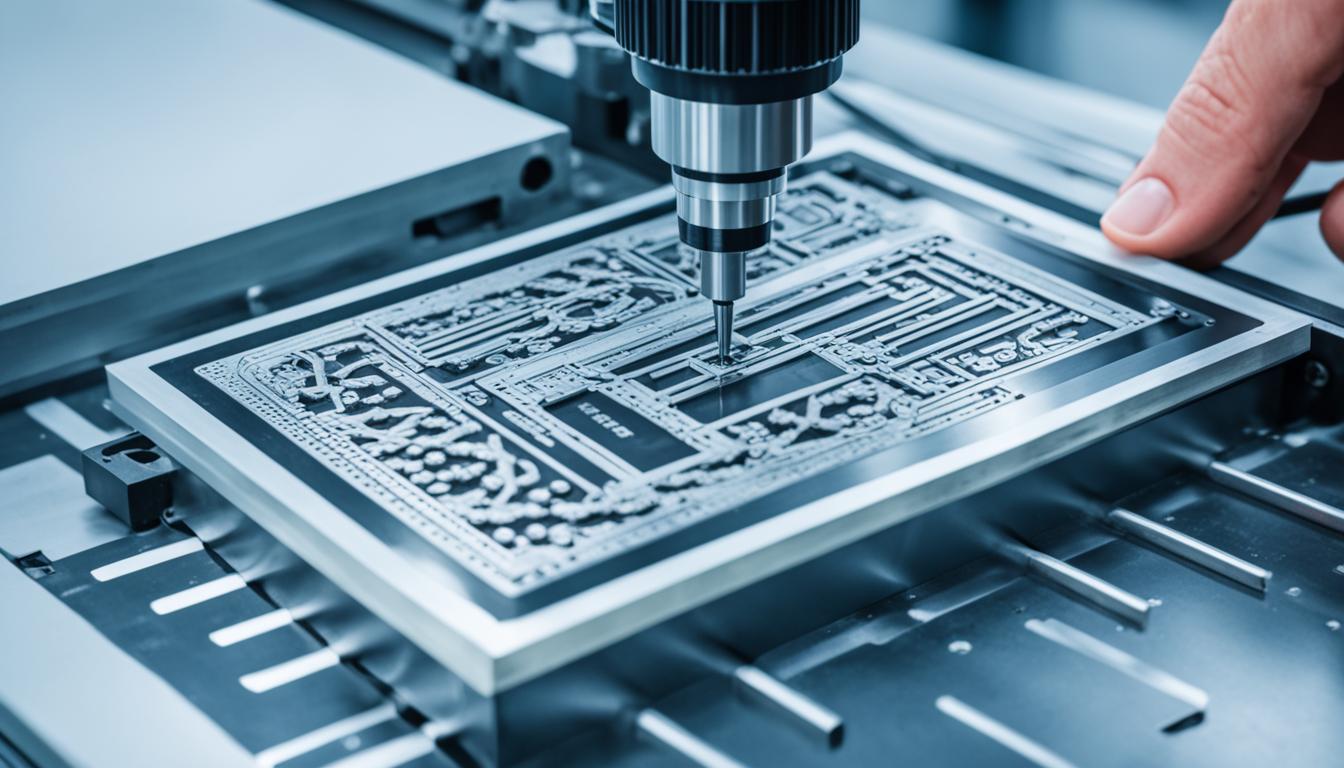
Achieving peak manufacturing efficiency is a constant pursuit for tooling engineers. Modern CNC software provides advanced capabilities that significantly enhance productivity, reduce costs, and improve part quality across various machining operations. Leveraging these digital tools is essential for staying competitive in today’s demanding industrial landscape.
Integrating sophisticated software solutions into CNC workflows allows for optimization at every stage, from initial design to final production. This strategic adoption translates directly into tangible benefits on the shop floor, impacting everything from material utilization to machine longevity.
Optimizing High-Speed Toolpaths
High-speed machining (HSM) toolpaths are fundamental to modern manufacturing, enabling faster material removal rates and improved surface finishes. Advanced CAM software generates these complex paths, ensuring consistent chip loads and controlled cutting forces. Trochoidal milling, a key HSM technique, employs circular or helical movements with continuous forward progression, maintaining a consistently low radial engagement, typically between 5% and 20% of the tool diameter.
This method significantly reduces heat buildup and cutting forces, distributing wear evenly across the tool’s cutting edge. It allows for higher axial depths of cut, utilizing the full flute length and dramatically increasing material removal rates, especially in tough materials like titanium and Inconel. The continuous engagement and disengagement of cutting edges in trochoidal paths also reduce shock loads, preventing premature tool wear.
Reducing Cycle Execution Times
| Parameter | Impact on Tool Life | Software Optimization |
|---|---|---|
| Cutting Speed | Directly impacts heat generation; too high or too low accelerates wear. | CAM algorithms calculate optimal speeds based on material and tool. |
| Feed Rate | Affects chip load and cutting forces; incorrect rates cause chipping or rubbing. | Software balances feed for consistent chip thickness and efficient material removal. |
| Depth of Cut | Influences cutting forces and heat; excessive depth increases load. | HSM toolpaths (e.g., trochoidal) allow deeper cuts by managing radial engagement. |
| Vibration/Chatter | Degrades surface finish, accelerates wear, damages components. | Simulation and adaptive control systems, damped tooling integration. |
Minimizing overall cycle time is critical for maximizing machine throughput and profitability. CNC software contributes by optimizing various aspects of the machining process beyond just cutting. This includes intelligent sequencing of operations and efficient management of non-cutting moves.
Tool change optimization features in CAM software analyze the entire part program to reduce the number of tool changes by reordering operations. For instance, the software can complete all operations requiring a specific tool before moving to the next, rather than switching tools multiple times for different features on the same part. This is particularly effective when machining repeated features or patterns.
Further reductions in cycle time come from optimizing spindle orientation and limiting unnecessary machine travel during tool changes. Advanced CAM systems can also parallelize operations where possible, allowing the tool magazine to pre-position the next tool while the current tool is still cutting. Investing in high-speed tool changers and multi-tool holders further complements these software-driven efficiencies.
Minimizing Tool Wear Rates
Extending tool life directly translates to lower tooling costs, reduced downtime for tool changes, and consistent part quality. CNC software, combined with modern tooling, plays a significant role in achieving this. Optimal cutting parameters, including cutting speed, feed rate, and depth of cut, are crucial for managing tool wear.
Excessive cutting speeds generate high heat, accelerating wear, while very low speeds can cause rubbing and inefficient cutting. Modern software helps identify the sweet spot for these parameters, often incorporating algorithms that consider tool material, workpiece material, and desired surface finish.
Advanced tool coatings, such as TiAlN, diamond-like carbon, and multi-layer nano coatings, significantly enhance heat and wear resistance, lubrication performance, and cutting speed capabilities. These coatings allow tools to last longer even under extreme conditions, especially when machining hard materials like titanium or Inconel. Furthermore, vibration damping technologies, including specialized tool holders and machine designs, reduce chatter, which is a major contributor to premature tool wear.
Preventing Costly Machine Collisions
Machine collisions are expensive, causing damage to tools, workpieces, and the machine itself, leading to significant downtime. CNC software offers robust solutions for collision prevention through advanced simulation and verification. Digital twin technology, a high-fidelity virtual replica of the physical CNC machine, is a transformative force in this area.
This digital counterpart mirrors the machine’s geometry, kinematics, control logic, and process behavior, allowing engineers to simulate tool paths and machining strategies virtually before any physical cutting occurs. Real-time data from the physical machine synchronizes with the digital twin, providing unprecedented insight and enabling the prediction and prevention of issues.
Simulation software can detect potential collisions between the tool, tool holder, workpiece, and machine components. This virtual testing reduces setup time, eliminates collisions, and minimizes scrap during first-off production, especially for complex 5-axis and multitasking machines. Post-processor verification further ensures that the generated G-code is safe and optimized for the specific machine.
Automating Nesting Layouts
Material utilization is a significant cost driver in sheet metal and plate fabrication. Automated nesting software dramatically improves material yield by intelligently arranging parts on raw material sheets.
These advanced algorithms consider part geometry, rotation, mirroring, and even remnant material to create the most efficient layouts, minimizing scrap. True-shape nesting, as opposed to rectangular nesting, recognizes the actual part geometry and interlocks parts, leaving less unused material.
Automated nesting reduces manual programming time from hours to minutes, freeing up staff for other value-adding activities. It also optimizes cutting paths, reducing pierce points and rapid movements, which extends consumable life and increases machine uptime. The return on investment for nesting software can be substantial, often seen within the first year, primarily through significant material savings and reduced programming labor.