
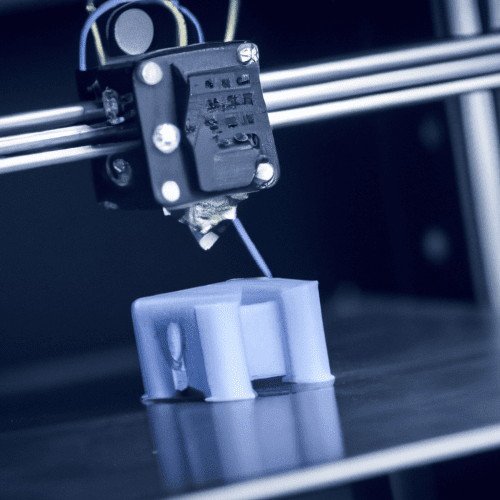
Establishing a robust 3D printing workflow requires more than just acquiring a machine; it demands a comprehensive understanding of the integrated ecosystem. Each element, from the physical printer to the post-processing tools, plays a critical role in achieving high-quality, dimensionally accurate parts.
3D Printer Hardware Fundamentals
Modern 3D printer hardware encompasses a diverse range of technologies, primarily Fused Deposition Modeling (FDM) and Stereolithography (SLA). FDM printers operate by extruding molten thermoplastic filament layer by layer, building objects from the ground up. These machines often feature heated build plates, all-metal hotends capable of reaching 300°C, and increasingly, CoreXY motion systems for enhanced speed and precision.
SLA printers, conversely, utilize a UV light source to cure liquid photopolymer resin, solidifying it layer by layer. This method is renowned for producing exceptionally fine details and smooth surface finishes, making it ideal for intricate prototypes and visual models. Many contemporary SLA systems position the light source below the resin tank, optimizing efficiency and reliability.
Advanced features now standard on many desktop FDM printers include automated leveling, responsive touchscreens, and filament-out detection. High-speed FDM models can reach print speeds of 500 mm/s, with some even hitting 600 mm/s for travel, though quality often requires a slower pace. Industrial-grade FDM systems can achieve dimensional tolerances of ±0.05mm consistently, while desktop FDM printers typically hold ±0.2 to ±0.5 mm on smaller features.
SLA technology offers superior dimensional accuracy, with general tolerances of ±0.2 mm for the first 100 mm of part size, and an additional ±0.1 mm for each subsequent 100 mm. Fine features on small SLA parts can achieve tolerances down to ±0.05 mm. This precision is crucial for applications requiring tight fits and intricate geometries.
Slicer Software Application
| Parameter | FDM (Fused Deposition Modeling) | SLA (Stereolithography) |
|---|---|---|
| Typical Dimensional Tolerance | ±0.2 mm to ±0.5 mm (small features) | ±0.05 mm to ±0.2 mm (small features) |
| Standard Layer Height | 0.1 mm to 0.3 mm | 25 µm to 100 µm (0.025 mm to 0.1 mm) |
| Typical Print Speed | 100-300 mm/s (up to 600 mm/s travel) | 25-30 mm/hr (at 50 µm layer height) |
| Minimum Wall Thickness | 1.0 mm | 0.3 mm to 0.5 mm |
A 3D slicer application serves as the essential intermediary between a digital 3D model and the physical printer. This software converts CAD models, typically in STL, OBJ, or 3MF formats, into layered instructions known as G-code. Without a slicer, a 3D printer cannot interpret the model data or execute a print.
Key slicer settings directly influence print quality and mechanical properties. These parameters include layer height, infill density and pattern, print speed, support structures, and temperature controls for both the nozzle and heated bed. Modern slicers also offer advanced functionalities such as model repair, automatic part layout, remote monitoring, and multi-color printing support.
Several powerful slicer options are available, catering to different user needs and printer types. OrcaSlicer is widely regarded as a top choice for FDM users in 2026 due to its integrated calibration tools and broad printer compatibility. Ultimaker Cura remains popular for its beginner-friendly interface and extensive plugin library, supporting a vast array of FDM machines.
For resin-based printing, Lychee Slicer and CHITUBOX are leading choices, especially for detailed miniatures and budget resin printers. CHITUBOX, in particular, is often the default slicer bundled with many resin printers, offering robust support generation and hollowing tools. PrusaSlicer is another strong contender, favored by users of Prusa and Voron machines for its advanced FDM and resin printing capabilities.
Filament and Resin Supply
The choice of printing material profoundly impacts a part’s mechanical properties, aesthetics, and printability. FDM printers primarily use thermoplastic filaments, with Polylactic Acid (PLA) being the most common due to its ease of printing, low warping, and biodegradability. PLA is suitable for visual prototypes and low-stress applications.
Polyethylene Terephthalate Glycol (PETG) offers a balance of strength and ease of use, providing better durability, chemical, and thermal resistance than PLA. Acrylonitrile Butadiene Styrene (ABS) and Acrylonitrile Styrene Acrylate (ASA) are known for their toughness, heat resistance, and UV resistance (ASA), but require higher print temperatures and often an enclosed print chamber to prevent warping.
Flexible filaments like Thermoplastic Polyurethane (TPU) enable the creation of rubber-like parts with excellent impact absorption and wear resistance. Engineering-grade filaments such as Nylon (PA), Polycarbonate (PC), and their carbon fiber-filled variants provide exceptional strength, stiffness, and high-temperature performance, though they demand more stringent printing conditions and often require hardened nozzles. Filament diameter, typically 1.75 mm, and a low tolerance (e.g., ±0.02 mm) are crucial for consistent extrusion.
SLA printing relies on photopolymer resins, which cure under UV light. Standard resins offer good detail and smooth finishes for general prototyping. Engineering resins provide enhanced mechanical properties like toughness, flexibility, or high temperature resistance, suitable for functional prototypes and snap-fit assemblies. Specialized resins include castable options for jewelry and dental applications, and transparent resins for clear parts. Proper storage, often in opaque containers away from UV light, is essential to maintain resin integrity.
Calibrated Build Plate Importance
A precisely calibrated build plate is fundamental for successful 3D printing, directly influencing first-layer adhesion and overall print quality. Improper calibration can lead to print failures such as warping, detachment, or inconsistent layer heights. The initial layer forms the foundation, and its integrity is paramount.
For FDM printers, calibration typically involves ensuring a consistent gap between the nozzle and the build surface. Manual bed leveling often uses a piece of paper as a feeler gauge, adjusting screws at multiple points until a slight drag is felt. This process is ideally performed with the bed at printing temperature to account for thermal expansion.
Many modern FDM machines incorporate automatic bed leveling (ABL) systems, utilizing sensors like BLTouch or inductive probes to map the build surface. These systems create a mesh compensation, dynamically adjusting the Z-axis height during printing to account for any unevenness. Correct Z-offset adjustment is also critical to prevent ‘layer crushing’ or insufficient adhesion.
SLA printers also require precise build plate calibration, often referred to as ‘zeroing’ or ‘leveling the resin vat’. This ensures the build plate is parallel to the resin tank’s film, allowing for uniform layer curing and proper part detachment. Consistent calibration across both FDM and SLA platforms minimizes print failures and maximizes dimensional accuracy.
Essential Post-Processing Tools
Post-processing is an integral stage in the 3D printing workflow, refining raw prints into finished parts. For FDM prints, common tasks include removing support structures, which can be done with flush cutters or pliers. Surface finishing often involves sanding to remove layer lines and deburring tools to clean edges.
SLA parts require a more specific post-processing regimen due to residual uncured resin. The initial step involves washing the parts in an alcohol or ether solution to remove excess liquid resin from surfaces. Automated wash stations, such as Form Wash units, streamline this process by agitating the cleaning solution.
Following washing, many SLA resins require post-curing under UV light to achieve their optimal mechanical properties and durability. Dedicated UV curing stations, like Form Cure, ensure uniform and controlled curing. Support removal for SLA parts is typically done with flush cutters or hobby knives, often leaving small nubs that require further sanding or polishing.
For enhanced surface finish on both FDM and SLA parts, tools like pen sanders, rotary tools with various bits, and polishing compounds are invaluable. Safety equipment, including gloves and eye protection, is crucial when handling uncured resins and solvents. A well-equipped post-processing station ensures prints meet the desired aesthetic and functional specifications.