
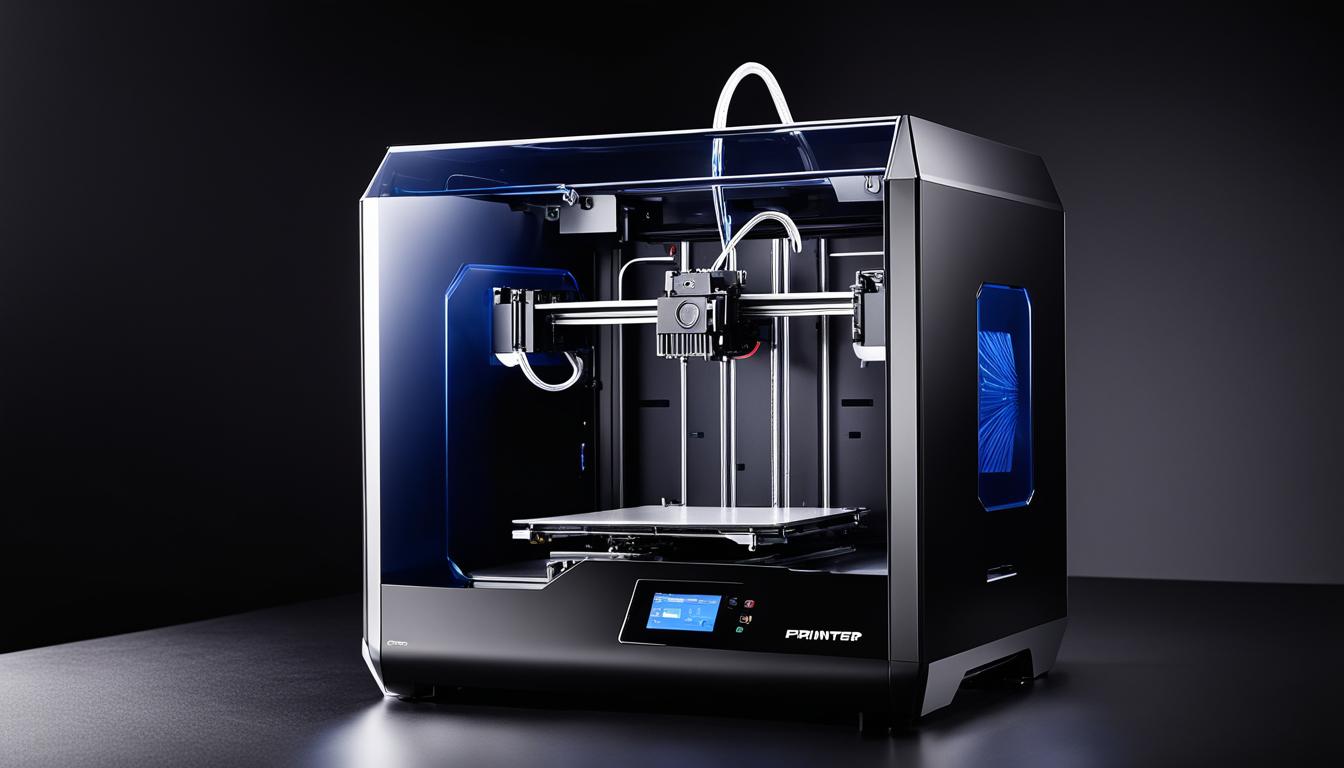
Tiertime 3D printers, particularly the UP series, are engineered for reliable precision in additive manufacturing, catering to both professional prototyping and educational applications. These Fused Deposition Modeling (FDM) machines integrate robust hardware with dedicated software to streamline the printing workflow. The company emphasizes user-friendliness and safety across its product line.
The current Tiertime UP product line includes models like the UP mini 3, UP300, UP300D, UP300HS, UP400 Pro, and the large-format UP600 and UP600HS. Each printer is designed to meet specific user needs, from compact desktop units to industrial-scale machines.
Tiertime UP 3D Printer Ecosystem
Tiertime’s UP series printers utilize Melted Extrusion Modeling (MEM) technology, a variant of FDM, to produce accurate parts. These machines are often characterized by their fully enclosed build chambers, which are crucial for maintaining stable printing environments. This enclosure helps minimize deformation, especially when working with high-temperature filaments like ABS.
The UP mini 3, for instance, offers a 200 x 200 x 200 mm build volume and features true auto-calibration based on load balancing, eliminating the need for manual nozzle height adjustment. It also includes a dual HEPA and activated carbon air filtration system for safer operation in shared spaces.
For larger industrial applications, the UP600 and UP600HS provide substantial build volumes of 400 x 500 x 600 mm and 500 x 400 x 600 mm respectively. These models incorporate heated build chambers and advanced dual air filtration systems, ensuring consistent quality for sizable components.
The UP300D and UP350D models feature dual extrusion capabilities, allowing for multi-material printing and the use of soluble support structures. This significantly enhances the complexity of printable geometries and simplifies post-processing.
Enclosed FDM Architecture for Precision
| Feature | UP mini 3 | UP300HS | UP600HS | UP400 Pro |
|---|---|---|---|---|
| Build Volume (XYZ) | 200 x 200 x 200 mm | 205 x 255 x 225 mm | 500 x 400 x 600 mm | 400 x 350 x 380 mm |
| Printing Technology | MEM (Melted Extrusion Modeling) | MEM (Melted Extrusion Modeling) | MEM (Melted Extrusion Modeling) | MEM (Melting Extrusion Modeling) |
| Layer Resolution | 0.1 – 0.35 mm | 0.05 – 0.4 mm | 0.1 – 0.4 mm | 0.05 – 0.6 mm |
| XYZ Accuracy | True Touch 2.0, Automatic | 0.002/0.002/0.0005 mm | 7, 7, 1 micron | 7, 7, 1 micron |
| Print Speed (Max) | 200 mm/sec | 200 mm/sec | 200 mm/sec | 600 mm/sec |
| Filtration System | HEPA + Activated Carbon | HEPA + Activated Carbon | HEPA + Activated Carbon | N/A (Enclosed) |
| Connectivity | USB, Wi-Fi | USB, Wi-Fi, Ethernet, USB Stick | Wi-Fi, Ethernet, USB Cable, USB Stick | N/A (Wi-Fi, Ethernet, USB) |
Enclosed FDM desktop units from Tiertime are designed to provide a controlled thermal environment, which is paramount for printing engineering-grade thermoplastics. A stable temperature within the build chamber reduces warping and improves layer adhesion, leading to more dimensionally accurate parts.
Many Tiertime printers, such as the UP mini 3 and UP600, integrate dual air filtration systems with HEPA and activated carbon filters. This system effectively reduces ultrafine particles (UFPs) and volatile organic compounds (VOCs), making these printers suitable for office and educational settings.
The robust construction, often featuring solid metal frames and precision linear rails, contributes to the printers’ stability and reduced vibrations during operation. This mechanical rigidity is essential for achieving high precision and print quality, even at increased print speeds.
Automatic calibration systems, like the ‘True Touch 2.0’ on the UP mini 3, ensure consistent bed leveling without user intervention. This automation minimizes common print failures related to improper first-layer adhesion and improves overall print reliability.
UP Studio Software: Integrated Control and Slicing
Tiertime’s dedicated UP Studio software is a comprehensive slicing and control platform specifically developed for their 3D printers. It offers a user-friendly interface while providing granular control over print parameters for advanced users.
UP Studio 3.0, the latest iteration, boasts fast model slicing and loading, along with extensive parameter tuning capabilities. It supports dual extrusion and allows for sub-model definition, enabling different print settings for various sections within a single print job.
The software includes features like automatic smart support generation, print preview, and manual support editing, which are critical for optimizing complex geometries. Users can also manage print jobs across a network using the Tiertime Print Queue, enhancing workflow efficiency in multi-user environments.
UP Studio also provides material profile management, allowing users to optimize print quality with third-party filaments and secure their custom profiles. The software supports various file formats, including STL, OBJ, and 3MF, ensuring broad compatibility.
Achieving Reliable Prototype Accuracy
Tiertime printers are designed to deliver consistent dimensional accuracy, a critical factor for functional prototyping. The UP600HS, for example, specifies a printed object accuracy of ±0.1mm/100mm and XYZ accuracy of 7, 7, 1 micron.
FDM technology generally offers dimensional tolerances ranging from ±0.15 mm to ±0.3 mm for well-calibrated machines on features smaller than 100 mm. For larger dimensions, a variation of approximately ±0.3% of the nominal size is expected.
Layer height significantly influences Z-axis resolution; lower layer heights (e.g., 0.1 mm) yield finer detail but increase print time. Tiertime printers offer a range of layer resolutions, from 0.05 mm to 0.4 mm, allowing engineers to balance detail and speed.
For parts requiring precise mechanical fits, it is often recommended to design holes undersized and ream or drill them to final dimensions after printing. This post-processing step ensures tighter tolerances than achievable directly from FDM.
Optimized Support Structure Management
Support structures are essential in FDM printing for geometries with overhangs exceeding approximately 45 degrees from vertical. Tiertime’s UP Studio software includes automatic smart support generation, simplifying the process for users.
The software allows for detailed tool path preview and manual editing of supports, giving engineers precise control over where support material is placed. This capability helps minimize contact points and improves the surface finish of supported areas.
For easier removal, various strategies can be employed, including adjusting the Z-distance between the support and the model, and utilizing interface layers. Soluble support materials, such as PVA, are particularly effective with dual-extrusion printers like the UP300D, as they dissolve in water, leaving no tool marks.
Modern slicers also offer ‘tree-like’ or ‘organic’ supports, which use less material and are generally easier to remove, especially from complex or curved surfaces, compared to traditional lattice supports. Proper orientation of the part during design can also significantly reduce the need for supports.