
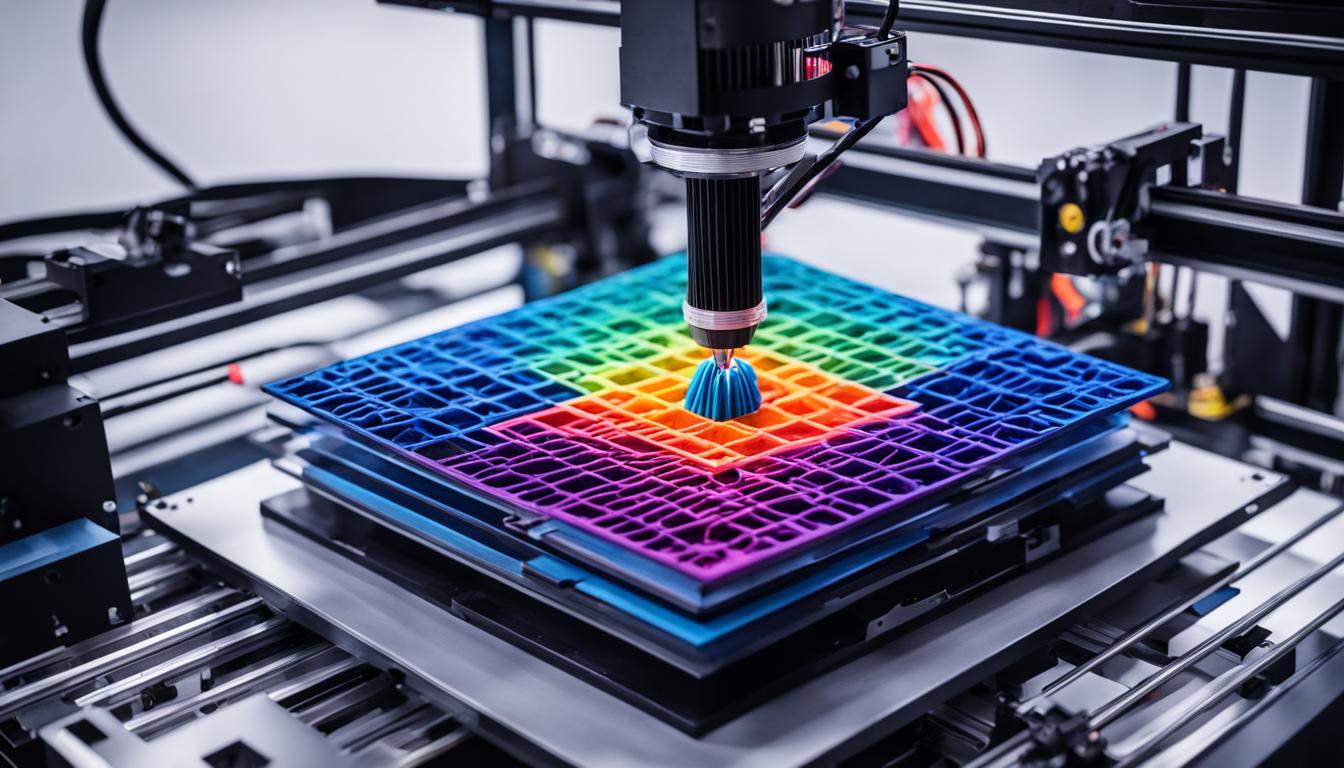
Aleph Objects’ LulzBot 3D printers have consistently pushed the boundaries of open-source additive manufacturing, providing robust solutions for diverse engineering applications. These machines are recognized for their reliability, repeatability, and performance in professional, educational, and hobbyist settings.
The LulzBot ecosystem emphasizes user freedom through its open filament system, allowing compatibility with a wide array of materials. This approach extends to hardware and software, fostering innovation and customization within the 3D printing community.
LulzBot 3D Printer Lineup and Evolution
The LulzBot TAZ Workhorse stands as a flagship model, offering a substantial build volume of 280mm x 280mm x 285mm. This printer is designed for demanding environments, featuring a reinforced frame, automatic bed leveling, and a heated borosilicate glass print bed.
The TAZ Workhorse incorporates a modular tool head system, enabling quick upgrades and versatility for various projects. Its all-metal, self-cleaning hot end is rated up to 300°C, supporting a broad range of engineering-grade filaments.
For more compact applications, the LulzBot Mini 2 provides a build area of 152mm x 152mm x 174mm. This desktop printer is known for its quiet operation, belt-driven Z-axis for improved print quality, and a GLCD controller for tetherless printing.
The Mini 2 also features a heated PEI-covered glass print surface, reaching up to 120°C, and a maximum hot end temperature of 290°C. It supports 2.85mm filament and can achieve layer thicknesses from 0.05mm to 0.4mm with its standard 0.5mm nozzle.
Open-Source Hardware Engineering Principles
| Tool Head Model | Nozzle Diameter | Nozzle Material | Max Hot End Temp | Supported Materials (Examples) | Key Feature |
|---|---|---|---|---|---|
| TAZ Workhorse SE | 0.5 mm | Nickel-Plated Copper Alloy | 290°C | ABS, PLA, TPU, PETg | Versatile, standard extrusion |
| HS Tool Head | 0.8 mm | Hardened Steel | 290°C | Carbon-fiber filled Nylon, ABS, PETg, PLA | High-strength composites, abrasive materials |
| HS+ Tool Head | 1.2 mm | Hardened Steel | 290°C | Carbon-fiber filled Nylon, ABS, PETg, PLA | High-speed, large-volume composite printing |
| Aerostruder Tool Head | 0.5 mm | (E3D Titan Aero) | 300°C | Rigid and flexible filaments | Precision, 360° part cooling |
| Aerostruder v2 Micro | 0.25 mm | (E3D Titan Aero) | 300°C | Fine detail materials | High-resolution, small features |
LulzBot’s commitment to open-source hardware (OSH) is a cornerstone of its engineering philosophy. This means that the designs, firmware, and software are freely available, encouraging users to copy, modify, and distribute the technology.
This ‘Libre Innovation’ model fosters a vibrant community, leading to continuous improvements and a wider range of compatible accessories and materials. Users benefit from extensive documentation and the ability to customize their machines to specific needs.
The open-source approach also ensures longevity and adaptability of LulzBot printers, as the community can develop upgrades and modifications independently. This contrasts with proprietary systems, offering greater flexibility and control to the end-user.
Heavy-Duty Tool Heads for Industrial Applications
LulzBot’s modular tool head system significantly expands the capabilities of its 3D printers. These tool heads are designed for quick swapping, allowing users to adapt their machines for different materials and print requirements.
The HS (Hardened Steel) Tool Head, with a 0.8mm nozzle, is engineered for printing abrasive, high-strength composite materials like carbon-fiber filled nylon. Its hardened steel nozzle and hobbed gear resist wear, making it suitable for industrial applications requiring durable parts.
For high-speed, large-volume printing, the HS+ Tool Head features a 1.2mm hardened steel nozzle and a larger heater block for increased volumetric flow rates. This enables faster production of large prototypes and high-strength parts with materials like carbon fiber-infused and glass-reinforced nylons.
The Aerostruder Tool Head, featuring an E3D Titan Aero hot end and extruder, provides precision for both rigid and flexible filaments. It incorporates a centrifugal fan and 360-degree part cooling for excellent detail, bridging, and overhang performance.
High-Temperature Filament Printing Capabilities
Printing with high-temperature filaments like PEEK and ULTEM (PEI) demands specialized equipment and precise thermal control. These materials offer exceptional strength, chemical resistance, and thermal stability, making them ideal for aerospace, medical, and automotive applications.
PEEK, a semi-crystalline thermoplastic, requires extrusion temperatures between 360°C and 450°C, a heated bed at 140-160°C, and an actively heated build chamber, ideally 70-150°C, to prevent warping and ensure strong interlayer bonding.
ULTEM (PEI) is an amorphous thermoplastic known for its high glass transition temperature and inherent flame retardancy. Successful printing typically requires nozzle temperatures of 350-400°C, a heated bed around 140-220°C, and a heated chamber, often above 150°C for larger prints.
While LulzBot’s standard tool heads reach up to 290-300°C, specialized high-temperature tool heads or printers with enclosed heated chambers are necessary for optimal PEEK and ULTEM processing. The HS and HS+ tool heads, with their hardened steel components, are capable of printing high-strength composite polymers with tensile strength comparable to PEEK.
Educational 3D Printers and Their Impact
LulzBot printers are widely adopted in educational settings due to their robust construction, ease of use, and open-source nature. The ability to experiment with various materials and modify hardware provides invaluable hands-on learning experiences for students.
The LulzBot Mini 2, with its compact size and quiet operation, is particularly well-suited for classrooms and labs. Its user-friendly interface and reliable performance allow educators to focus on teaching additive manufacturing principles rather than troubleshooting equipment.
The open-source ecosystem also means that educational institutions can access and contribute to a vast repository of knowledge and designs. This collaborative environment supports curriculum development and encourages students to engage with real-world engineering challenges.
Technical Specifications Comparison of LulzBot Tool Heads
Dimensional tolerances in FDM 3D printing typically range from ±0.3 mm for features under 100 mm, and approximately ±0.3% for larger dimensions. For high-precision mechanical fits, FDM is generally not recommended without post-processing.
Achieving optimal results with advanced materials requires careful consideration of print speed, layer height, and material-specific shrinkage. For instance, PEEK printing often benefits from slower speeds (20-40 mm/s) to enhance layer bonding and minimize warping.