
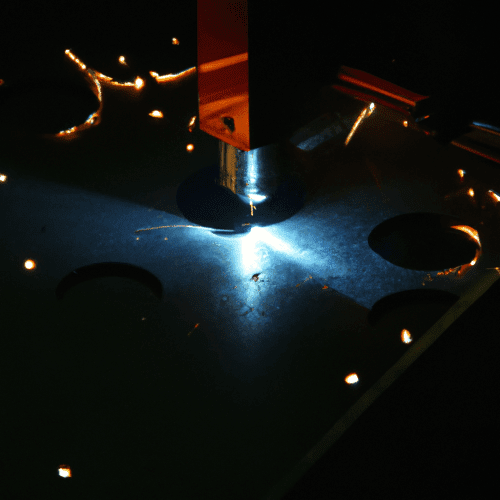
Choosing a CNC plasma table involves evaluating several critical engineering factors to ensure optimal performance and longevity in metal fabrication. The machine’s structural integrity, fume extraction method, and advanced control systems directly impact cut quality, operational efficiency, and workplace safety. Understanding these technical specifications is paramount for any serious fabricator.
Table Frame Rigidity and Motion Systems
A robust, welded steel frame forms the foundational element of a high-performance CNC plasma table, providing the necessary stability for precise cutting operations. This heavy-duty construction minimizes vibration, which is crucial for maintaining consistent accuracy and achieving superior edge quality, particularly during continuous production runs.
The gantry, which carries the plasma torch, must exhibit exceptional rigidity and remain true and square to the cutting bed. Any flex in this component can introduce inaccuracies, compromising the dimensional integrity of cut parts. Modern tables often incorporate precision linear guide systems, significantly enhancing motion control and overall cutting results compared to simpler bearing-on-rail designs.
While plasma cutting is a non-contact process with minimal lateral forces on the torch, the table’s ability to bear substantial material weight without deflection is essential. A stable motion system, coupled with optimized acceleration and deceleration capabilities, allows for higher travel speeds without sacrificing cut quality. This directly translates to increased throughput and reduced lead times.
Fume Extraction: Water Bed versus Downdraft
| Feature | Water Bed | Downdraft Table |
|---|---|---|
| Fume Control | Excellent (90-95% reduction) | Good (70-80% capture) |
| Heat Distortion | Reduced (water cools material) | More common (dry process) |
| Noise Level | Lower (water dampens sound) | Higher (fan noise, 90-120 dBA) |
| Maintenance | Regular water/chemical addition, draining, sludge disposal | Filter replacement, dust drum emptying |
| Initial Cost | Generally lower | Higher (requires fan/filtration) |
| Aluminum Cutting | Risk of hydrogen bubble buildup | No specific issues |
Effective fume and dust control is a non-negotiable aspect of CNC plasma cutting, vital for operator health and equipment longevity. Two primary systems address this: water tables and downdraft tables. Each offers distinct advantages and disadvantages depending on the application and shop environment.
Water tables submerge the cutting area, trapping fumes and particles in the water below the material. This method significantly reduces airborne contaminants, often by 90-95%, and also helps cool the material, minimizing heat distortion and warping, especially on thinner plates. Water tables also contribute to quieter operation by dampening the plasma arc noise.
Downdraft tables, conversely, actively pull air and fumes downward through the cutting bed and out of the shop via an extraction fan and filtration system. This dry process is generally cleaner to maintain, as there is no water to manage or dispose of. Downdraft systems are versatile, accommodating various metals, and can be zoned to concentrate extraction only where cutting occurs.
OSHA regulations mandate adequate ventilation, with industrial systems typically requiring at least 100 cubic feet per minute (CFM) per square foot of cutting table surface for downdraft systems. While water tables generally have lower initial and running costs, downdraft systems may incur higher upfront expenses for the extraction unit and filters, which require periodic replacement.
Achieving Precision with Torch Height Control
Torch Height Control (THC) is an indispensable automated system that maintains a consistent, optimal distance between the plasma torch and the workpiece throughout the cutting process. This ‘autopilot for the Z-axis’ is critical for achieving high-quality cuts and maximizing consumable life.
THC systems operate by first performing Initial Height Sensing (IHS) to locate the material surface before cutting. Once the arc is established, the system continuously monitors the arc voltage, which directly correlates to the torch-to-work distance. Real-time adjustments are then made to keep the torch at the precise nominal voltage, compensating for any plate warpage or irregularities.
Implementing effective THC technology yields numerous benefits, including superior cut quality with consistent kerf width and reduced angularity, extended consumable life by preventing torch crashes, and minimized material waste. It also significantly boosts productivity by allowing the machine to maintain optimal cutting speeds consistently.
Key features to seek in a THC system include Ohmic sensing for precise surface detection, adjustable voltage settings for different materials and thicknesses, and anti-dive protection to prevent torch collisions during intricate cuts or small holes. Arc loss detection is another valuable feature, automatically pausing or stopping the cut if the plasma arc is interrupted.
CNC Plasma Software Integration and Compatibility
The efficacy of a CNC plasma table is profoundly influenced by its software ecosystem, encompassing CAD (Computer-Aided Design), CAM (Computer-Aided Manufacturing), and the CNC controller. Seamless integration between these components is vital for an efficient workflow, from design conception to final part production.
CAD software is used for designing parts, while CAM software translates these designs into machine-readable G-code, generating toolpaths with critical parameters like lead-in/lead-out, pierce delays, and kerf compensation. Modern CAM packages often include advanced nesting capabilities to optimize material usage and reduce scrap.
Popular software solutions like Autodesk Fusion 360 offer integrated CAD/CAM platforms, while others like Mach4 and LinuxCNC provide robust control for various machine types, including plasma cutters. The ability to import common file formats such as DXF and SVG is essential for design flexibility.
In 2026, the trend towards Industry 4.0 emphasizes connectivity and data-driven manufacturing. CNC controllers now frequently ship with embedded AI for toolpath optimization and predictive analytics, enabling features like predictive maintenance and direct integration with Enterprise Resource Planning (ERP) systems for real-time production monitoring.
Optimizing Cutting Bed Dimensions and Material Flow
Selecting the appropriate cutting bed dimensions is a fundamental decision, directly impacting the types of projects a plasma table can undertake and its overall efficiency. The most common sizes for general fabrication and light industrial use are 4×4 feet, 4×8 feet, and 5×10 feet, aligning with standard sheet metal dimensions.
While smaller 2×2 foot tables exist, they are often quickly outgrown due to their limited capacity for standard material sizes and diverse projects. It is generally advisable to consider future needs and opt for a table size slightly larger than current requirements to avoid limitations.
For operations requiring cuts on larger sheets than the table’s native dimensions, ‘indexing’ the sheet is a possible, though cautious, workaround. This involves moving the material across the table in stages. However, precise alignment is critical, as even minor errors can ruin a cut, making it a practice best reserved for occasional use rather than regular production.
Industrial-grade plasma tables can be custom-configured to much larger dimensions, sometimes up to 20 feet wide and 40 feet long, to accommodate massive plates and high-volume production. Efficient material handling systems, such as overhead cranes or forklifts, are crucial for loading and unloading these larger workpieces safely and quickly.
Performance Metrics and Modern Plasma Practices
Achieving consistent precision is a hallmark of modern CNC plasma cutting. Standard plasma systems typically deliver tolerances ranging from ±0.5mm to ±1mm, suitable for many general fabrication tasks. High-definition plasma systems, however, can achieve significantly tighter tolerances, often as precise as ±0.25mm, depending on the material and machine settings.
Several variables influence cut accuracy, including the machine’s build quality, the plasma torch design, the material type and thickness, and the cutting speed. Thinner materials are more susceptible to heat distortion, which can affect precision. Proper feeds and speeds are paramount for optimizing cut quality, extending consumable life, and preventing issues like excessive dross.
For example, cutting 1/4-inch mild steel with a 75-amp plasma system might involve a cutting speed of 80 IPM for outside contours and 40 IPM for holes, with a cut height of 0.065 inches and an air pressure of 74 psi. These parameters are starting points and require fine-tuning based on specific equipment and desired outcomes.
Modern engineering practices in 2026 emphasize high-power X-definition plasma for processing heavy plate, multi-process machining, and advanced automation. Connectivity and Industry 4.0 principles, including predictive maintenance and ERP integration, are becoming standard to enhance efficiency and profitability.
Safety remains a critical consideration. Operators must use appropriate Personal Protective Equipment (PPE), including eye protection with suitable filter lenses, and ensure adequate ventilation to manage fumes and gases. Proper grounding of all electrical equipment according to OSHA standards is also essential to prevent electrical hazards.