
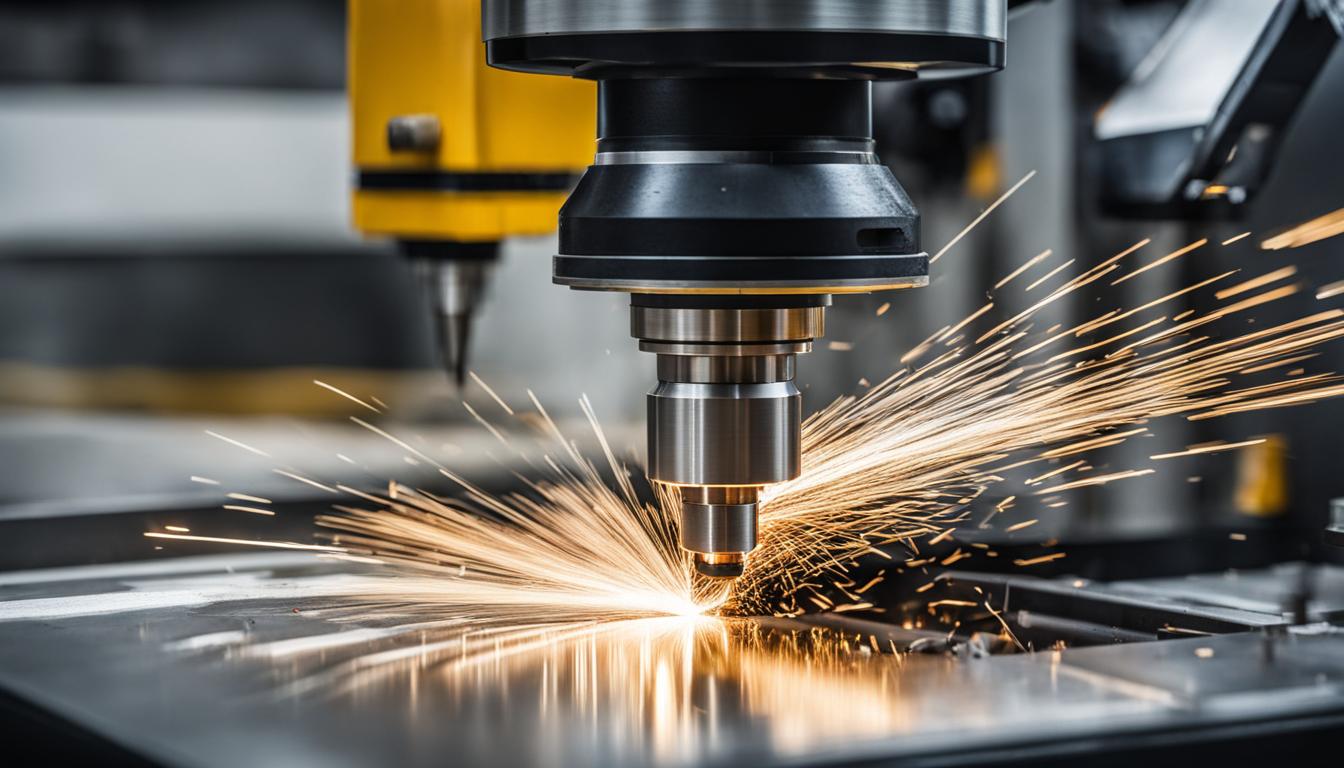
Computer Numerical Control (CNC) prototyping stands as a cornerstone in modern product development, enabling engineers to transform digital designs into tangible, functional components with exceptional speed and accuracy. This subtractive manufacturing process is indispensable for validating designs, conducting rigorous functional testing, and facilitating iterative improvements across diverse industries, from aerospace to consumer electronics.
Accelerating Development with Low-Volume Quick Turn Parts
Rapid prototyping with CNC machining significantly shortens product development cycles, allowing for the swift creation of low-volume parts. Simple aluminum prototypes can often ship in 1-3 days, while more complex designs or those requiring specialized materials might take 3-10 days. This expedited turnaround is crucial for maintaining project momentum and responding quickly to market demands.
Several factors influence the overall lead time for CNC prototypes. Part complexity, including features requiring multiple setups or 4- and 5-axis access, directly impacts programming and machining duration. Material availability also plays a role; common alloys like 6061 aluminum are often readily stocked, whereas exotic materials may require longer procurement times.
Achieving precise dimensional control is a hallmark of CNC prototyping. Standard manufacturing tolerances typically range from ±0.005 inches (±0.127 mm) for general-purpose parts. For applications demanding higher accuracy, precision machining services can achieve tolerances of ±0.001 inches (±0.0254 mm) or better, with industry leaders reaching 1-3 microns for critical medical and aerospace components.
Enabling Agile Product Evolution Through Rapid Design Iteration
| Material | Key Properties | Typical Applications |
|---|---|---|
| Aluminum 6061 | Lightweight, good strength, excellent machinability, corrosion resistant | Electronics enclosures, heat sinks, general industrial parts, drone frames |
| Aluminum 7075 | Very high strength, good fatigue resistance, aerospace grade | Aerospace components, high-stress structural parts |
| Stainless Steel 304 | Good corrosion resistance, high strength, weldable, cost-effective | Medical devices, food processing equipment, general industrial components |
| Stainless Steel 316 | Superior corrosion resistance (especially to chlorides), higher strength | Marine applications, chemical processing, surgical instruments |
| Carbon Steel (e.g., 1045) | High strength, good wear resistance, affordable | Shafts, pins, gears, fasteners, machine components |
CNC machining is inherently suited for rapid design iteration, providing the flexibility to adjust designs and specifications on the fly. Unlike traditional methods that require expensive and time-consuming tooling changes, CNC machines can be reprogrammed quickly to adapt to design modifications, fostering an agile development environment.
This capability for quick reiteration allows engineers to test, validate, and refine designs rapidly. Fast feedback loops are established, enabling prompt identification and correction of design flaws or performance issues before committing to full-scale production. This iterative process significantly reduces the risk of costly late-stage changes.
CNC prototyping effectively bridges the gap between conceptual digital models and physical reality. Prototypes produced via CNC closely resemble final production parts in form and function, facilitating comprehensive functional testing and design validation under real-world conditions.
Functional Metal Testing and Optimal Material Selection
Functional testing of prototypes is paramount, requiring parts to be manufactured from materials that closely mimic the properties of the intended production material. CNC machining allows for the creation of prototypes using a wide array of metals, ensuring that tests accurately reflect real-world performance.
Aluminum alloys, particularly 6061, are widely used for CNC prototypes due to their excellent machinability, high strength-to-weight ratio, and corrosion resistance. For aerospace applications or those requiring higher strength, 7075 aluminum is often selected. Stainless steel grades like 304 and 316 are chosen for their exceptional corrosion resistance and robust mechanical properties, crucial for harsh environments.
Optimizing feeds and speeds is critical for successful metal machining, impacting surface finish, tool life, and dimensional accuracy. For 6061 aluminum, typical cutting speeds for carbide tools range from 300-800 surface feet per minute (SFM), with chip loads around 0.002-0.005 inches per tooth. Machining 304 stainless steel, a work-hardening material, often requires lower surface speeds (150-250 SFM for carbide) and lighter chip loads (0.001-0.002 inches per tooth) to prevent premature tool wear and ensure a clean cut.
Enhancing Producibility with CAD DFM Analysis
Design for Manufacturability (DFM) analysis is a critical process integrated early in the prototyping stage to optimize designs for efficient and cost-effective production. This methodology scrutinizes a part’s design to identify and mitigate potential manufacturing challenges before physical production begins.
CAD software plays a pivotal role in DFM, allowing engineers to analyze designs for manufacturability, reduce the number of parts, standardize components, and streamline the overall manufacturing process. By addressing these considerations upfront, DFM significantly reduces costs, shortens lead times, and enhances the quality of custom parts.
Specific DFM considerations for CNC machining include designing internal features with rounded corners to accommodate tool geometry, ensuring adequate wall thickness to prevent warping or breakage under cutting loads, and simplifying part geometry where possible. These practices prevent expensive secondary operations and rework, ensuring a smoother transition to production.
Seamless Transition to Short-Run Production Batches
CNC prototyping services are instrumental in bridging the gap between initial prototypes and short-run production batches. This capability allows businesses to produce small to moderate quantities of items, typically ranging from 10 to 10,000 pieces, without the significant upfront investment required for mass production tooling.
The advantages of utilizing CNC for short-run production are numerous, including cost-effectiveness for specialized or custom parts, high precision, and consistent quality across all units. This approach provides greater flexibility, rapid turnaround times, and minimal initial investment, making it ideal for new product launches or niche markets.
Short-run production also offers scalability benefits; if initial market testing proves successful, production can be scaled up efficiently. This strategy enables businesses to quickly respond to customer feedback, incorporate market trends into design, and penetrate markets faster, diversifying risk while optimizing profitability.