
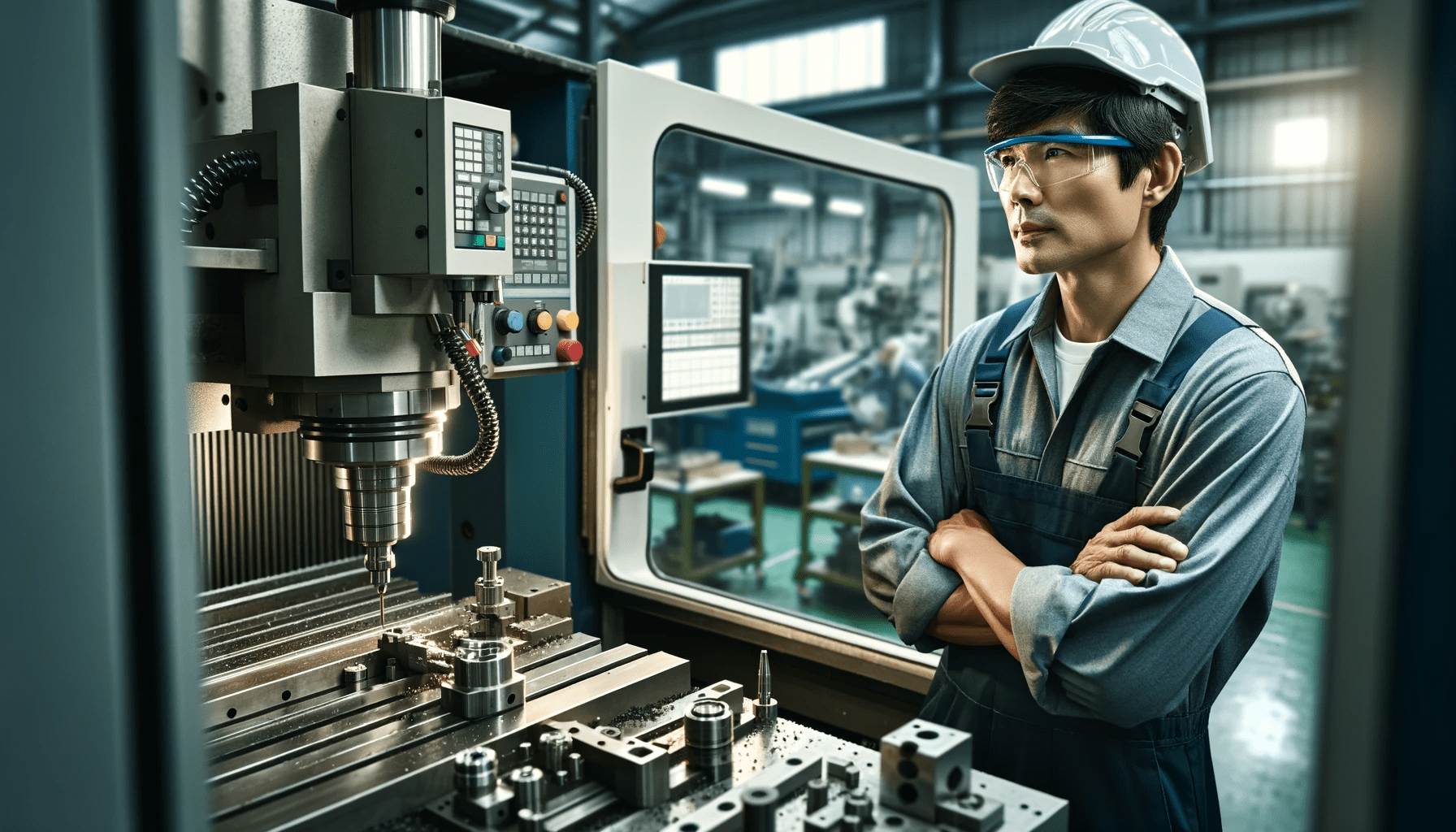
Smart cities rely on a complex interplay of advanced hardware, demanding exceptional precision in manufacturing. Computer Numerical Control (CNC) machining is indispensable for producing the intricate, high-tolerance components that form the backbone of these urban ecosystems. This technology ensures the reliability and longevity required for critical infrastructure.
Precision machining capabilities have advanced significantly, with industry leaders now achieving dimensional control at ±0.0025 mm (±0.0001″) or better, and some even reaching 1-3 microns for highly critical applications like medical and aerospace components. This level of accuracy is vital for parts that must fit and function flawlessly within integrated systems.
Precision Machining for Smart City Infrastructure
Smart infrastructure hardware, encompassing everything from intelligent traffic systems to environmental monitoring stations, requires components that are both robust and dimensionally accurate. CNC machining provides the necessary control to produce these parts from various materials, ensuring they withstand harsh urban environments and perform consistently. Materials like 6061 aluminum and 304 stainless steel are frequently chosen for their strength, corrosion resistance, and machinability.
Manufacturing these components often involves complex geometries, internal coolant channels, and precision datum surfaces, particularly in applications like AI data center cooling systems. Five-axis CNC machining is increasingly utilized for such parts, allowing for angled fluid ports, multi-sided mounting surfaces, and integrated flow and structural geometry with fewer setups, which reduces fixturing errors and improves feature-to-feature relationships.
Achieving tight tolerances is paramount for smart infrastructure. Standard manufacturing tolerances typically range from ±0.127 mm to ±0.254 mm (±0.005″ to ±0.010″), but precision machining services operate within ±0.0254 mm to ±0.0508 mm (±0.001″ to ±0.002″) ranges. For critical applications, tolerances can be as tight as ±0.0005 inches, with specialized techniques reaching 1-5 microns.
The hardware requirements for CNC systems themselves are also evolving, demanding powerful performance and computing ability from industrial panel PCs to control complex software, process G-code, and ensure accurate control for carving, finishing, drilling, and tapping operations. These systems must be dust-proof, shock-proof, and anti-interference to meet demanding workshop environments.
Advanced Facade Milling Techniques
| Material | Tool Type | Cutting Speed (Vc) | Chip Load (fz) | Typical Machined Tolerance |
|---|---|---|---|---|
| 6061 Aluminum | Carbide End Mill | 300 m/min | 0.05-0.10 mm/tooth | ±0.0254 mm (±0.001″) |
| 304 Stainless Steel | Carbide End Mill | 60-75 m/min (200-250 SFM) | 0.05-0.15 mm/tooth (0.002-0.006 in/tooth) | ±0.0254 mm (±0.001″) |
Architectural facade milling creates visually striking and structurally sound exterior elements for smart buildings. These components often feature intricate designs and require high precision to ensure seamless integration and aesthetic appeal. Aluminum, particularly 6061 and 7075 alloys, is a common material due to its lightweight properties, excellent machinability, and corrosion resistance, often finished with anodizing for durability.
Milling allowances for custom architectural metal parts are critical, with 0.1 mm per side often reserved for faces involved in part interfaces. Non-mating faces can be milled straight to tolerance, typically around ±0.2–0.3 mm. Over-reserving allowance can lead to costly on-site finishing and color-matching issues.
Facade companies typically work to installation tolerances as low as 1mm, though British Standards and the NSSS specify 10mm. This discrepancy highlights the need for adjustable brackets in facade design to compensate for variations in the underlying structural steelwork, which may have tolerances of ±15mm or more.
CNC milling significantly reduces rework rates in custom architectural metal projects by maintaining assembly accuracy, especially for complex joints, multi-slot assemblies, or hidden-connector systems. Manual methods often struggle to achieve the required ±0.1 mm accuracy for these intricate features.
Sensor Enclosure Manufacturing Standards
Sensor enclosures are vital for protecting sensitive electronic components in smart city deployments from environmental factors like dust, moisture, and physical impact. The choice of material and manufacturing process directly impacts the enclosure’s ability to maintain optimal operating conditions for sensors, ensuring accuracy and longevity.
IP (Ingress Protection) ratings classify the degree of protection an enclosure provides against solids and liquids. Common ratings for sensor enclosures include IP65, IP66, IP67, and IP68, with higher numbers indicating superior protection. For instance, an IP67 rating means the enclosure is dust-tight and can withstand immersion in water up to 1 meter for 30 minutes.
Materials such as aluminum, stainless steel, and engineering plastics like ABS or polycarbonate are frequently used for sensor enclosures. Aluminum offers good thermal management and durability, while stainless steel, particularly 316L, provides enhanced corrosion resistance for harsh environments.
Manufacturing consistency is crucial to retain IP certification validity, whether for basic industrial use (e.g., IP40) or rigorous immersed sensor applications (e.g., IP68). The design must account for thermal management and robust construction to withstand environmental challenges.
CNC Production of Mass Transit Components
Mass transit systems demand components that meet stringent mechanical and regulatory benchmarks, including fatigue resistance, safety, and traceability. CNC machining is essential for producing parts that endure extreme wear and tear, ensuring the reliability and longevity of urban transportation infrastructure.
Materials commonly used include HSLA steels (A572/A588), 1018/1045, 4140/4340, 17-4PH, 304/316 stainless steel, 6061 aluminum, and ductile/cast iron. These materials are selected for their strength, durability, and ability to withstand constant operational stress.
Machined tolerances for mass transit components typically range from ±0.02 mm to ±0.10 mm, depending on the specific feature. This precision is critical for components like wheel hubs, axles, brake cylinders, and propulsion elements, where controlled Total Indicator Runout (TIR) and precise fits are paramount for safety and performance.
Feeds and speeds for machining these materials are carefully optimized. For 6061 aluminum, a cutting speed of 300 m/min and a chip load of 0.05-0.10 mm/tooth are practical starting points for carbide end mills. For 304 stainless steel, typical cutting speeds are 60-75 m/min (200-250 SFM) with carbide end mills, and a feed per tooth between 0.05-0.15 mm/tooth (0.002-0.006 in/tooth) is recommended to prevent work hardening and tool chipping.
Fabricating Urban Technology Fixtures
Urban technology fixtures, such as smart lighting poles, public information kiosks, and charging stations, integrate various electronic and mechanical systems into the urban landscape. CNC machining plays a critical role in producing the housings, mounting brackets, and aesthetic panels for these fixtures, ensuring both functionality and visual harmony with the city environment.
Manufacturing these fixtures often involves a blend of materials, including aluminum alloys for lightweight and corrosion-resistant enclosures, and stainless steel for structural integrity and vandal resistance. Engineering plastics like ABS and polycarbonate are also used for internal components or specific aesthetic requirements due to their impact strength and low heat conductivity.
The trend towards ‘urban manufacturing’ facilitates the local production of these goods, leveraging advanced technologies like CNC routing and 3D printing. This approach reduces delivery distances and utilizes existing urban infrastructure for material procurement, contributing to sustainability and economic resilience.
Precision in fabricating urban technology fixtures extends to surface finishes and assembly features. Components often require specific surface treatments like anodizing for aluminum or passivation for stainless steel to enhance durability and appearance. Accurate drilling, tapping, and O-ring grooves are essential for weatherproofing and secure assembly.