
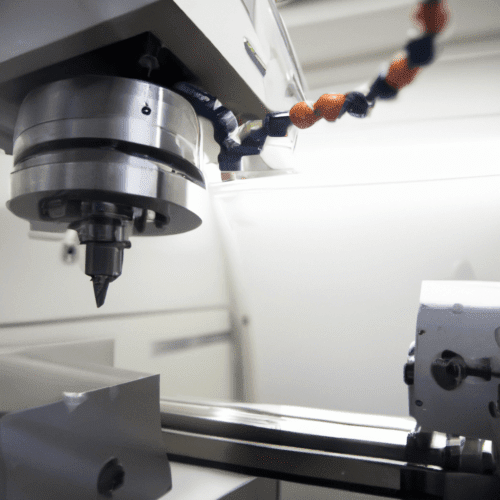
Constructing a CNC machine from individual components offers significant advantages in customization and cost efficiency. This approach allows engineers and hobbyists to tailor the machine’s capabilities precisely to specific manufacturing needs, from intricate woodworking to light metal machining.
Aluminum Extrusion Frame Design and Assembly
Aluminum extrusion frames provide a robust and modular foundation for DIY CNC machines due to their high strength-to-weight ratio and ease of assembly. Common profiles like 20x20mm, 20x40mm, and 40x80mm are widely available, offering varying levels of rigidity.
Selecting the appropriate extrusion profile is critical for machine stiffness, directly impacting accuracy and surface finish. For smaller desktop CNC routers, 20x40mm or 40x40mm profiles often suffice, while larger machines or those intended for harder materials benefit from 40x80mm or 80x80mm extrusions.
Frame assembly typically involves T-nuts and specialized corner brackets or internal connectors, ensuring squareness and rigidity. Standard dimensional tolerances for aluminum extrusions can vary, but general straightness is often around 0.0125 inches per foot, and flatness around 0.004 inches per inch of width. Achieving precise alignment during assembly is paramount to prevent binding and inaccuracies in machine movement.
Proper fastening torque for bolts securing the frame components is essential to maintain structural integrity and prevent loosening under vibration, which could compromise the machine’s long-term accuracy.
Stepper Motor Selection and Installation
| Feature | A4988 Stepper Driver | DRV8825 Stepper Driver |
|---|---|---|
| Max Current (per coil) | Up to 2A | Up to 2.5A (with cooling) |
| Microstepping Resolution | Up to 1/16 step | Up to 1/32 step |
| Input Voltage Range | 8-35V | 8.2-45V |
| Thermal Shutdown | Yes | Yes |
| Overcurrent Protection | Yes | Yes |
Stepper motors are the workhorses of most DIY CNC machines, providing precise, open-loop positional control. NEMA 17 and NEMA 23 are the most common sizes, referring to the motor’s faceplate dimensions.
NEMA 17 motors are suitable for lighter loads and smaller machines, typically offering holding torques from 0.2 to 0.8 Nm (approximately 30-80 N·cm or 40-80 oz-in). NEMA 23 motors, with their larger size and increased power, provide holding torques ranging from 0.5 to 3.0 Nm (approximately 120-300 N·cm or 140-175 oz-in), making them ideal for larger machines or applications requiring more force.
Motor installation involves securely mounting the stepper motors to the machine’s axes using appropriate brackets, ensuring proper alignment with the lead screws or belt drives. Misalignment can introduce friction, reduce motor efficiency, and lead to skipped steps, compromising machining accuracy.
Dampers or flexible couplings are often integrated between the motor shaft and the lead screw to absorb vibrations and compensate for minor misalignments, extending component lifespan and improving motion smoothness.
Arduino/GRBL Controller Configuration
The Arduino Uno, paired with GRBL firmware, forms a cost-effective and highly capable CNC controller for hobbyist and small-scale professional machines. GRBL is an open-source, high-performance G-code parser and motion controller.
Flashing GRBL onto an Arduino Uno involves using the Arduino IDE to upload the firmware, which translates G-code commands into precise stepper motor movements. The latest stable GRBL version, often 1.1h or newer, offers improved performance and features like real-time feed override, laser mode, and optional dual motor support for self-squaring gantry homing.
Post-installation, GRBL requires configuration of various machine parameters via serial commands, including steps per millimeter for each axis, maximum travel limits, acceleration values, and homing sequences. These settings are crucial for accurate machine operation and safety, and it is recommended to save existing GRBL settings before updating firmware.
A typical setup involves connecting the Arduino to a computer via USB for G-code streaming, with the Arduino then sending step and direction signals to the stepper motor drivers. The Arduino Uno’s 16MHz clock can handle up to about 30kHz step pulses, suitable for most stepper motors with microstepping.
Lead Screw Assembly and Backlash Management
Lead screws convert rotational motion from stepper motors into linear motion, driving the CNC machine’s axes. Acme and ball screws are the two primary types used in CNC applications, with trapezoidal threads also common in metric systems.
Acme lead screws are economical and suitable for many DIY projects, but they inherently have some backlash due to the clearance between the screw and nut threads. Ball screws, while more expensive, offer significantly higher precision and efficiency with minimal backlash, making them preferred for demanding applications.
Backlash, the play between the lead screw and nut, can cause inaccuracies, especially during direction changes. Anti-backlash nuts, often spring-loaded, are commonly used with Acme screws to minimize this effect by maintaining constant pressure against the screw threads. For ball screws, preloaded nuts are standard to eliminate play.
Proper lubrication of lead screws is essential for smooth operation, reduced wear, and extended lifespan, typically using lithium-based grease or specialized dry lubricants. Software backlash compensation can also be employed in some CNC control systems to account for known backlash values.
Wiring Electronic Drivers and Safety Protocols
Electronic stepper motor drivers, such as the A4988 or DRV8825, translate the low-power step and direction signals from the GRBL controller into higher-current pulses required to energize the stepper motor coils.
The DRV8825 driver offers higher current capabilities (up to 2.5A per coil without active cooling, 1.5A with passive cooling) and finer microstepping resolutions (up to 1/32 step) compared to the A4988, which typically handles up to 2A and 1/16 microstepping. This allows for smoother motor movement and potentially higher precision, making the DRV8825 a popular choice for DIY CNC projects.
Wiring involves connecting the drivers to the Arduino (step, direction, enable pins), the stepper motors (four wires for bipolar motors), and a power supply (typically 12-48V DC). Correct polarity and secure connections are vital to prevent damage to components, and identifying motor coil pairs is a crucial first step.
Implementing emergency stop buttons, limit switches, and proper grounding practices are critical safety measures to protect both the operator and the machine from electrical faults or runaway conditions. All CNC machines must be properly grounded to prevent electrical surges and shocks, and regular inspection of cables and wiring is essential.