
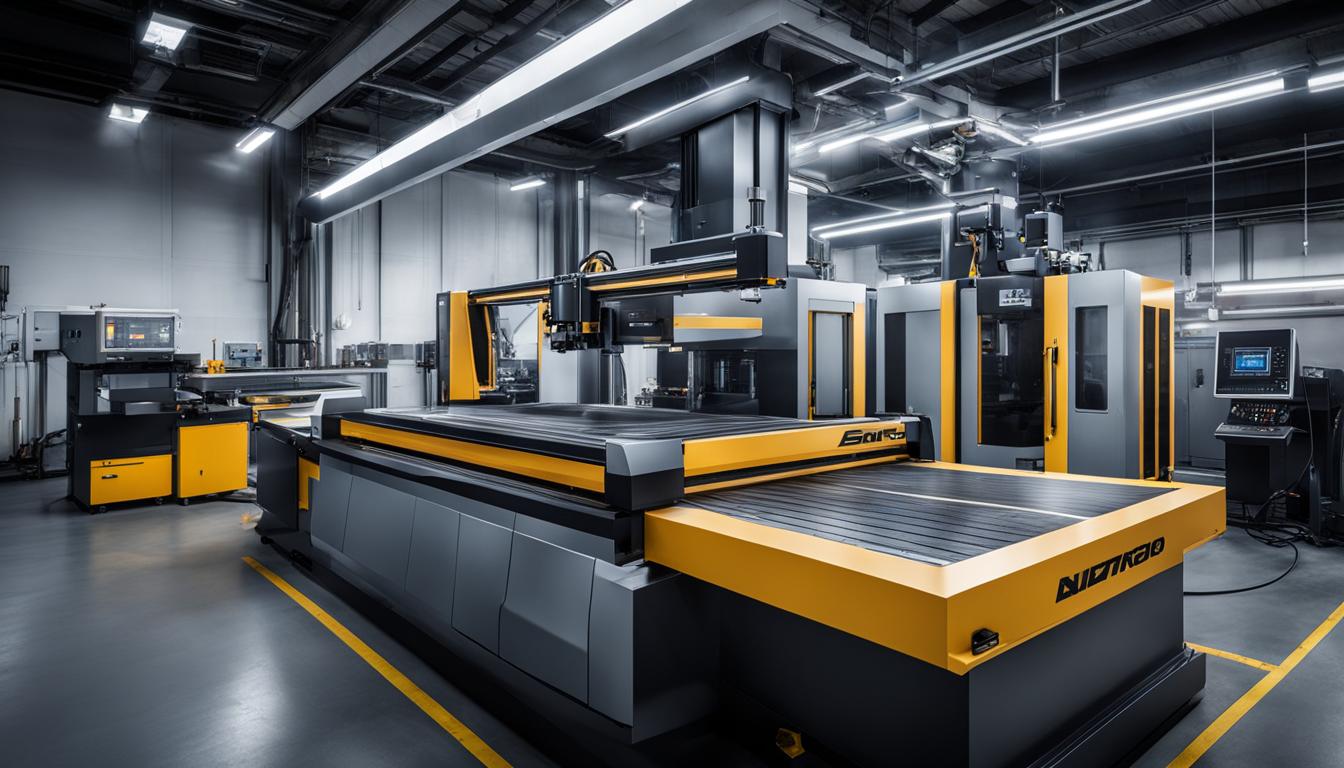
Modern CNC programming extends far beyond basic G-code, embracing sophisticated techniques to achieve unparalleled precision and efficiency in manufacturing. Contemporary practices leverage tailored routines, parametric designs, and algorithmic toolpaths to address complex production challenges. This evolution is critical for shops aiming to maximize machine productivity and reduce programming time.
The demand for custom solutions in CNC machining continues to grow, driven by the need for intricate parts and optimized processes. Programmers are increasingly utilizing advanced G-code features, such as variables and conditional statements, to create flexible and adaptive manufacturing workflows. This approach allows for dynamic adjustments directly on the machine controller, enhancing automation.
Tailored Macro Program Routines
Macro programming enables dynamic logic, variables, conditional statements, and loops within G-code, effectively transforming the CNC into a small programmable controller. This capability allows machinists to move beyond single-part thinking and develop reusable logic for various applications. Fanuc’s Macro B, for instance, provides access to variables, mathematical operations, and flow control.
Custom macros are invaluable for automating repetitive tasks, such as machining bolt circles or a series of pockets, significantly reducing manual programming time and minimizing human error. They also ensure consistency across families of parts. Programmers can define their own G and M codes or redefine existing ones, allowing for highly specialized machine behaviors.
For example, a standard M06 tool change command can be redefined to automatically move axes to a specific tool change position and orient the spindle before executing the tool change. This combines multiple functions into a single, user-defined command, shortening programs and preventing forgotten steps. Such customization is achieved by setting specific parameters on the CNC control to call a custom macro program.
Custom Parametric Part Generation
| Tolerance Grade | Typical Range (mm) | Achievable Materials | Cost Impact (vs. ±0.1mm) |
|---|---|---|---|
| Standard Commercial | ±0.05 to ±0.13 | Aluminum, Steel, Brass, Copper, Titanium | Baseline |
| Precision Grade | ±0.01 to ±0.05 | Aluminum, Steel, Brass, Copper | 3-5x higher for ±0.01mm |
| Ultra-High Precision | ±0.005 | Specialized Alloys, Aerospace Grade | Significantly higher |
| Engineering Plastics | ±0.15 to ±0.25 | Delrin, Nylon, PEEK | Higher than metal for equivalent precision |
Parametric programming transforms CNC code into a smart, adaptive system by replacing fixed numerical values with variables, formulas, and logical conditions. This allows programs to dynamically adjust to different part sizes, repeat patterns, and even make decisions based on input parameters. It is particularly beneficial for manufacturing families of parts with similar geometries but varying dimensions.
This programming method significantly shortens code length and simplifies modifications, as changes to a few variables can alter an entire part’s dimensions without rewriting extensive G-code. Parametric programming is often considered the closest CNC programmers get to higher-level languages like C++ or Python, offering features such as arithmetic, loops, branching, and data storage.
Common applications include general-purpose routines, complex motion generation like cutting tapers, and any process that benefits from dynamic adjustment. While CAM software can generate thousands of lines of code for complex parts, parametric programming allows for concise, adaptable code directly at the G-code level.
Algorithmic Toolpath Design
Algorithmic toolpath design is a critical approach to optimizing toolpath generation, enhancing machining efficiency, and ensuring precision. These strategies leverage advanced algorithms to ensure cutting tools move in the most effective and economical way, minimizing non-cutting movements and maximizing material removal rates.
Modern CAM software incorporates adaptive clearing, a dynamic toolpath strategy that adjusts feed rates and tool engagement to maintain consistent cutting forces. This technique reduces tool wear, minimizes the risk of breakage, and results in faster material removal compared to traditional roughing methods.
Further advancements include trochoidal milling, which uses circular toolpaths with small radial stepovers to reduce cutting forces and vibrations, improving surface finish. Toolpath smoothing algorithms also minimize abrupt changes in cutting direction, enhancing both surface finish and dimensional accuracy.
The integration of AI and machine learning is revolutionizing toolpath optimization, enabling the development of smarter, more adaptive machining strategies. These AI-powered tools can automatically select tools, generate optimized toolpaths, and identify the best machining strategies, significantly boosting productivity and accuracy.
Specialized Fixture Offsets
Fixture offsets define different work coordinate systems (WCS), allowing the CNC machine to accurately locate the workpiece on the table. This is crucial for running multiple parts in a single cycle or avoiding toolpath modifications for different setups, saving considerable time in high-volume production.
Standard fixture offsets, such as G54 through G59, are commonly used, with extended offsets like G54.1 P1-P99 providing even greater flexibility for numerous setups. Programmers define these offset locations on the machine controller, and they are called using specific work coordinate offset register numbers.
Properly defining and verifying fixture offsets is paramount to prevent part errors. Technicians use probes or dial indicators to locate reference features and input X, Y, and Z offsets into the controller. Incorrect offset entry is a frequent cause of scrapped parts, even with a correct program.
For reusable fixtures, it is essential to map multiple work offsets to durable physical stations, ensuring each position has a stable physical datum. Documenting how each station locates, how its offset is verified, and the applicable clearance envelope is critical before production.
Proprietary Cycle Integration
Proprietary cycle integration involves embedding custom machining routines directly into the CNC controller’s firmware or utilizing advanced macro capabilities to create user-defined cycles. This allows manufacturers to implement highly specialized operations tailored to unique part geometries or material requirements that standard canned cycles cannot address.
Many modern CNC controllers, including those from Fanuc, Haas, and Okuma, offer robust macro programming languages (e.g., Fanuc Custom Macro B, Okuma User Task) that facilitate the creation of these proprietary cycles. These cycles can automate complex sequences, such as helical milling, bolt hole patterns, or anti-chatter turning, improving efficiency and consistency.
Integrating proprietary cycles often involves leveraging the controller’s ability to access and manipulate system variables, tool offsets, and machine parameters directly from within the G-code program. This level of control enables sophisticated automation, such as automatic coordinate calculation based on part size or real-time tool wear tracking.
The development of such cycles requires a deep understanding of the specific CNC control system and its programming language. Companies like CNC Innovations specialize in providing custom programming solutions, including database, communications, and process control systems, to enhance production processes for various industries.