
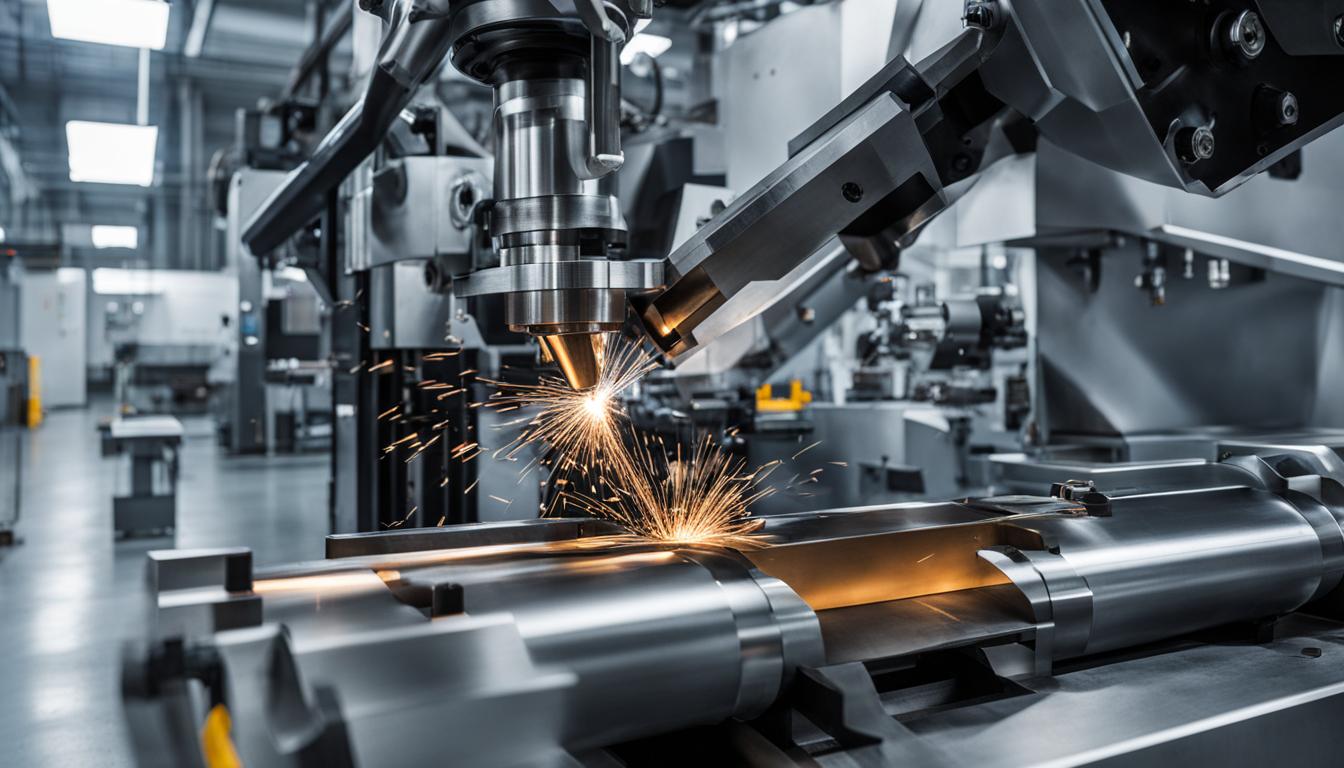
Precision Computer Numerical Control (CNC) machining in the USA offers critical advantages for industries demanding high accuracy and reliability. Domestic manufacturers provide advanced capabilities, ensuring stringent quality control and adherence to complex specifications for diverse applications. This approach supports robust supply chains and fosters innovation across various sectors.
ITAR Defense Compliance in Precision CNC
International Traffic in Arms Regulations (ITAR) compliance is a non-negotiable requirement for US-based CNC machine shops handling defense-related articles and technical data. These regulations, administered by the US State Department’s Directorate of Defense Trade Controls (DDTC), restrict access to sensitive defense technologies to ‘US persons’ unless an export license is explicitly approved.
ITAR registration signifies a manufacturing facility is identified to the DDTC as handling controlled items or data, requiring annual filing and a documented compliance program. This program includes technology control plans, employee training, and verification of a US-person workforce.
Machine shops must maintain secure data management systems and controlled access to technical documentation to prevent unauthorized access to sensitive information. For defense contractors, partnering with ITAR-compliant suppliers significantly reduces regulatory risk and ensures products meet government and military requirements.
Beyond ITAR registration, defense CNC suppliers often require AS9100D certification and must demonstrate Cybersecurity Maturity Model Certification (CMMC) Level 2 readiness for handling Controlled Unclassified Information (CUI). These certifications ensure robust quality management and cybersecurity protocols are in place.
ISO 9001 Certified Machine Shops
| Tolerance Category | Imperial (inches) | Metric (mm) | Typical Applications |
|---|---|---|---|
| Standard | ±0.005″ | ±0.127 mm | General industrial parts, non-critical dimensions |
| Tight | ±0.002″ | ±0.050 mm | Precisely fitting components, bearing bores, locating pins |
| Precision | ±0.001″ | ±0.025 mm | Critical mating surfaces, aerospace, medical components |
| Ultra-Precision | ±0.0001″ | ±0.0025 mm | Medical devices, aerospace systems, defense equipment |
| Surface Finish (Ra) | Value (μm) | Typical Applications | |
| General Machined | 3.2 – 6.3 | Non-critical surfaces, cosmetic finishes | |
| Fine Machined | 0.8 – 1.6 | Turbine blades, structural fasteners | |
| Precision Ground/Polished | 0.4 – 0.8 | Hydraulic components, critical sealing surfaces |
ISO 9001 certification establishes a globally recognized standard for a company’s Quality Management System (QMS), applicable across all industries. For CNC machining operations, ISO 9001 provides a structured framework to ensure consistent process controls, documented manufacturing protocols, and defined preventive actions against non-conformance.
This certification signifies a commitment to continuous improvement, traceability, and customer satisfaction, enhancing consistency and product repeatability. ISO-certified shops adhere to written processes, ensuring parts meet specifications consistently, whether it’s the first run or the hundredth.
Partnering with an ISO 9001-certified precision engineering company offers predictability, leading to reduced errors and more reliable delivery timelines. Every stage of the CNC machining process is monitored, allowing for early identification of potential bottlenecks or quality inconsistencies.
ISO 9001 also mandates clear communication channels and a focus on customer feedback, ensuring that complex finishes or tight tolerances are formally reviewed before production. This structured approach eliminates guesswork, ensuring the final part consistently matches the design intent.
Domestic Prototype to Production
Domestic CNC machining services offer a seamless transition from initial prototype development to full-scale production, providing significant advantages in lead time and quality consistency. This integrated approach allows manufacturers to bring products to market faster by working with a single engineering partner.
Prototyping with CNC machining is highly effective for testing new designs rapidly, enabling quick identification and correction of design flaws before committing to large production runs. This method is cost-effective for low-volume production as it does not require expensive tooling.
The ability to quickly modify designs and update programs within a short timeframe reduces development cycles and facilitates efficient testing of ideas. This flexibility is crucial for industries requiring rapid iteration and responsiveness to market demands.
When a project scales to production, the same manufacturing knowledge, quality controls, and machining expertise remain in place, eliminating the need to transfer information to new suppliers. This ensures improved component consistency and reduced supply chain complexity.
Domestic Aerospace Machining
Aerospace components demand exceptionally tight tolerances and rigorous quality standards due to the catastrophic consequences of part failure. Critical features often require tolerances in the ±0.01mm to ±0.005mm range, significantly tighter than general industrial standards.
Common aerospace materials include titanium alloys (e.g., Ti-6Al-4V) for their high strength-to-weight ratio and corrosion resistance, and aluminum alloys (e.g., 7075, 2024) for airframe components. Superalloys like Inconel 718 are used for extreme temperature applications.
Aerospace machining requires full material traceability, including material certificates and process records for any heat treatment or surface finishing. Extensive inspection, such as First Article Inspection (FAI) and Coordinate Measuring Machine (CMM) verification, is standard.
Surface finish is also critical for aerospace components, impacting fatigue life and corrosion resistance. Typical surface roughness (Ra) values range from 0.4-0.8μm for hydraulic components to 0.8-1.6μm for turbine blades.
Fast Turnaround Shipping
Expedited manufacturing services in the USA are crucial for projects with tight timelines, offering quick turnaround times for prototypes, urgent repairs, and production orders. Some services can deliver qualified parts in as few as two business days.
Domestic sourcing significantly reduces lead times compared to offshore manufacturing, which can sometimes take months or even a year. This efficiency minimizes delays and helps manufacturers respond quickly to market demands.
The advantages of a localized supply chain include reduced shipping costs, enhanced quality control, and better safeguarding of intellectual property. These factors contribute to overall cost-effectiveness and improved supply chain resilience.
Streamlined production processes and optimized machining workflows, often supported by advanced automation, further contribute to faster turnaround times. This agility allows manufacturers to meet tight deadlines and capitalize on market opportunities.