
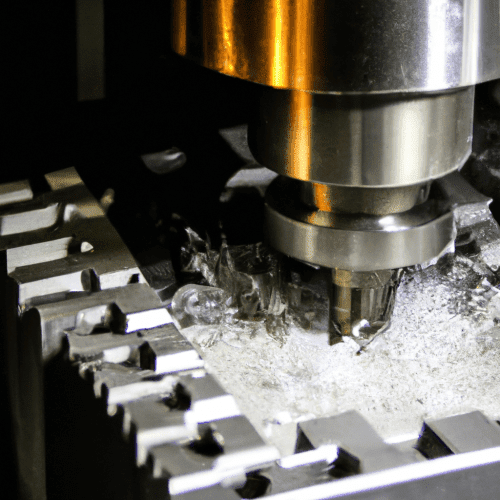
Computer Numerical Control, widely known as CNC, represents an automated manufacturing process where pre-programmed computer software dictates the movement of factory tools and machinery. This advanced system allows for precise control over a wide array of complex machines, from lathes and mills to routers and grinders.
Understanding Computer Numerical Control Fundamentals
CNC technology fundamentally transforms manual machining operations into highly efficient, automated processes. It integrates computer systems directly with machine tools, enabling intricate part production with minimal human intervention during the actual machining cycle.
The core of any CNC system involves several key components working in concert. These typically include the machine tool itself, a controller unit, servo or stepper motors, drive systems, and feedback devices. Each element plays a critical role in translating digital instructions into physical motion.
Modern CNC machines often feature multi-axis capabilities, allowing for simultaneous movement along three, four, five, or even more axes. This expanded kinematic range facilitates the creation of highly complex geometries and reduces the need for multiple setups, significantly improving efficiency and part accuracy.
The Essence of Subtractive Automation
| Material | Operation | Spindle Speed (RPM) | Feed Rate (IPM) | Typical ISO 2768-1 Tolerance (mm) |
|---|---|---|---|---|
| Aluminum (6061-T6) | Milling (Roughing) | 8,000 – 18,000 | 40 – 100 | ±0.1 to ±0.3 (Medium ‘m’ class) |
| Steel (Mild) | Milling (Roughing) | 200 – 400 | 8 – 20 | ±0.1 to ±0.3 (Medium ‘m’ class) |
| Aluminum (6061-T6) | Turning | 600 – 1200 | 10 – 30 | ±0.1 to ±0.3 (Medium ‘m’ class) |
Subtractive automation defines a manufacturing methodology where material is removed from a solid workpiece to create a desired shape. Unlike additive processes that build up material, CNC subtractive methods precisely cut, drill, mill, or grind away excess material.
This approach is highly effective for producing parts with tight tolerances and excellent surface finishes from a vast range of materials, including metals, plastics, composites, and wood. The automated nature ensures consistent quality across large production runs.
Common subtractive processes include milling, turning, drilling, and grinding, each employing specialized cutting tools. The choice of process depends on the part geometry, material properties, and required precision.
Digital Manufacturing Workflow and Integration
Digital manufacturing integrates computer-aided design (CAD) and computer-aided manufacturing (CAM) software into a seamless production workflow. This digital thread begins with a 3D model created in CAD, which defines the part’s geometry and specifications.
The CAD model is then imported into CAM software, where toolpaths are generated. CAM engineers define cutting strategies, select appropriate tools, and simulate the machining process to optimize efficiency and prevent collisions.
This digital integration minimizes errors, reduces prototyping time, and allows for rapid iteration and design changes. The entire process, from concept to finished part, is managed within a digital environment, enhancing control and traceability.
G-Code: the Language of Machine Control
G-code, often referred to as ‘Geometric Code’, is the primary programming language used to instruct CNC machines. It consists of alphanumeric commands that dictate specific actions, such as tool movement, spindle speed, feed rate, and coolant activation.
Each line of G-code typically represents a single instruction, executed sequentially by the CNC controller. For instance, ‘G01 X100 Y50 F200’ commands a linear interpolation to coordinates X100, Y50 at a feed rate of 200 units per minute.
M-codes, or ‘Miscellaneous Codes’, complement G-codes by controlling machine functions like tool changes, program stops, and spindle direction. Together, G-codes and M-codes form the comprehensive instruction set for automated machining operations.
Achieving Precision Through Machine Automation
Precision machine automation is a hallmark of CNC technology, delivering exceptionally tight tolerances and repeatable results. Modern CNC machines are engineered with robust structures, high-resolution encoders, and advanced control algorithms to achieve micron-level accuracy.
Standard machining tolerances, often referenced by ISO 2768, specify general tolerances for linear and angular dimensions without individual tolerance indications. For fine machining, these can range from ±0.05 mm to ±0.15 mm, depending on the tolerance class and nominal length.
Closed-loop feedback systems are integral to maintaining this precision. These systems continuously monitor the actual position of machine axes and compare it to the commanded position, making real-time adjustments to correct any deviations.