
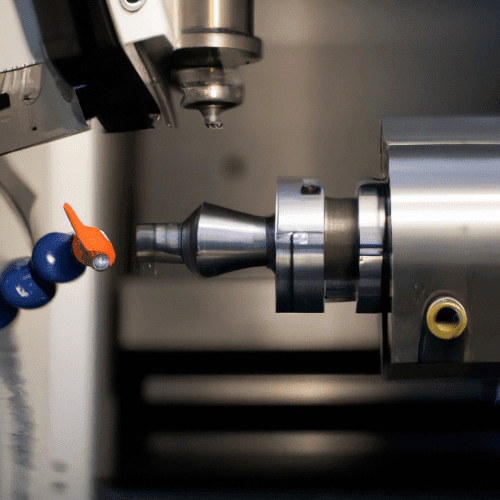
Computer Numerical Control (CNC) machining services have become indispensable for modern manufacturing, offering unparalleled precision, speed, and versatility. These services enable businesses to transform digital designs into physical components with exceptional accuracy, supporting a wide array of industries from aerospace to medical devices. The ability to produce complex geometries with repeatable quality makes CNC a cornerstone of contemporary production strategies.
The demand for high-precision mechanical components continues to grow, driven by advancements in automation, robotics, and electric vehicles. CNC machining remains critical for meeting these stringent requirements, balancing quality, efficiency, and cost control effectively.
Streamlining Production with On-Demand Manufacturing
On-demand manufacturing, facilitated by CNC machining services, offers businesses significant agility in production. This approach allows for the rapid creation of parts only when needed, minimizing inventory holding costs and reducing lead times. It directly addresses supply chain volatility by enabling quick responses to market shifts and unforeseen demands.
This model is particularly beneficial for ‘high-mix, low-volume’ production scenarios, where diverse components are required in smaller quantities. Manufacturers can quickly adjust designs through CAD/CAM programs, eliminating the need for new molds and offering substantial flexibility.
Modern CNC practices, including deeper automation and robotic loading/unloading, further enhance on-demand capabilities. These innovations reduce errors, minimize downtime, and allow for ‘lights-out machining’ routines, where production continues with minimal human intervention.
Accelerating Innovation Through Low-Volume Prototyping
| Parameter | Typical Range / Description | Notes |
|---|---|---|
| Standard CNC Tolerance | ±0.05 mm (±0.002″) to ±0.13 mm (±0.005″) | Common for most milling and turning operations; cost-effective for general applications. |
| Precision Grade Tolerance | ±0.01 mm (±0.0004″) to ±0.025 mm (±0.001″) | Achievable with careful process control, proper tooling, and experienced operators; increases costs. |
| Aluminum 6061 Milling (Carbide) – Cutting Speed | 300-800 SFM (hobby/desktop) to 1000-4000 SFM (industrial) | High speeds are generally recommended; adjust for tool diameter, coating, and machine rigidity. |
| Aluminum 6061 Milling (Carbide) – Chip Load | 0.002″-0.005″ per tooth | Crucial for preventing built-up edge and ensuring proper chip evacuation. |
| 304 Stainless Steel Milling (Carbide) – Cutting Speed | 150-250 SFM (milling) to 150-220 m/min (turning) | Lower speeds for roughing, higher for finishing; use appropriate coatings. |
| 304 Stainless Steel Milling (Carbide) – Feed per Tooth | 0.001″-0.006″ per tooth (milling) | Lighter chip loads than carbon steel to avoid work hardening; ensure consistent chip load. |
CNC machining is a vital tool for rapid prototyping, allowing engineers to quickly iterate and validate designs. The ability to produce functional prototypes from a wide range of engineering-grade materials enables thorough testing and refinement before committing to mass production. This significantly shortens the product development cycle.
Combining additive and subtractive manufacturing processes, known as hybrid manufacturing, is a growing trend in prototyping. This approach can reduce material waste by building a part close to its final shape with additive methods, then finishing critical features with CNC machining.
Artificial intelligence (AI) is also being integrated into early prototyping stages. AI-powered design tools can optimize CAD models, identify potential design conflicts, and simulate product performance, further reducing costly design revisions.
The Efficiency of Instant Online Quoting
Instant online quoting systems have revolutionized the procurement of machined parts by providing real-time pricing and manufacturability feedback. These platforms leverage AI algorithms to analyze 3D CAD files, generating precise cost estimates and lead times in seconds or minutes.
This automated process replaces traditional Request for Quote (RFQ) methods, which often caused delays of days. Engineers receive actionable pricing during design meetings, enabling immediate budget decisions and significantly compressing product development timelines.
Advanced platforms offer granular control over production parameters, including micron-level tolerances and specialized surface treatments. They also provide automated Design for Manufacturability (DFM) feedback, identifying features that could increase costs and helping optimize designs.
Strategic Advantages of Outsourced Shop Production
Outsourcing CNC machining services provides businesses with access to advanced technology without substantial capital investment. This includes state-of-the-art multi-axis milling and turning machines, software updates, and inspection systems.
This strategy offers significant scalability and flexibility, allowing companies to adjust production volumes according to fluctuating market demands. Whether for a single prototype or a large production run, outsourced partners can accommodate varying needs efficiently.
Cost-effectiveness is another major benefit, as outsourcing eliminates expenses related to maintaining in-house facilities, equipment maintenance, and staff training. This allows businesses to allocate financial resources more strategically.
Leveraging Expert Machinist Access and Specialized Knowledge
Reputable CNC machining services employ experienced engineers, machinists, and quality control experts. Outsourcing provides immediate access to this specialized knowledge, ensuring high-quality output and adherence to industry standards.
These experts possess deep understanding of material properties, complex geometries, and optimal machining strategies. Their problem-solving skills are invaluable for intricate setups, fixture design, and troubleshooting, especially for challenging materials like stainless steel or titanium.
The ongoing machinist shortage in 2026 makes access to skilled professionals even more critical. Outsourcing can mitigate this challenge by providing a reliable source of expertise, allowing companies to focus on their core competencies.
Key Technical Parameters for CNC Machining
Achieving optimal results in CNC machining relies on precise control over various technical parameters. Tolerances, feeds, and speeds are fundamental to part quality, tool life, and overall efficiency. Understanding these specifications is crucial for successful project execution.