
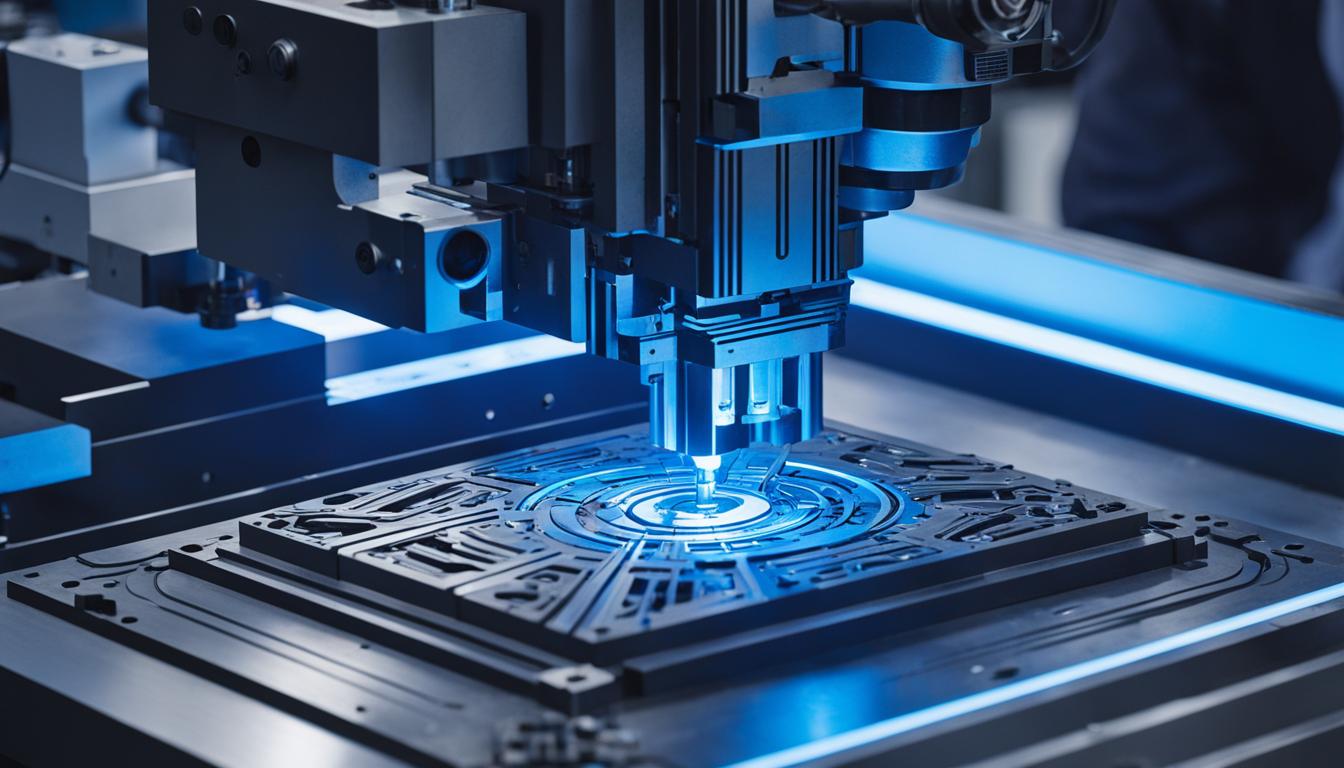
Effective CNC programming is a cornerstone of modern manufacturing, demanding precision and a deep understanding of machine kinematics. In 2026, the field has evolved significantly, incorporating advanced simulation, AI-augmented G-code, and real-time feedback loops to achieve sub-micron accuracy and optimize toolpath efficiency.
Precision CNC programming extends beyond basic coordinate entry, requiring expertise in managing thermal stability, vibration, and material stress. Modern practices emphasize the ‘Precision-First 4S Protocol’—Setup, Simulation, Sync, and Scrutiny—to minimize scrap rates and ensure tool longevity.
Foundational CNC Programming and Modern Practices
Understanding G-code and M-code remains fundamental for any CNC programmer, serving as the direct language for machine instructions. Programmers must also interpret blueprints, comprehend machine tool functions, and master advanced techniques like multi-axis and parametric programming.
Modern CNC programming integrates sophisticated software, making processes faster and more accurate. CAM software packages such as Mastercam, Fusion 360, SolidWorks CAM, and Siemens NX are essential tools for designing parts, simulating operations, and optimizing toolpaths.
Standard machining tolerances typically range around ±0.125 mm (±0.005 inches) for most linear dimensions, balancing precision with cost-effectiveness for non-critical features. However, precision applications, particularly in aerospace and medical sectors, often demand tighter tolerances, reaching ±0.025 mm (±0.001 inches) or even ±0.0025 mm (±0.0001 inches) with specialized equipment and controlled environments.
Feeds and speeds are critical parameters that dictate how a cutting tool moves through material and rotates. Spindle speed (RPM) controls how fast the bit spins, while feed rate (mm/min or IPM) determines how quickly the machine moves the bit through the workpiece. Incorrect settings can lead to poor surface finish, excessive heat buildup, tool wear, or even tool breakage.
Online Platforms for G-Code and CAM Proficiency
| Feature | Udemy G-code Courses | Titan of CNC Academy |
|---|---|---|
| Cost Model | Individual course purchase (often discounted) or subscription | Free access to courses, projects, and resources |
| Content Focus | Basic G-code, specific CAM software versions (e.g., Mastercam 2026), general CNC programming | Comprehensive CAD/CAM/CNC, 3-axis to 5-axis machining, shop management, certifications |
| Learning Style | Self-paced video lectures, exercises, downloadable PDFs | Self-paced video tutorials, project-based learning, 3D models, process documents |
| Certifications | Course completion certificates | Offers certifications for various programs |
Udemy offers a variety of G-code beginner courses, providing accessible entry points for aspiring CNC programmers. Courses like ‘Basic G-code Programming for CNC Mills’ teach hand-writing G-code for 3-axis mills, covering rough and finish profile milling, face milling, cutter compensation, and canned cycles for drilling.
Many Udemy courses, including those for Mastercam 2026, are regularly updated and provide downloadable resources and mobile access. These platforms often cater to individuals seeking to learn G-code for various CNC machines, including Haas, Doosan, Mori, and Mazak.
Titan of CNC Academy provides extensive free online CNC training courses, encompassing a wide range of topics from fundamental machine setup to advanced 5-axis simultaneous operations. Their curriculum includes structured CAD, CAM, and CNC tutorials, often building in complexity.
The Academy offers specialized series such as ‘TITAN ROCKET LATHE’ and ‘TITAN BUILDING BLOCKS MILL,’ which guide students through programming solid model parts in Fusion 360. These resources are designed to enhance a machinist’s skillset and prepare them for advanced roles in the industry.
Advanced CAM Software Training
Mastercam University provides an extensive virtual training portal with 24/7 access to self-paced Mastercam classes. These courses are developed by experts and trusted partners, offering intuitive instruction with real-world exercises applicable immediately.
The platform covers a comprehensive range of Mastercam expertise, from beginner basics to advanced techniques, including 2D hole operations, surface finish options, and part handling. Students can download a free Mastercam Demo/Home Learning Edition and receive a certificate upon course completion.
Mastercam training includes specialized courses such as ‘Mastercam Mill 3D’ and ‘Mastercam Mill 5-Axis,’ which delve into advanced surface machining, toolpath filtering, tolerance settings, and gouge checking. These programs are crucial for developing proficiency in complex multi-axis machining.
Industry-Recognized Certifications and Vocational Pathways
Tooling U-SME offers industry-leading online classes and certifications that are widely recognized for validating manufacturing knowledge and skills. These self-paced classes, typically 60 minutes in length, are accessible on various devices and cover topics like CNC, blueprint reading, and inspection.
Certifications such as the Certified Manufacturing Associate (CMfgA), Certified Manufacturing Technologist (CMfgT), and Certified Manufacturing Engineer (CMfgE) are aligned with current workforce needs and emerging technologies. These credentials provide clear pathways for career progression from entry-level to leadership roles.
Vocational college programs offer structured pathways to CNC machining careers, combining technical education with hands-on training. Institutions like Goodwin University and Anoka Technical College provide certificates and Associate of Applied Science (AAS) degrees, focusing on practical skills and industry-standard equipment.
These programs typically cover G-code and M-code, machine setup, blueprint reading, quality control, and advanced CAD/CAM software like Mastercam. Many vocational colleges emphasize real machine access and shop-floor training, preparing graduates for immediate entry into the workforce.
Selecting the Right CNC Programming Education
Choosing an appropriate CNC programming education depends on individual career goals, existing skill levels, and preferred learning styles. Online platforms offer flexibility and self-paced learning, ideal for those seeking to upskill or gain foundational knowledge without a rigid schedule.
For individuals aiming for comprehensive, hands-on experience and industry-recognized credentials, vocational college programs or specialized certifications from organizations like Tooling U-SME provide structured curricula and practical application. These pathways often lead to direct employment opportunities in advanced manufacturing.
Continuous learning is paramount in the rapidly evolving CNC industry, with new technologies like AI-native machining and digital twins becoming integral to daily operations. Machinists must adapt to new software tools, machine technologies, and Industry 4.0 concepts to remain competitive.