
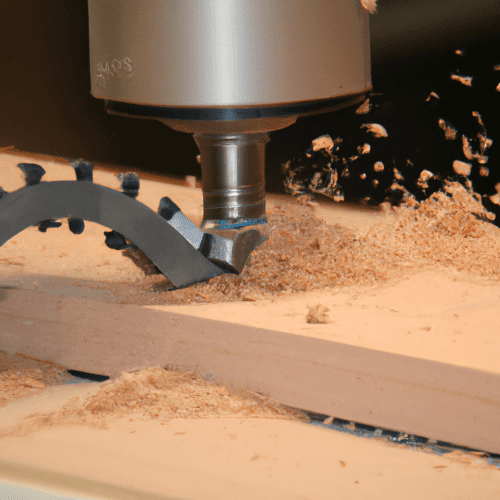
Computer Numerical Control (CNC) woodworking integrates automated precision into traditional wood fabrication, enabling complex geometries and repeatable accuracy across various applications. This technology has fundamentally reshaped how wood products are designed and manufactured, from furniture components to intricate artistic pieces.
Modern CNC routers offer significant advantages over manual methods, including enhanced precision, reduced material waste, and increased production efficiency. The global CNC router market is projected to reach $4.4 billion by 2026, underscoring the growing adoption of these machines in the woodworking industry.
CNC Wood Routers: Precision and Versatility
CNC wood routers are electromechanical systems that utilize computer control to guide cutting tools across a workpiece. These machines typically feature a gantry-style frame, a high-speed spindle, and a control system that interprets G-code to execute precise movements.
Spindle power is a critical specification, directly influencing cutting force, surface finish, and overall efficiency. For woodworking and plastics, a spindle motor in the 3 kW to 5 kW range is commonly recommended, though hobbyist machines may use 0.8 kW to 2.2 kW. Industrial applications, especially for solid hardwood or high-speed nesting, often require 4.5 kW to 6 kW or more to maintain consistent torque at various RPMs.
Router bits, typically made of solid carbide for durability and heat resistance, come in various geometries. Single-flute bits excel in soft wood and plastics for chip clearance, while two-flute bits offer a balanced approach for wood, MDF, and acrylic. Compression bits, combining upcut and downcut flutes, are ideal for sheet goods like melamine and veneered plywood, providing clean edges on both sides.
Achievable tolerances in CNC woodworking are generally within ±0.05 mm for standard commercial applications. Precision-grade work can reach ±0.01 mm, though this requires specialized equipment, careful process control, and often increases costs by 3-5 times compared to standard tolerances.
Cabinet Panel Nesting: Maximizing Material Yield
| Material Type | Recommended RPM | Feed Rate (IPM) | Chip Load (IPT) |
|---|---|---|---|
| Softwood | 18,000-22,000 | 100-150 | 0.005-0.008 |
| Hardwood (Oak, Maple) | 16,000-18,000 | 80-120 | 0.003-0.004 |
| Plywood (Baltic Birch) | 16,000-18,000 | 100-140 | 0.003-0.004 |
| MDF | 16,000-18,000 | 100-150 | 0.003-0.005 |
Cabinet panel nesting is a manufacturing strategy that optimizes the layout of multiple parts on a single sheet of material to minimize waste. This process is crucial for industries like furniture and cabinetry, where material costs significantly impact profitability.
Specialized nesting software employs advanced algorithms to arrange parts, often boosting material yield by 8% to 15% compared to manual or basic rectangular nesting. Programs like OptiNest, Mozaik, and PolyBoard offer features such as true-shape nesting, common line cutting, and automatic generation of G-code and cut lists.
The software integrates seamlessly with CAD/CAM systems, streamlining the design-to-production workflow. This automation reduces programming time from hours to minutes and enhances quality control by ensuring accurate part creation every time.
3D Wood Relief Carving: Artistic Expression
3D wood relief carving on a CNC router involves cutting designs with varying depths into a flat board, creating a sculpted, raised image. This process typically uses 2.5D toolpaths, moving in X, Y, and Z axes from a single side of the workpiece.
Achieving intricate detail requires specific tooling and software. Flat end mills are used for roughing passes to remove bulk material, while ball nose bits and tapered ball nose bits are essential for smooth 3D contours and finishing passes. V-bits can also be employed for accent lines and engraving.
Specialized CAM software, such as Carveco Maker, VCarve Desktop/Aspire, or Fusion 360, is necessary to generate the complex 3D toolpaths. These programs calculate multi-axis movements to produce smooth contours and fine details. Dense hardwoods like maple or walnut are preferred materials as they capture fine detail better than softwoods.
Vacuum Bed Clamping: Secure Workholding
Vacuum bed clamping systems utilize suction to hold flat materials securely against the CNC router’s worktable. This method is widely adopted for sheet processing because it eliminates the need for mechanical clamps across the top surface, providing full access to the workpiece.
These systems typically consist of a vacuum pump or generator, a grid table or porous surface, sealing cords, and zone valves. Zoned vacuum tables, which allow specific areas to be activated, are particularly efficient for mixed-size jobs and save energy.
While highly effective for large, flat panels like plywood and MDF, very small or porous materials may require supplementary workholding methods. Hybrid tables, combining vacuum suction with T-slots for mechanical clamps, offer versatile solutions for irregular shapes or materials difficult to hold with vacuum alone.
Dust Extraction Integration: Safety and Performance
Effective dust extraction is paramount in CNC woodworking, protecting operator health, reducing fire hazards, and improving cut quality. Wood and MDF dust, classified as Group 1 carcinogens by IARC, can be harmful if inhaled, making robust extraction systems critical.
A comprehensive dust collection system typically includes a dust shoe mounted around the spindle, a flexible hose, a cyclone separator, and a vacuum or dedicated dust collector with HEPA filtration. The dust shoe captures chips at the source, preventing them from spreading.
Cyclone separators are highly recommended as they separate heavier debris before it reaches the main filter, maintaining consistent suction and extending filter life. For mid-size routers, systems with 600–1200 CFM capacity are common, while large industrial machines may require 2000+ CFM with zoned ducting. OSHA regulates wood dust exposure, with a Permissible Exposure Limit of 15 mg/m³ total dust over an 8-hour shift.