
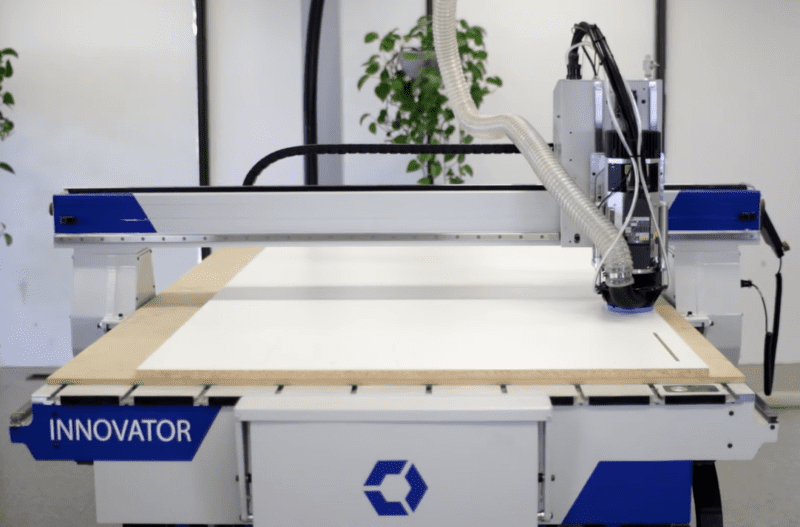
Crafting high-quality CNC furniture demands a precise integration of advanced software and specialized tooling. Achieving optimal material utilization, accurate joinery, and superior surface finishes relies heavily on selecting the right digital and physical tools for each stage of the design and manufacturing process.
Modern CNC woodworking workflows prioritize efficiency and repeatability, moving beyond traditional methods to leverage computational power. This technical guide explores the critical tools and practices that empower engineers and fabricators to produce exceptional CNC-milled furniture components.
Parametric 3D CAD Software for Furniture Design
Parametric 3D CAD software forms the foundational backbone of contemporary CNC furniture design, enabling designers to define geometric relationships and dimensions that automatically update when changes are made. This dynamic capability is invaluable for furniture, where design iterations and custom sizing are common requirements.
Programs like Autodesk Fusion 360, SolidWorks, and Onshape are widely adopted, offering robust features for creating complex assemblies and individual components. Fusion 360, for instance, is noted for its integrated CAD/CAM/simulation capabilities, making it a versatile choice for makers and professionals alike. These platforms allow engineers to establish parameters for dimensions, material thicknesses, and joint types, ensuring design consistency and reducing errors during modifications.
The ability to generate accurate 2D drawings, cut lists, and bill of materials directly from the 3D model streamlines the transition from design to manufacturing. Autodesk Inventor, particularly with the Woodwork for Inventor (W4I) add-on, provides specialized features for millwork, including grain direction management, automatic edge banding, and hardware pattern databases.
Nesting Software Optimization for Material Efficiency
| Bit Type | Common Materials | Typical Application | Recommended Chip Load (in/flute) |
|---|---|---|---|
| Up-cut Spiral | Plywood, MDF, Solid Wood | Through-cutting, pocketing, good chip evacuation | 0.003 – 0.004 (Plywood/MDF) |
| Down-cut Spiral | Plywood, Laminates, Veneers | Clean top surface, prevents splintering | 0.003 – 0.004 (Plywood/MDF) |
| Compression | Plywood, Melamine, MDF | Clean cuts on both top and bottom surfaces | 0.003 – 0.004 (Plywood/MDF) |
| Straight Flute | Wood, MDF, Plywood | Dados, grooves, general purpose | 0.004 – 0.007 (MDF/Particle Board) |
Nesting software is a critical component in CNC furniture production, designed to maximize material yield from sheet goods like plywood and MDF. These applications employ sophisticated algorithms to arrange parts on stock sheets, significantly reducing waste and improving profitability.
Leading nesting solutions, such as VCarve Pro, OptiNest, and EnRoute, utilize true-shape nesting engines that consider part geometry, rotation constraints, and grain direction. This advanced optimization can boost material yield by 8 to 15 percent compared to manual or basic rectangular nesting.
Many nesting programs also offer features like remnant management, allowing shops to track and utilize leftover material from previous jobs. Browser-based rectangular nesting tools like Cutlistor and CutList Optimizer provide quick estimates and panel breakdown plans, while industrial CAM nesting suites like AlphaCAM and SigmaNEST offer comprehensive true-shape nesting with machine-specific post-processors for high-volume production.
Dog-Bone Joint Tools for Perfect Fit
CNC routing with round bits inherently creates rounded internal corners, which can prevent mating parts with square corners from fitting together precisely. Dog-bone joints, also known as ‘T-bones’ or ‘fillet reliefs,’ are a standard solution to this challenge in CNC joinery.
These specialized corner reliefs are designed to provide clearance for the router bit, allowing square tenons or tabs to fully engage with mortises or pockets. The most common dog-bone solution involves integrating a circular recess at each internal angle, typically offset at a 45° or 135° angle to minimize material removal and visual impact.
Some CAD/CAM software includes automated tools for generating dog-bones, simplifying the design process. The choice between a standard dog-bone (visible from both sides) and a T-bone (offering a cleaner interior corner) depends on aesthetic preferences and structural requirements. Proper implementation ensures strong, flush-fitting joints without manual cleanup.
CNC Router Bit Selection
Selecting the appropriate CNC router bit is paramount for achieving desired cut quality, tool life, and machining efficiency. Bit geometry, material, and coating must align with the workpiece material and the specific cutting operation.
Carbide bits are the industry standard due to their superior durability and heat resistance, outperforming high-speed steel (HSS) significantly. Coatings like Titanium Nitride (TiN) and Titanium Carbo-Nitride (TiCN) further enhance wear resistance and tool longevity, particularly when cutting abrasive materials like MDF.
Feeds and speeds, including spindle RPM, feed rate, and chip load, are critical parameters that must be carefully calculated. Chip load, defined as the thickness of material removed by each cutting edge per revolution, directly impacts cut quality and tool health. A chip load that is too small causes rubbing and excessive heat, while one that is too large leads to deflection and bit breakage.
For woodworking, a typical chip load for hardwoods ranges from 0.001–0.003 inches per flute, while for plywood and MDF, it can be 0.003–0.004 inches per tooth. General-purpose cutting with 1/4′ bits often uses 16,000 to 18,000 RPM, with feed rates adjusted proportionally to maintain the target chip load. Axial depth of cut (DOC) should generally not exceed 1x the bit diameter for softwoods and 0.5x for hardwoods, with slotting operations requiring a reduced DOC of 0.5x diameter regardless of material.
Sheet Material Layout Tools
Effective sheet material layout tools are essential for pre-production planning, ensuring that raw stock is managed efficiently before it reaches the CNC router. These tools help visualize and plan cuts for standard sheet sizes, such as 4×8 or 5×10 panels, minimizing offcuts and optimizing material purchasing.
While nesting software focuses on arranging parts, layout tools often provide a broader perspective on stock management, allowing users to define stock sheets, apply kerf width, and manage grain direction constraints. This upstream planning reduces waste and ensures that the correct number and size of sheets are ordered for a project.
Software like Cutlistor and CutOps offer browser-based solutions for generating optimized panel layouts, complete with visual cut plans and CSV exports for machine import. These tools are particularly useful for validating layout efficiency and sheet count, preventing costly rework during CAM programming. Standard CNC machining tolerances for woodworking typically range from ±0.125 mm (±0.005 in) for most linear dimensions, with precision work sometimes requiring tighter controls.