
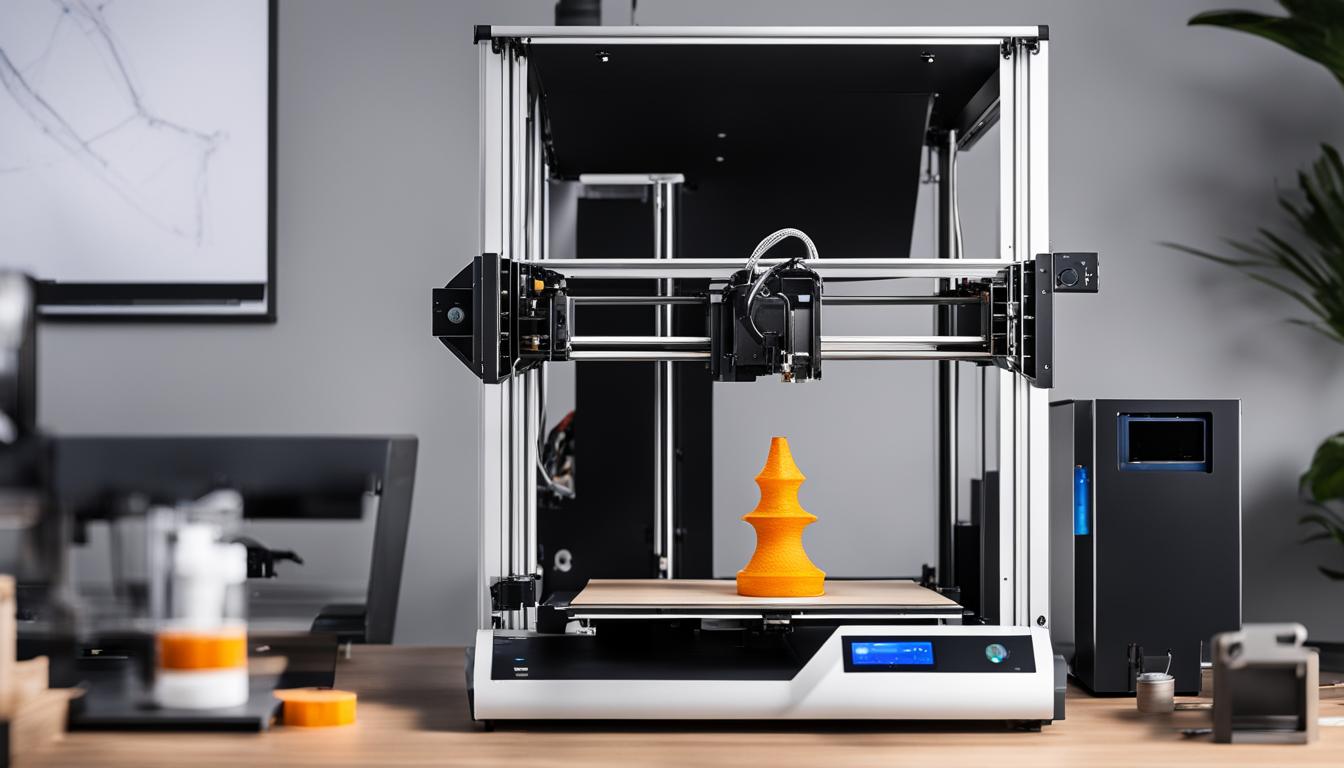
Additive manufacturing has transformed prototyping and production across numerous industries. Formlabs offers a comprehensive ecosystem of 3D printing solutions, encompassing both Stereolithography (SLA) and Selective Laser Sintering (SLS) technologies. These systems are designed for precision, reliability, and ease of use, enabling engineers and manufacturers to produce high-quality parts in-house.
This guide delves into the technical capabilities of Formlabs’ advanced printers, their specialized materials, and the essential post-processing workflows. Understanding these systems is crucial for optimizing design and achieving desired mechanical properties and surface finishes for industrial applications.
Formlabs Form 3 Stereolithography: Precision and Detail
The Formlabs Form 3, and its larger counterpart the Form 3L, utilize Low Force Stereolithography (LFS) technology, a significant advancement over traditional SLA. LFS minimizes peel forces during printing through a flexible resin tank and a custom-designed Light Processing Unit (LPU). This innovation results in superior surface quality, reduced support structures, and enhanced part accuracy.
The Form 3 features a build volume of 14.5 × 14.5 × 18.5 cm (5.7 × 5.7 × 7.3 inches) and offers layer resolutions ranging from 25 to 300 microns. Its LPU employs a system of lenses and mirrors to deliver a crisp, clean laser spot, ensuring the laser beam is always perpendicular to the print plane for uniform quality. This precise control allows for the creation of highly detailed models with sharp edges, even for intricate features like embossed text or small holes.
Design considerations for Form 3 models include minimum supported wall thicknesses of 0.2 mm and unsupported walls of 0.2 mm. Features thinner than this may warp or detach due to peel forces or solvent absorption during washing. The printer’s automated features, such as resin filling and print profile application, streamline the workflow considerably.
Formlabs Fuse 1 Selective Laser Sintering: Strength and Functionality
| Feature | Form 3 (SLA) | Fuse 1+ 30W (SLS) |
|---|---|---|
| Technology | Low Force Stereolithography (LFS) | Selective Laser Sintering (SLS) |
| Build Volume (W×D×H) | 14.5 × 14.5 × 18.5 cm | 16.5 × 16.5 × 30 cm |
| Layer Resolution | 25 – 300 microns | 110 microns |
| XY Resolution | 25 microns | 200 microns (laser spot size) |
| Typical Tolerance (XY) | +/- 0.1 mm (material dependent) | +/- 0.5% or 0.3 mm (whichever is larger) |
| Support Structures | Required (light-touch) | Not required |
| Primary Materials | Photopolymer Resins | Nylon Powders, TPU Powder |
For robust, functional parts, the Formlabs Fuse 1 and Fuse 1+ 30W employ Selective Laser Sintering (SLS) technology. This process uses a powerful laser to selectively fuse powdered material, typically nylon, into solid objects. A key advantage of SLS is the absence of support structures, as the unfused powder naturally supports the part during printing, allowing for complex geometries and internal features.
The Fuse 1+ 30W boasts a build volume of 165 × 165 × 300 mm (6.5 × 6.5 × 11.8 inches) and a layer thickness of 110 microns. Its 30W ytterbium fiber laser enables faster print speeds and compatibility with a broader range of materials, including TPU 90A Powder for flexible parts. The system is designed for high-speed output, making it suitable for rapid prototyping and small-batch manufacturing.
SLS parts from the Fuse Series achieve a standard XY tolerance of +/- 0.5% or 0.3 mm, whichever is larger, and a Z-axis accuracy of +/- 1% or 0.6 mm, whichever is smaller. Design guidelines recommend minimum unsupported and supported wall thicknesses of 0.6 mm for vertical walls and 0.3 mm for horizontal walls. Holes smaller than 1.0 mm in diameter may close during printing, and escape holes of at least 3.5 mm are recommended for internal cavities to remove unsintered powder.
Biocompatible Resin Options
Formlabs offers an extensive portfolio of biocompatible resins, crucial for medical and dental applications. These materials are developed and manufactured under a quality management system certified to ISO 13485 and EU MDR, ensuring compliance with stringent regulatory standards. Formlabs’ FDA-registered facility produces these resins in an ISO Class 8 clean room.
Notable biocompatible resins include Dental LT Clear Resin (V2), which is Class IIa certified for occlusal splints and bite splints, offering high clarity, fracture resistance, and colorfastness. Premium Teeth Resin, cleared by the FDA, EU, UK, Switzerland, and Canada, allows for 3D printing of natural-looking teeth for temporary crowns, bridges, and dentures.
Other specialized BioMed resins like BioMed Amber, BioMed Clear, BioMed Durable, and BioMed Flex 80A are also ISO 10993 certified, suitable for various skin-contacting and medical device applications. Post-curing is a mandatory step for all biocompatible materials to achieve the necessary safety standards and optimal mechanical properties.
Achieving Industrial Prototype Quality
Formlabs printers are engineered to deliver industrial-quality parts directly on the desktop or in-house. The LFS technology of the Form 3 series ensures exceptional surface finish and detail, making it ideal for high-fidelity prototypes that closely mimic final product aesthetics. The flexible build plate on newer models like the Form 3+ also simplifies part removal, reducing the risk of damage.
For functional prototypes and end-use parts requiring high strength and durability, the Fuse 1 series SLS printers excel. The ability to print complex geometries without supports, combined with materials like Nylon 12 and Nylon 11, provides robust parts suitable for rigorous testing and demanding applications. The high packing density of SLS also contributes to cost-effective production at scale.
Maintaining consistent print quality across batches is facilitated by Formlabs’ integrated software, PreForm, which offers automatic mesh repair and optimized print settings. Real-time monitoring and advanced sensing in the printers further enhance reliability and reduce print failures, crucial for industrial environments.
Wash and Cure Post-Processing
Effective post-processing is integral to achieving the final mechanical properties and desired aesthetics of 3D printed parts. Formlabs provides integrated solutions with the Form Wash and Form Cure stations, designed to streamline this critical workflow.
After printing, SLA parts require washing to remove uncured liquid resin. The Form Wash automates this process, using isopropyl alcohol (IPA) or other solvents to clean parts thoroughly and consistently. Proper washing prevents stickiness and prepares parts for subsequent steps.
Post-curing is then performed in the Form Cure or Form Cure V2, which utilizes a combination of heat and 405 nm UV light to complete the polymerization process. The Form Cure V2, for example, features a 48-LED array and a convection heating system that reaches up to 100 °C, ensuring uniform UV and heat distribution. This step significantly enhances the part’s strength, toughness, heat resistance, and surface hardness. For biocompatible resins, post-curing is a regulatory requirement to meet safety standards.