
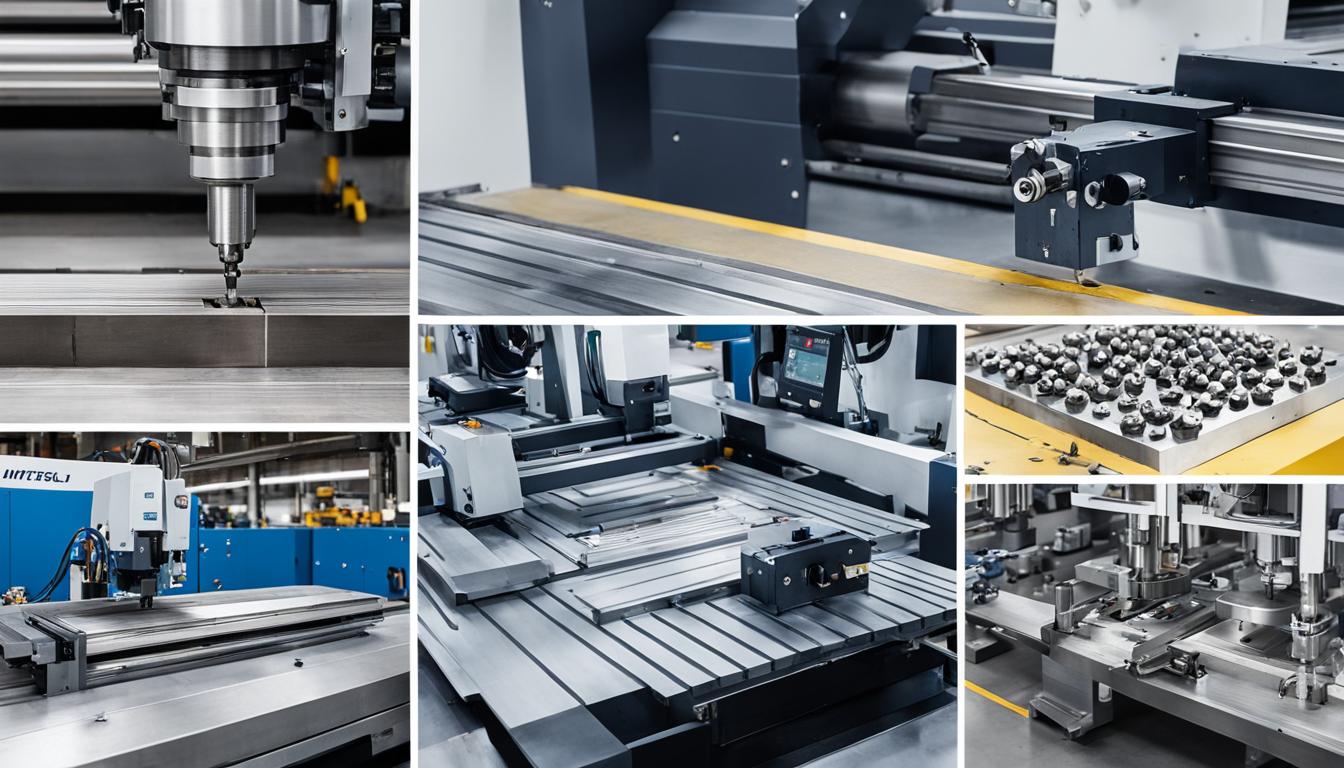
Los Angeles stands as a prominent hub for advanced manufacturing, with precision CNC machining services forming a critical backbone for numerous high-stakes industries. The region’s machine shops cater to sectors demanding exceptional accuracy, material integrity, and stringent quality control. This includes aerospace, defense, and medical device manufacturing, alongside specialized short-run production and precision turning applications.
The manufacturing sector in Los Angeles is substantial, employing over 500,000 workers and serving as the nation’s largest manufacturing center. This robust ecosystem supports a diverse range of companies, from major aerospace and defense OEMs to innovative medical device startups.
California Aerospace Machining Excellence
Aerospace machining in Los Angeles requires adherence to the highest industry standards, primarily AS9100 Rev D certification. This quality management system, built upon ISO 9001:2015, incorporates specific requirements for product safety, counterfeit parts prevention, configuration management, and risk-based thinking.
Machine shops serving the aerospace sector in Southern California, including the Los Angeles metro area, are often AS9100D-certified, ensuring full material traceability and the capability to handle complex geometries with tight tolerances. These facilities produce critical components for aircraft and spacecraft, operating under challenging conditions from high altitudes to extreme temperatures.
Common aerospace alloys machined include titanium, Inconel, and various aluminum grades like 7075. Machining these materials demands specialized tooling and optimized parameters due to their unique properties, such as Inconel’s rapid work hardening and high-temperature strength. For instance, milling Inconel 718 typically requires surface speeds of 80-120 SFM (25-35 m/min) and feed per tooth of 0.001-0.003 inches (0.025-0.075 mm) to manage heat and cut beneath the work-hardened layer.
Precision in aerospace components often means tolerances of ±0.0001 inches or better, especially for engine parts like turbine blades and compressor discs. First Article Inspection (FAI) per AS9102 is a mandatory process, verifying a supplier’s ability to consistently produce conforming parts before full production commences.
Defense Contractor Machine Shop Requirements
| Parameter | Aerospace Machining | Medical Device Machining | Precision Turning |
|---|---|---|---|
| Typical Tolerances | ±0.0001 inches (or better) | ±0.0002 inches | ±0.0001 inches |
| Common Materials | Titanium, Inconel, Aluminum 7075 | 316L Stainless Steel, Ti-6Al-4V, PEEK | Titanium, Stainless Steel, 4140 Steel, Aluminum |
| Standard Surface Finish (Ra) | Ra 0.8-1.6 µm (for critical features) | Ra < 0.05 µm (articulating), Ra 0.4-0.8 µm (instruments) | Ra 1.6-6.3 µm (standard), Ra 0.4-0.8 µm (fine) |
| Key Certifications | AS9100 Rev D, ITAR, DFARS | ISO 13485, FDA Registered | ISO 9001:2015 |
Defense contractors in the Los Angeles area rely on machine shops that meet stringent regulatory and quality standards, including ITAR (International Traffic in Arms Regulations) compliance and DFARS (Defense Federal Acquisition Regulations Supplement) requirements. ITAR registration is crucial for handling export-controlled technical data and defense-related articles.
DFARS compliance, particularly clause 252.225-7009, mandates that specialty metals used in DoD contracts must be melted and manufactured in the United States or approved countries. This ensures material integrity and supply chain security, affecting materials like stainless steel, titanium alloys, and certain superalloys.
Defense machining facilities often possess AS9100D and ISO 9001:2015 certifications, demonstrating robust quality management systems. They provide full traceability, CMM inspection reports, and process documentation to ensure audit readiness and compliance with military specifications.
These shops frequently machine materials such as 4150 chrome-moly, 7075-T6 aluminum, Inconel 718, and Ti-6Al-4V titanium for components like weapons systems, armored vehicle parts, and communication hardware. Tolerances for critical features often reach ±0.0005 inches.
Medical Prototype Shop Services
Medical device prototyping in Los Angeles demands exceptional precision, biocompatibility expertise, and strict adherence to regulatory standards like ISO 13485. This international standard specifies requirements for a quality management system where an organization needs to demonstrate its ability to provide medical devices and related services that consistently meet customer and regulatory requirements.
Specialized medical CNC shops offer rapid prototyping services, enabling quick design iterations and validation without compromising traceability. They work with a range of biocompatible materials, including 316L stainless steel, Ti-6Al-4V titanium, PEEK, Ultem, and medical-grade polycarbonate.
Surface finish is a critical aspect of medical devices, directly influencing biocompatibility, wear resistance, and sterilization efficacy. Articulating surfaces in orthopedic implants may require ultra-smooth finishes (Ra < 0.05 µm), while bone-contacting zones often need rougher textures (Ra 3–6 µm) to promote osseointegration.
Medical machining facilities provide comprehensive documentation, including dimensional inspection reports, material certifications, and process records, to support ISO 13485 supplier requirements and FDA audit trails. Tolerances for medical components can be as tight as ±0.0002 inches.
Local Short-Run Manufacturing Capabilities
Short-run manufacturing in Los Angeles offers flexibility and cost-effectiveness for producing smaller batches of parts, typically ranging from 10 to 5,000+ units. This service is invaluable for product development, specialized equipment, and bridging the gap between prototyping and large-scale production.
Many local machine shops provide quick turnaround times for low-volume orders, leveraging advanced CNC milling and turning centers. They often utilize multi-axis machines and quick-change tooling to minimize setup times and maximize efficiency for diverse projects.
These services support various industries, including entertainment technology and advanced manufacturing, where custom components are frequently required without the need for mass production. The ability to produce high-quality parts with consistent results across smaller batches is a key advantage.
Precision Turning in Los Angeles
Precision CNC turning services in Los Angeles utilize multi-axis lathes and live tooling to produce cylindrical and complex geometry parts with exceptional accuracy. These machines can handle bar stock from 1/2 inch to 2-1/2 inches in diameter, achieving tolerances down to ±0.0001 inches.
Achievable surface finishes in standard CNC turning typically range from Ra 1.6 to 6.3 µm. For more demanding applications, fine turning operations can achieve Ra values of 0.4 to 0.8 µm, which is crucial for bearing journals, spindle fits, and sealing surfaces.
The integration of live tooling on CNC turning centers allows for secondary operations like milling, drilling, and tapping to be performed in a single setup. This reduces part handling, improves accuracy, and shortens lead times for complex turned components.
Precision turning is essential for producing components from a wide array of materials, including aerospace-grade titanium, various stainless steels, and high-carbon alloys. Shops in Los Angeles are equipped to handle these diverse material requirements, ensuring high-quality finishes and tight dimensional control.