
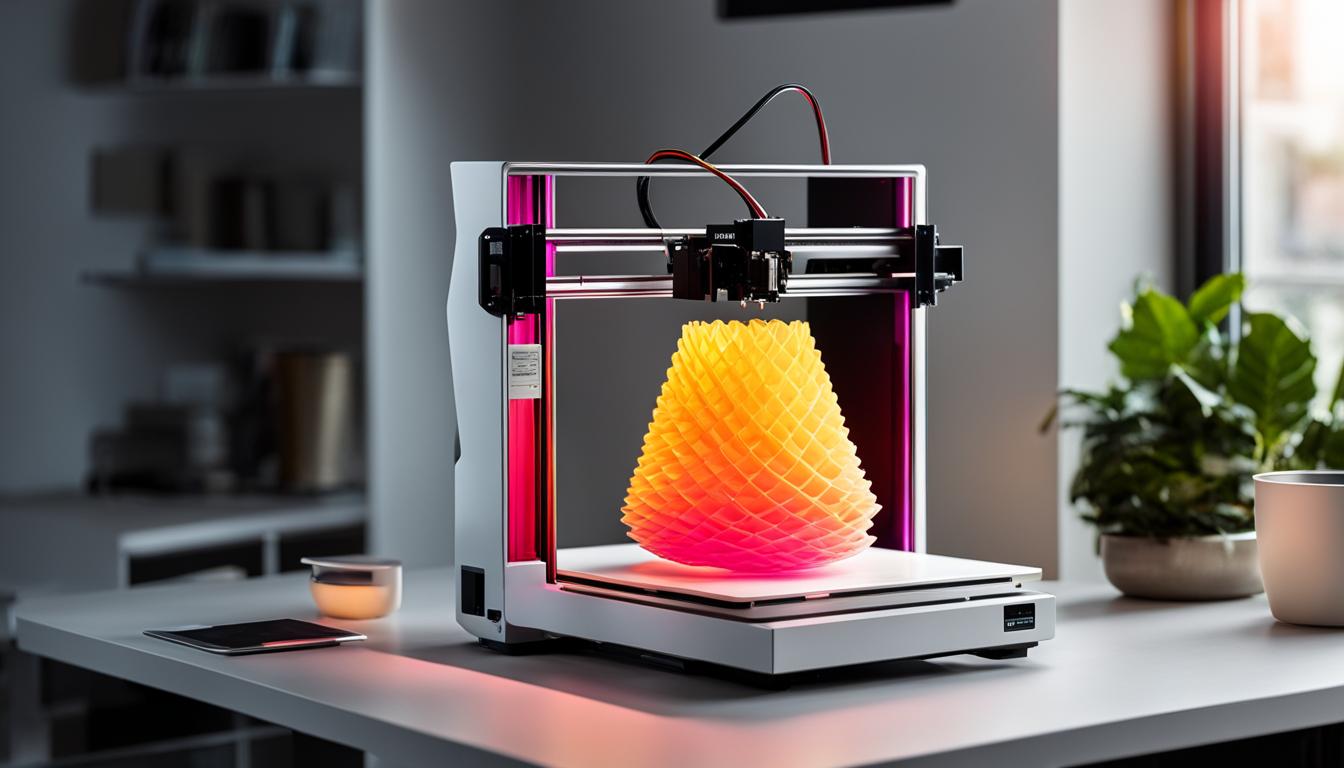
Additive manufacturing continues its rapid advancement in 2024, offering diverse solutions for prototyping, tooling, and end-use part production. Engineers and designers now have access to a broad spectrum of 3D printers, from reliable desktop FDM machines to highly precise SLA systems and robust industrial platforms. Selecting the optimal printer hinges on specific application requirements, material compatibility, and desired dimensional accuracy.
The market has matured significantly, with a strong focus on specialized materials and production-level capabilities. Businesses are increasingly leveraging 3D printing to reduce lead times and save costs, indicating its established role in modern manufacturing workflows.
Prusa I3 Series: the Benchmark for Reliability
The Original Prusa i3 series, particularly the MK4, maintains its reputation as a highly reliable and user-friendly FDM 3D printer. Prusa Research’s commitment to open-source ideals and continuous refinement has resulted in a machine that consistently delivers high-quality prints with minimal operational issues.
The MK4 features a thicker frame, a redesigned Nextruder extruder with a load cell for automatic first-layer leveling, and an improved bed-leveling system. This meticulous design ensures excellent control over layer and wall thicknesses, producing clean clearances for moving components. The printer supports a wide variety of filament types, including ABS, ASA, PETG, PLA, and flexible TPU, with a maximum extruder temperature of 290°C.
Prusa’s robust support ecosystem, including 24-hour chat and email support, along with comprehensive documentation, further enhances the user experience. The MK4 is also designed for upgradability, allowing users to integrate new technologies as they emerge, extending the machine’s lifespan in a fast-evolving industry.
Bambu Lab: Redefining Speed and Efficiency
| Printer Model | Technology | Build Volume (mm) | XY Resolution (microns) | Max Print Speed (mm/s or mm/hr) | Typical Tolerance (mm) |
|---|---|---|---|---|---|
| Prusa i3 MK4 | FDM | 250 x 210 x 220 | ~100-200 (layer height) | Up to 250 mm/s | ±0.1 to ±0.3 |
| Bambu Lab X1 Carbon | FDM (CoreXY) | 256 x 256 x 256 | 7 (LiDAR) | 500 mm/s | ±0.1 to ±0.3 |
| Creality Ender 3 V3 KE | FDM | 220 x 220 x 240 (approx.) | ~100-300 (layer height) | Up to 500 mm/s | ±0.2 to ±0.5 |
| Formlabs Form 4 | MSLA (LFD) | 200 x 125 x 210 | 50 | 100 mm/hr | ±0.05 to ±0.15 |
| Stratasys F900 (Example Enterprise) | FDM (Industrial) | 914 x 610 x 914 | ~127-330 (layer height) | 100-150 mm/s (typical) | ±0.1 to ±0.2 |
Bambu Lab printers, particularly the X1 Carbon, have significantly impacted the desktop FDM market by prioritizing high-speed printing without compromising quality. The X1 Carbon utilizes a CoreXY motion system, enabling tool head speeds up to 500 mm/s and accelerations of 20,000 mm/s².
This rapid movement is complemented by advanced features like Bambu Micro LiDAR for micron-level calibration and first-layer inspection, along with AI print failure detection. The X1 Carbon’s hardened all-metal hotend, reaching 300°C, allows it to print a broad range of materials, including engineering-grade plastics like PC, PA, ASA, and carbon fiber-reinforced polymers.
The optional Automatic Material System (AMS) further enhances efficiency by enabling multi-color and multi-material printing with up to 16 colors. This combination of speed, material versatility, and intelligent features makes Bambu Lab a strong contender for rapid prototyping and small-batch production.
Creality Ender: Accessible Innovation for Every Budget
Creality’s Ender series continues to dominate the budget-friendly segment of the 3D printing market, making additive manufacturing accessible to a wider audience. Models like the Ender-3 V3 and K1C Carbon offer impressive speeds and quality for their price point, catering to hobbyists and small businesses.
These printers are known for their open design, which encourages modification and a strong community support network. While typically requiring more user involvement for optimal performance compared to higher-end machines, Creality printers provide an excellent entry point into 3D printing. They allow users to experiment with various filaments and settings without a significant initial investment.
Formlabs SLA: Unmatched Precision in Resin Printing
Formlabs has established itself as a leader in stereolithography (SLA) 3D printing, renowned for producing parts with exceptional detail and smooth surface finishes. The Form 4, their latest flagship resin printer, leverages Low Force Display™ (LFD) technology to achieve significantly faster print speeds than previous iterations, often completing most parts in under two hours.
The Form 4 boasts a 50-micron XY resolution and can achieve layer thicknesses from 25 to 300 microns. This precision results in dimensional tolerances typically ranging from ±0.05 mm to ±0.15 mm for smaller features, making it ideal for applications requiring tight fits and intricate geometries. The printer’s advanced pixel smoothing and highly collimated light contribute to stunning parts with a surface finish that rivals injection molding.
Formlabs offers an extensive library of engineering-grade resins, including biocompatible options, expanding the applications for high-resolution prototyping, dental models, and end-use components. The intuitive user interface, automated resin handling, and smart sensors simplify operation, making high-precision resin printing more accessible.
Enterprise Additive Systems: Industrial-Scale Production
Industrial additive manufacturing systems represent the pinnacle of 3D printing technology, designed for high-volume production, large-format parts, and specialized material processing. Companies like Stratasys, EOS, and HP offer solutions that integrate seamlessly into existing manufacturing workflows, providing robust and repeatable results. These systems often employ advanced FDM, SLS, or Multi Jet Fusion (MJF) technologies.
Enterprise-grade printers handle a wide array of engineering plastics, high-performance polymers, and even metals, with an increasing focus on specialized material blends tailored for specific industrial applications. These machines feature large build volumes, sophisticated environmental controls, and integrated post-processing solutions, crucial for maintaining dimensional accuracy and mechanical properties in demanding applications.
Typical FDM industrial systems can achieve print speeds up to 200-300 mm/s, while industrial SLS systems can reach build rates of several liters per hour. Tolerances for industrial FDM can be as tight as ±0.1mm on smaller features under ideal conditions, while SLS and MJF offer excellent isotropy and dimensional uniformity. These systems are critical for aerospace, medical, and automotive sectors, where stringent quality control and high throughput are paramount.