
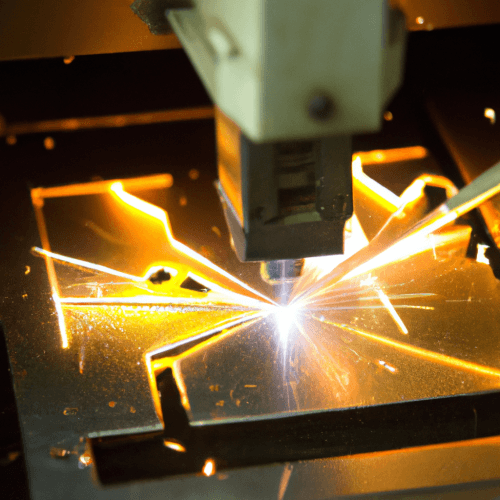
Modern manufacturing demands increasingly precise and efficient material processing methods. Laser cutting technology has emerged as a dominant force, offering significant advantages over traditional mechanical cutting techniques. Its ability to deliver intricate designs with minimal material distortion makes it a preferred choice for various industries.
Extreme Edge Precision in Laser Cutting
Laser cutting systems achieve exceptional edge precision through a highly focused beam of coherent light. This concentrated energy melts, vaporizes, or ablates material along a precisely controlled path, resulting in a clean, burr-free cut. The kerf width, or the width of the cut, can be incredibly narrow, often ranging from 0.1 mm to 0.5 mm depending on the material and laser type.
Achieving such tight tolerances is critical for components requiring exact fitment or aesthetic quality. Modern fiber lasers, for instance, can maintain positional accuracy within ±0.02 mm and repeatability within ±0.01 mm across large work envelopes. This level of control minimizes post-processing requirements, reducing overall production time and cost.
The heat-affected zone (HAZ) is also significantly smaller compared to plasma or oxy-fuel cutting. This localized heating prevents material warping and preserves the metallurgical properties of the surrounding material. For example, cutting 6mm mild steel with a fiber laser typically results in a HAZ of less than 0.5mm.
Achieving High Cutting Speeds with Lasers
| Parameter | CO2 Laser (Typical) | Fiber Laser (Typical) |
|---|---|---|
| Wavelength | 10.6 µm | 1.06 µm |
| Max Material Thickness (Mild Steel) | 25 mm | 30 mm+ |
| Kerf Width | 0.15 – 0.5 mm | 0.1 – 0.3 mm |
| Positional Accuracy | ±0.03 mm | ±0.02 mm |
| Surface Roughness (Ra) | 1.6 – 6.3 µm | 0.8 – 3.2 µm |
Laser cutting offers impressive processing speeds, directly impacting manufacturing throughput. The speed at which a laser can cut depends on several factors, including laser power, material type, thickness, and assist gas used. Fiber lasers, in particular, have revolutionized speed capabilities due to their high power density and excellent beam quality.
Cutting 1mm thick stainless steel with a 6kW fiber laser can achieve speeds exceeding 20 meters per minute (m/min). For thicker materials, while speeds decrease, they remain highly competitive. A 12kW fiber laser can cut 10mm mild steel at approximately 2.5 m/min, significantly faster than traditional methods.
These high speeds are further enhanced by advanced motion control systems and sophisticated nesting software. Optimized tool paths and rapid acceleration/deceleration capabilities of modern CNC laser machines ensure that the laser head spends minimal time repositioning, maximizing actual cutting time.
The Non-Contact Advantage of Laser Processing
Laser cutting is a non-contact process, meaning the cutting tool—the laser beam—never physically touches the workpiece. This fundamental characteristic eliminates tool wear, a common issue with mechanical cutting methods that necessitates frequent tool changes and resharpening. Consequently, operational downtime is reduced, and consumable costs are lowered.
Without physical contact, there is no mechanical stress induced on the material, preventing deformation or marring of delicate surfaces. This is particularly beneficial when working with thin sheets or brittle materials that might otherwise chip or crack under the pressure of a blade or punch. The absence of contact also means no contamination from cutting fluids or lubricants.
Furthermore, the non-contact nature allows for cutting materials that are difficult to secure or are highly abrasive. Workholding requirements are often simpler, as only minimal clamping is needed to prevent gross movement, not to resist significant cutting forces. This simplifies fixture design and setup times.
Minimizing Material Waste Through Laser Technology
Material utilization is a critical factor in manufacturing cost efficiency, and laser cutting excels in minimizing waste. The extremely narrow kerf width of a laser beam means less material is removed during the cutting process compared to wider saw blades or plasma torches. This allows for tighter nesting of parts on a sheet, maximizing the number of components produced from a given stock material.
Advanced nesting software algorithms are specifically designed to optimize part layout, often achieving material utilization rates upwards of 90-95% for complex geometries. This is a substantial improvement over methods with wider kerfs or those requiring significant lead-ins and lead-outs. Reduced scrap material directly translates to lower raw material costs and decreased disposal expenses.
The precision of laser cutting also reduces the likelihood of producing scrap parts due to inaccurate cuts. First-time yield rates are typically very high, further contributing to material efficiency. This combination of narrow kerf, optimized nesting, and high accuracy makes laser cutting an environmentally and economically sound choice.
Unlocking Complex Profile Cutting Capabilities
Laser cutting technology offers unparalleled flexibility in creating intricate and complex profiles that would be challenging or impossible with traditional methods. The focused beam can navigate sharp corners, small radii, and elaborate internal cutouts with ease, limited only by the beam’s diameter and the machine’s motion control.
Designers can leverage this capability to create highly functional and aesthetically pleasing components without compromising on manufacturability. Features such as micro-holes, intricate filigree, and sharp internal angles are routinely produced. The ability to cut virtually any 2D shape directly from a CAD file streamlines the design-to-production workflow.
Consider the following typical parameters for various laser cutting applications:
This versatility extends to prototyping and low-volume production, where the absence of tooling costs for new designs provides a significant advantage. Changes to part geometry can be implemented rapidly by simply updating the digital design file, enabling agile manufacturing processes.