
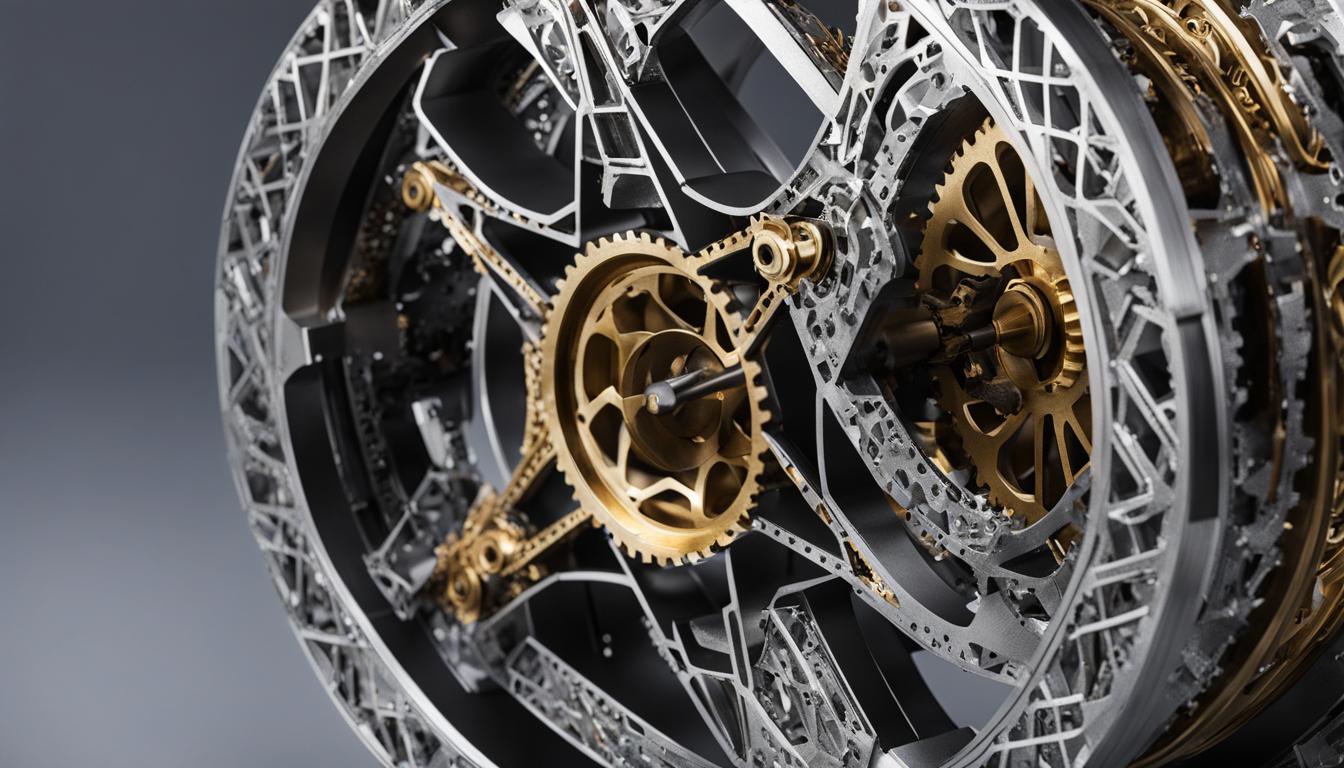
Metal additive manufacturing, particularly binder jetting, offers a transformative approach to producing complex metal parts, moving beyond traditional prototyping into full-scale production. This technology enables the creation of intricate geometries and lightweight structures that are often impossible or cost-prohibitive with conventional subtractive methods. The process significantly reduces material waste by building parts layer by layer, which is especially beneficial when working with expensive alloys like titanium or Inconel.
Desktop Metal has emerged as a key player in this evolving landscape, providing scalable solutions from research and development to mass production. Their portfolio includes systems designed for various production volumes, supported by integrated software and sintering solutions.
Binder Jetting Metal Technology Fundamentals
Binder jetting is an additive manufacturing process where a liquid binder selectively joins layers of powdered metal to form a ‘green part’. This method operates at room temperature, which minimizes thermal stresses and eliminates the need for support structures during the printing phase.
The process begins with a thin layer of metal powder spread across a build platform. An industrial inkjet printhead then precisely deposits micro-droplets of a liquid binder onto specific areas, adhering the powder particles together. This layer-by-layer deposition continues until the entire object is formed within the powder bed.
After printing, the unbound powder is removed, leaving a fragile ‘green part’. This part then undergoes a crucial post-processing stage involving debinding and sintering to achieve final density and mechanical properties. Desktop Metal’s binder jetting systems can achieve feature resolutions as small as 16 microns.
Binder jetting supports a wide array of materials, including stainless steels, tool steels, copper, titanium, and nickel alloys. The ability to process common metal injection molding (MIM) powders contributes to a broader range of material properties and often lower costs compared to powders specifically formulated for other metal 3D printing methods.
Desktop Metal Studio System for Shop Printing
| Parameter | Desktop Metal Studio System 2 | Desktop Metal Production System P-50 |
|---|---|---|
| Process | Bound Metal Deposition (BMD) | Single Pass Jetting (SPJ) Binder Jetting |
| Build Volume (approx.) | 300 x 200 x 200 mm (12 x 8 x 8 inches) | 750 x 330 x 250 mm (29.5 x 13 x 9.8 inches) |
| Print Speed | Not specified, designed for shop use | Up to 12,000 cm³/hour |
| Materials (examples) | 316L SS, 17-4PH SS, H13 Tool Steel, Copper, 4140 Chromoly Steel | 316L SS, 420 SS, 440C SS, D2 Tool Steel, Al 6061, Copper, Ti64 |
| Typical Sintered Tolerance | ~0.5% of outer dimension, approx. ±0.05 mm | ~0.5% of outer dimension, approx. ±0.05 mm |
| Post-Processing | Two-step: Debind and Sinter in one furnace cycle | Depowdering, Debind, Sintering |
The Desktop Metal Studio System 2 is engineered for office and shop environments, offering a streamlined, two-step workflow for metal 3D printing. This system eliminates the solvent debinding phase, allowing printed parts to go directly into the furnace for combined debinding and sintering.
This simplified process reduces odors and environmental health and safety concerns associated with solvent use, making it more accessible for various facilities. The Studio System 2 features a heated build chamber and optimized print profiles, contributing to excellent surface finish and reduced ‘stair-stepping’ on sidewalls.
Materials available for the Studio System 2 include 316L stainless steel, 17-4 PH stainless steel, H13 tool steel, 4140 chromoly steel, and pure copper. These materials enable the production of functional prototypes, jigs, fixtures, tooling, and low-volume production parts with complex geometries.
Typical tolerances for binder jetting, including systems like the Studio System, are approximately 0.5 percent of the outer dimension, often around ±0.05 mm once sintered. Designers must account for sintering shrinkage, which can be a few percent, by printing the green part oversized.
High-Volume Metal Additive with the Production System
For high-volume metal additive manufacturing, Desktop Metal offers its Production System, including models like the P-1 and P-50, designed for mass production of complex metal parts. These systems leverage ‘Single Pass Jetting’ technology, which combines powder spreading, binder deposition, and compaction into a single, rapid pass.
The Production System P-50 boasts an expanded build volume of 750 x 330 x 250 mm and accelerated printing speeds up to 12,000 cm³ per hour. This throughput can be 8-10 times faster than a single laser powder bed fusion system for medium-complexity parts.
While print time is rapid, the total production cycle, including depowdering and sintering, can extend significantly. For instance, a job with a 14-hour print time might require 72 hours for the full cycle to reach final specifications.
The Production System supports a broad range of materials, including various stainless steels (316L, 420, 440C), low-alloy steels (4140, 4340, 4605), tool steels (D2), aluminum 6061, bronze, chromium zirconium copper, cobalt chrome, and gold.
Sintering Furnace Processing
Sintering is the critical final step in binder jetting, transforming fragile ‘green parts’ into dense, functional metal components. This thermal process removes the binder and fuses metal powder particles together at temperatures just below the material’s melting point.
Desktop Metal provides integrated sintering solutions, such as the Studio System 2 furnace and the PureSinter furnace, designed for ease of use and high material properties. These furnaces feature precise temperature control and uniform heating.
Atmosphere control within the furnace is paramount to prevent oxidation and ensure proper densification. Typical atmospheres include hydrogen-nitrogen, pure hydrogen, argon, or vacuum, with dew points often at -40°C or below.
The debinding phase, occurring at temperatures typically between 200°C and 550°C, removes the organic binder through degradation or evaporation. The furnace then ramps to the sintering temperature, which can exceed 1200°C for stainless steels or 900-1060°C for copper and bronze.
Production Metal Parts Capabilities
Metal additive manufacturing, particularly binder jetting, offers significant advantages for producing production-grade metal parts. These benefits include the ability to create complex geometries, consolidate multiple parts into a single component, and reduce material waste.
Industries such as aerospace, medical, automotive, and consumer products are increasingly adopting Desktop Metal’s solutions for end-use parts. Examples include lightweight aerospace components, medical implants like cervical fusion cages and hip reamers, and complex heat exchangers.
While binder jetting offers design freedom, achieving tight tolerances often requires careful process control and sometimes post-machining. Standard binder jetting tolerances are around ±0.05 mm after sintering, whereas CNC machining can achieve ±0.01 mm on request.
The economic viability of binder jetting for production hinges on factors like printer throughput, raw powder expenses, and available furnace capacity. Companies are evaluating these systems for repeatable complex-part production, with a focus on stable sintered density and batch economics.