
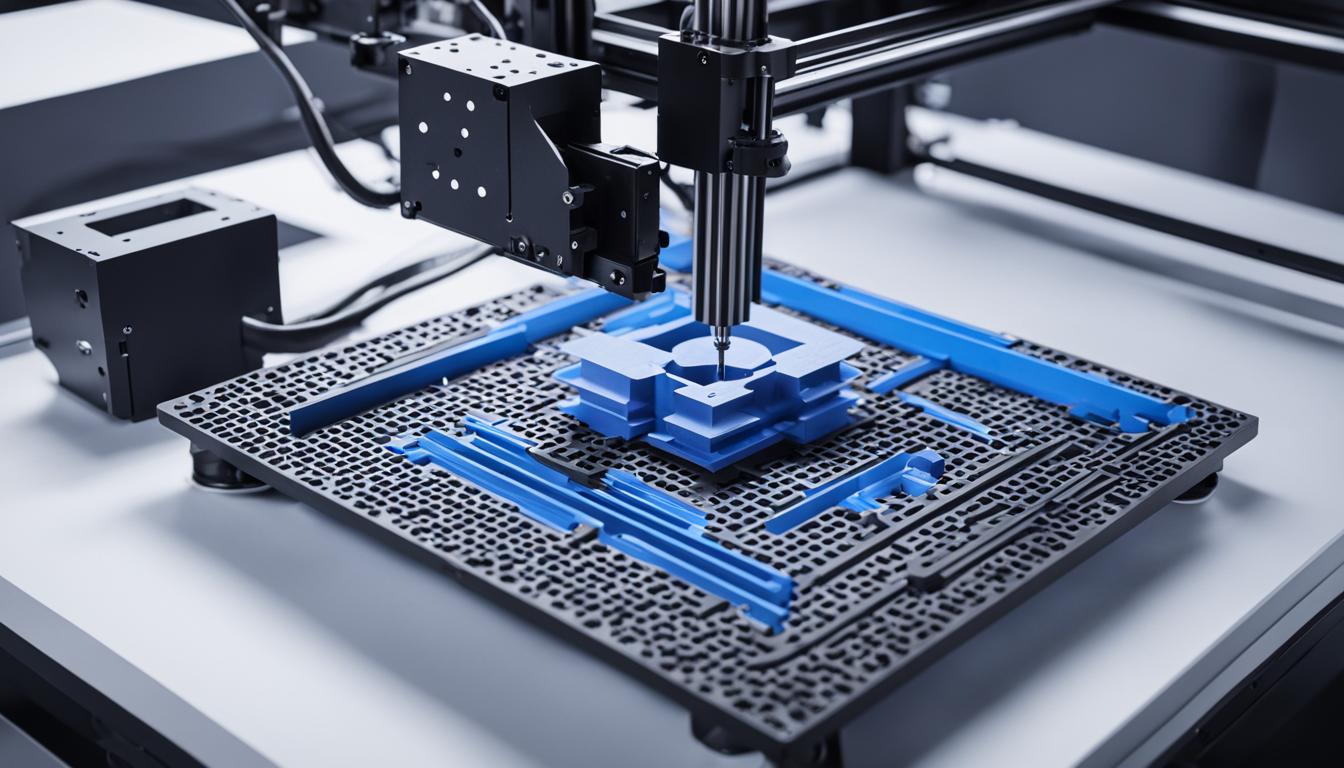
The additive manufacturing sector continues its rapid expansion, with several key companies consistently pushing the boundaries of what is technically feasible. These industry leaders are not merely producing machines; they are developing comprehensive ecosystems that encompass hardware, advanced materials, and sophisticated software solutions. Their innovations are critical for transitioning 3D printing from prototyping to full-scale industrial production across diverse applications.
Engineers and designers rely on these firms for robust, repeatable, and precise manufacturing capabilities. The demand for faster product development, enhanced design flexibility, and reliable supply chain continuity drives continuous advancements in 3D printing technologies. This technical overview examines some of the most influential companies and their core contributions to the field.
Stratasys: FDM and PolyJet for Industrial Applications
Stratasys remains a consistent leader in industrial additive manufacturing, offering multi-technology platforms widely utilized across aerospace, automotive, medical, and consumer product sectors. The company’s core technologies, Fused Deposition Modeling (FDM) and PolyJet, address distinct industrial requirements with specialized material properties and build characteristics.
FDM technology, a widely adopted 3D printing method, excels in producing durable, functional thermoplastic parts suitable for demanding real-world environments. Stratasys FDM systems, such as the Fortus 450mc, are recognized for their reliability and repeatability in manufacturing jigs, fixtures, and end-use components. These machines process engineering-grade thermoplastics like ABS, polycarbonate, and various blends, ensuring dimensional stability.
PolyJet technology from Stratasys delivers ultra-smooth surfaces and exceptional fine detail, enabling true multi-material printing within a single build. This process allows for complex geometries, intricate features, and combinations of full-color, transparency, and flexibility. PolyJet systems are particularly valuable in medical modeling, surgical planning, and high-realism prototyping, as well as for packaging design.
Dimensional tolerances for FDM typically range from ±0.15 mm to ±0.3 mm, though larger parts or lower-end printers may exhibit greater variation. PolyJet technology, known for its precision, generally achieves tolerances of ±0.1 mm or better, making it ideal for highly detailed appearance models and master patterns.
3D Systems: a Pioneer’s Broad Portfolio
| Technology | Type | Typical Materials | Typical Layer Thickness | Typical XY Resolution | Typical Dimensional Tolerance |
|---|---|---|---|---|---|
| Stratasys FDM | Fused Deposition Modeling | Engineering-grade thermoplastics (ABS, PC, Nylon) | 0.127 – 0.330 mm | ~0.4 mm (nozzle dependent) | ±0.15 – 0.3 mm (or ±0.3% for large parts) |
| Stratasys PolyJet | Material Jetting | Photopolymers (multi-material, full-color, flexible) | Not specified (known for fine layers) | High (fine detail) | ±0.1 mm or better |
| Formlabs SLA/LFS/LFD | Stereolithography (Resin) | Photopolymer resins (standard, tough, flexible, biocompatible) | 25 – 300 µm | 25 – 50 µm | ±0.1 – 0.2 mm (Form 4: ±0.15% XY) |
| HP Multi Jet Fusion | Powder Bed Fusion | Thermoplastic powders (Nylon PA 12, TPU) | ~80 µm | 0.1 mm (minimum feature) | ±0.2 mm (up to 100 mm, then 0.2%) |
3D Systems, founded in 1986, is a foundational pioneer in additive manufacturing, offering an extensive suite of technologies from ‘design-to-manufacturing’ solutions. The company’s portfolio includes Stereolithography (SLA), Fused Deposition Modeling (FDM), Selective Laser Sintering (SLS), ColorJet Printing (CJP), MultiJet Printing (MJP), and Direct Metal Printing (DMP).
The company’s solutions are integral to industries such as aerospace, automotive, healthcare, and dental, providing product concept models, precision prototypes, and production parts. 3D Systems emphasizes a full-stack approach, integrating hardware, materials, software, and application engineering services to deliver comprehensive manufacturing solutions.
Recent innovations include the SLA 825 Dual, a next-generation dual-laser production system designed for increased throughput in precision applications. This system offers over 20% larger build volumes and up to 30% faster print speeds compared to competitive systems. Additionally, the AddiTrak™ software platform provides real-time fleet monitoring and process control for connected 3D Systems environments.
SLA technology, a cornerstone of 3D Systems’ offerings, typically achieves dimensional tolerances of ±0.1–0.2 mm, providing excellent detail. The company’s diverse material library, encompassing over 130 high-performance options, supports a wide array of applications, from photopolymers with thermoplastic-like properties to biocompatible resins.
Formlabs: Advancing Stereolithography with Precision
Formlabs has established a strong reputation in the professional resin 3D printing space, focusing on quality, usability, and reliability. Their primary technology, Low Force Stereolithography (LFS), represents a significant advancement in resin-based printing. LFS utilizes a flexible resin tank and linear illumination to drastically reduce peel forces during the print process.
This reduction in peel forces allows for lighter support structures, which are easier to remove and result in superior part surface finishes. The LFS process also contributes to consistently high part accuracy and enables the use of more advanced materials. Formlabs’ Form 3 and Form 3L printers are powered by this innovative technology.
The newer Form 4 and Form 4B printers feature the Low Force Display™ (LFD) Print Engine, which further enhances speed and quality. This engine incorporates an ultra-high power backlight unit with 60 LEDs, integrated cooling, and collimating lenses, delivering an optical power intensity of 16 mW/cm². This ensures uniform light projection and blazing fast print speeds with excellent print quality.
Formlabs SLA printers typically offer XY resolutions of 25-50 µm and layer thicknesses ranging from 25 to 300 µm. The Form 4 boasts typical XY dimensional tolerances of ±0.15%, ensuring precise assemblies. Formlabs provides an extensive library of 23 industry-leading materials, including various biocompatible options, catering to diverse professional applications.
Ultimaker and HP: Enterprise Solutions and Multi Jet Fusion
Ultimaker has carved a niche in enterprise FDM solutions, offering a range of S-series printers (S3, S5, S6, S7, S8) known for their reliability and ease of use. These machines feature dual extrusion, are composite-ready, and incorporate advanced functionalities like active leveling and filament flow sensors.
The Ultimaker ecosystem includes the powerful Ultimaker Cura slicing software, which streamlines workflows and enhances print success through features like intent profiles and remote printing. Optional peripherals such as the Material Station provide automated material management for up to six spools, ensuring uninterrupted 24/7 printing.
HP’s Multi Jet Fusion (MJF) technology represents a distinct approach to powder bed fusion, leveraging HP’s proprietary inkjet technology. The process involves depositing thin layers of powder, selectively applying fusing and detailing agents, and then bonding them with infrared heat lamps. This method eliminates the need for traditional support structures, allowing for highly complex geometries.
MJF is recognized for its speed, quality, and cost-efficiency in producing functional parts from powdered thermoplastics like Nylon PA 12 and TPU. The technology delivers parts with high tensile strength, fine feature resolution, and well-defined mechanical properties, comparable to SLS but often with slightly better uniformity.
HP MJF printers, such as the Jet Fusion 5600 series, are designed for high-volume production environments, capable of producing over 550 parts per week. Typical dimensional accuracy for MJF is ±0.2 mm up to 100 mm, and 0.2% above that value, with minimum printable features as small as 0.1 mm.
Comparative Technical Parameters of Leading 3D Printing Technologies
Understanding the technical specifications and typical performance metrics across different additive manufacturing technologies is crucial for selecting the appropriate process for specific engineering applications. Each technology offers a unique balance of speed, accuracy, material versatility, and surface finish. The following table provides a concise comparison of the discussed leading technologies.