
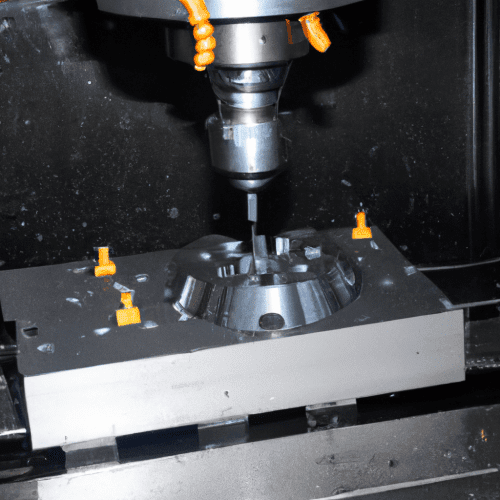
Accelerating product development cycles demands efficient, high-quality prototyping. Modern manufacturing services, such as those offered by Protolabs, provide critical capabilities for engineers to quickly validate designs and move from concept to production. These services integrate advanced digital tools with sophisticated machining and molding processes.
Rapid prototyping encompasses various techniques, including CNC machining, injection molding, and 3D printing, all designed to produce physical parts from CAD data within days or even hours. This approach significantly reduces time-to-market and mitigates risks by enabling multiple design iterations early in the development process.
Automated Design for Manufacturability Analysis
Design for Manufacturability (DFM) analysis is a crucial engineering method that optimizes part designs for efficient and cost-effective production. This proactive approach identifies potential manufacturing issues before physical production begins, minimizing costly delays and rework.
Protolabs offers an automated DFM analysis through its digital quoting platform, providing rapid feedback on design manufacturability, typically within hours. This system highlights challenging features and suggests improvements, allowing engineers to iterate designs quickly and without additional cost.
The benefits of integrating automated DFM are substantial. It reduces overall costs by preventing design flaws that would be expensive to correct later in the production cycle. Furthermore, DFM analysis shortens lead times and enhances the quality of custom parts by streamlining the manufacturing process.
Beyond automated feedback, Protolabs also provides consultative design services, where experienced application engineers offer expert guidance on complex geometries, material selection, and cost-cutting strategies. This hybrid approach ensures both speed and in-depth technical support for intricate projects.
Fast Turnaround Machining and On-Demand Tooling
| Parameter | CNC Machining (Protolabs) | Injection Molding (Protolabs) |
|---|---|---|
| Typical Lead Time | As fast as 1 day (expedited), 3 days (standard), 6-12 days (flexible) | As fast as 7 days (prototype tooling) |
| Standard Tolerance | ±0.005 in. (0.13mm); Precision: ±0.002 in. (0.051 mm) | Mold: ±0.003 in. (0.076mm); Part: ±0.002 in./in. (0.051mm/mm) |
| Volume Suitability | Low to medium volumes, up to 1,000,000+ parts | Low to high volumes, 100,000+ parts, no MOQ |
| Material Range | Extensive metals and engineering plastics | 100+ plastic, elastomeric, and silicone rubber materials |
| Geometric Complexity | High precision, tight tolerances, less flexibility for very complex internal features than 3D printing | Complex geometries with detailed features |
Protolabs is renowned for its rapid turnaround times in CNC machining, offering machined parts in as fast as one day for urgent projects. Standard delivery typically takes three days, with a flexible lead time option extending from 6 to 12 days for cost optimization.
The company’s ‘infinite capacity’ model, supported by over 500 CNC mills and lathes, including 5-axis milling capabilities, ensures consistent lead times and on-demand production. This model is particularly beneficial for rapid prototyping, allowing engineers to quickly test form, fit, and function with no minimum order quantity.
For injection molding, Protolabs provides on-demand prototype tooling, primarily utilizing aluminum molds. These tools offer an affordable entry point for lower part quantities and enable rapid iterative development, with standard lead times as fast as seven days.
Prototype tooling is distinct from on-demand manufacturing tooling, which is designed for higher volumes and offers lower piece-part prices, multi-cavity options, and an unlimited guaranteed mold life. Protolabs facilitates a seamless transition from prototype to production, often providing a free prototype mold when upgrading to on-demand manufacturing.
Injection Molding versus CNC Machining for Prototypes
Selecting between injection molding and CNC machining for prototypes depends heavily on project requirements such as volume, geometric complexity, material properties, and desired tolerances. Both processes offer distinct advantages in the rapid prototyping landscape.
CNC machining excels in producing high-precision parts with tight tolerances, making it ideal for low-volume runs and components requiring excellent mechanical properties. It offers a wide range of production-grade materials, including various metals and plastics.
Injection molding, conversely, is highly suitable for higher production volumes and complex geometries with intricate features, offering a vast selection of plastic, elastomeric, and silicone rubber materials. While often associated with mass production, it is also effectively used for functional prototyping in production-grade materials.
Here is a comparison of key technical parameters for both processes:
Strategic Material Selection Options
Choosing the appropriate material is paramount in rapid prototyping, directly impacting a part’s functionality, manufacturability, and cost. Protolabs offers a comprehensive library of materials for both CNC machining and injection molding, allowing engineers to select based on specific application requirements.
For CNC machining, popular metal options include various grades of aluminum (e.g., 6061 and 7075), brass, copper, and stainless steel. Engineering plastics like ABS, Acetal (POM), Nylon, Polycarbonate, PEEK, and Ultem (PEI) are also widely available, offering diverse mechanical and thermal properties.
When machining Aluminum 6061-T6, typical cutting speeds for carbide tools range from 300-800 surface feet per minute (SFM) for roughing and 300-400 SFM for finishing. Chip loads often fall between 0.002-0.005 inches per tooth for small-diameter carbide end mills. Maintaining proper chip evacuation and using coolant is crucial to prevent built-up edge and ensure a good surface finish.
Machining ABS plastic requires careful heat control to prevent melting and poor surface finish. Recommended spindle speeds for CNC routers are typically between 4,000-8,000 RPM, while milling can range from 8,000-15,000 RPM for finishing. Feed rates around 350mm/min with single-flute or two-flute carbide end mills are often effective.
For injection molding, the material selection is even broader, encompassing a vast array of thermoplastics, elastomers, and liquid silicone rubbers. Common choices include ABS, Polycarbonate, Nylon, Polypropylene (PP), and high-performance polymers like PEEK and Ultem, which can also be machined for prototyping to ensure material consistency between prototype and production.