
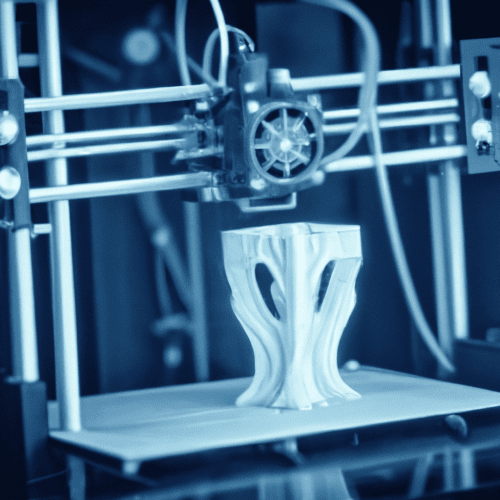
The world of additive manufacturing has expanded significantly, offering diverse opportunities for both hobbyists and professional engineers. Beyond industrial applications, desktop 3D printers now enable the creation of intricate and functional objects for personal use and rapid prototyping. Understanding the technical capabilities and material properties of Fused Deposition Modeling (FDM) and Stereolithography (SLA) is crucial for successful outcomes.
FDM technology, which extrudes melted thermoplastic filament layer by layer, is generally more cost-effective and suitable for larger, more robust parts. It offers advantages in material variety, including PLA, PETG, ABS, and TPU, each with distinct mechanical properties. Conversely, SLA printing utilizes a UV laser to cure liquid photopolymer resin, producing parts with superior surface finish and finer detail, making it ideal for intricate designs and visual prototypes.
Custom Desk Gadgets
Designing custom desk gadgets with 3D printing allows for personalized organization and enhanced workspace ergonomics. Common materials like PLA and PETG are excellent choices due to their ease of printing and sufficient rigidity for static applications. PLA is particularly user-friendly and biodegradable, making it a popular choice for aesthetic models and non-load-bearing prototypes.
For more durable or impact-resistant desk accessories, PETG offers improved strength and heat resistance compared to PLA. When designing features like interlocking components or sliding mechanisms, FDM dimensional tolerances typically range from ±0.2 mm to ±0.5 mm for well-calibrated machines on features smaller than 100 mm. For larger dimensions, expect approximately ±0.3% of the nominal size.
Considerations for wall thickness are critical; a minimum of 0.8 mm is recommended for reliable FDM prints, with 1.5 mm providing better strength for parts that will experience handling or light mechanical loads. Overhangs exceeding 45 degrees from vertical will generally require support structures, which can impact surface finish and necessitate post-processing. Designing with chamfers instead of fillets on bottom edges can minimize the need for supports.
Articulated Figures
| Parameter | FDM (Fused Deposition Modeling) | SLA (Stereolithography) |
|---|---|---|
| Typical Dimensional Tolerance | ±0.2 mm to ±0.5 mm (for features < 100 mm) | ±0.05 mm to ±0.15 mm |
| Standard Layer Height | 0.2 mm (200 microns) | 0.05 mm to 0.1 mm (50-100 microns), finer options available |
| Minimum Wall Thickness | 0.8 mm (PLA/PETG), 1.0 mm (ABS/ASA), 1.5 mm (TPU) | 0.3 mm to 0.5 mm |
| Surface Finish | Visible layer lines | Smooth, fine details |
| Material Cost | Generally lower | Generally higher |
| Best Use Cases | Functional parts, larger prototypes, tools, jigs | Miniatures, dental models, jewelry, detailed visual models, precision parts |
Creating articulated figures demands careful attention to joint design and material selection to ensure smooth movement and durability. FDM is frequently employed for larger, print-in-place articulated models, but specific design rules apply to clearances and wall thicknesses. For FDM print-in-place joints, a clearance of 0.2 mm to 0.3 mm per side is a good starting point for a tight friction fit, while 0.4 mm to 0.5 mm provides a smoother sliding fit.
Functional walls around lightly loaded joints should be at least 1.2 mm thick, increasing to 1.6 mm to 2.0 mm or more for repeatedly stressed joints, depending on the model’s overall size. It is crucial never to scale functional geometry proportionally, as a small joint gap scaled down may fall below reliable manufacturing limits. Testing with a clearance ladder before printing the full model helps determine the optimal gap for a specific printer and material.
SLA printing offers superior resolution and surface smoothness, making it suitable for articulated figures where fine details and minimal layer lines are paramount. While standard SLA resins can be brittle, engineering-grade resins or ABS-like resins provide increased flexibility and impact resistance for moving parts. SLA parts typically achieve dimensional accuracy of ±0.05 mm to ±0.15 mm, which is significantly tighter than FDM.
Functional Home Tools
3D printing functional home tools requires materials with high mechanical strength and appropriate design for load-bearing applications. Strong FDM filaments like PETG, ABS, Nylon, and carbon fiber-filled composites are preferred over PLA, which is generally too brittle for robust functional parts. Nylon 12, often used in Selective Laser Sintering (SLS) and Multi Jet Fusion (MJF), offers an excellent balance of rigidity and impact resistance, making it suitable for production components like housings and brackets.
Infill density and pattern significantly influence the strength of FDM prints. While a 20% infill is common for general parts, increasing infill percentage and selecting robust patterns like rectilinear or gyroid can enhance structural integrity for tools. Layer height also plays a role; while lower layer heights improve Z-axis resolution, standard 0.2 mm layers are often sufficient for most functional parts, balancing strength and print time.
For tools requiring higher precision or smoother surfaces for comfortable handling, SLA with tough or engineering resins can be considered. These resins offer tensile strengths comparable to traditional injection-molded plastics like polypropylene and ABS. However, standard SLA resins are more brittle and may not withstand the same mechanical stresses as FDM thermoplastics unless specifically formulated for mechanical use.
Board Game Miniatures
Board game miniatures demand exceptional detail and smooth surface finishes, making SLA 3D printing the preferred technology. SLA printers excel at capturing intricate textures, sharp edges, and fine features that FDM printers often struggle with due to visible layer lines. Resins specifically designed for miniatures, such as ABS-like or high-detail resins, offer a balance of fine resolution and improved durability.
Standard resins provide the smoothest surface finish and sharpest detail, ideal for display miniatures, though they can be brittle. ABS-like resins introduce flexibility and impact resistance, making them a popular choice for miniatures that will be handled frequently during gameplay. Some resins, like AmeraLabs TGM-7, are formulated to balance stiffness, impact resistance, and flexibility, ensuring miniatures withstand gaming sessions.
SLA printers can achieve layer resolutions as fine as 0.05 mm or even 0.02 mm upon request, significantly reducing visible layer lines compared to FDM’s typical 0.2 mm layer height. This allows for the reproduction of micro-details like hair textures, armor engravings, and fabric folds. Proper post-processing, including washing and post-curing, is essential for optimal mechanical properties and paint adhesion.
Mechanical Prototypes
Developing mechanical prototypes with 3D printing requires a strategic approach to material selection, dimensional accuracy, and iterative design. Both FDM and SLA technologies are utilized, depending on the specific requirements for rigidity, flexibility, or precision. FDM is often chosen for rapid iteration and larger, more robust prototypes where cost-effectiveness and material versatility are key.
For prototypes demanding high dimensional accuracy, such as snap-fit assemblies or precision housings, SLA is generally superior, achieving tolerances of ±0.05 mm. FDM, while repeatable, may require calibration and compensation for material shrinkage, with tolerances typically in the ±0.1 mm to ±0.2 mm range. When designing interlocking parts, a clearance of 0.1 mm to 0.3 mm is recommended for SLA to account for resin shrinkage and post-curing variations.
Engineering resins for SLA, such as ‘Tough’ or ‘Rigid’ resins, are formulated to withstand mechanical stress and cyclical loads, making them suitable for functional prototypes. For FDM, materials like Nylon 12 and carbon fiber-filled composites provide high strength-to-weight ratios and fatigue resistance, crucial for components undergoing repeated motion or stress. Iterative design and testing are paramount, often involving printing a series of test pieces to validate fits and mechanical functions before committing to a final prototype.